6 Best Personal Sound Amplifiers With Headphones in 2026
Six personal sound amplifiers sold with headphones compared on gain, battery, controls and accessories, plus how they differ from hearing aids.


At a Glance
A personal sound amplifier with headphones is the old-fashioned format that still works for plenty of people: a small body you hold or clip on, a microphone that picks up sound and a headset that delivers it. The headphones matter more than they seem, since they decide comfort, how much of the outside room you still hear and whether the cable gets in the way. Listings also differ in whether they include a full headset, earbuds or both.
This lineup covers six kits: the Williams Sound PockeTalker Ultra DUO, the SuperEar SE9000HP, the IROGER rechargeable, the SuperEar SE5000 and SE7500, and the Reizen Loud Ear 120dB package. We compared listed gain, battery hours, power type, controls and what ships in the box. Gaps in a listing are marked as gaps, and nothing is assumed beyond the page.
A personal sound amplifier is a consumer product. It is not a hearing aid, it does not treat hearing loss, and it cannot stand in for a hearing test. Keep levels low, and book a visit with an audiologist if conversations are getting harder to follow.
6 Criteria to Look For Before Buying a Personal Sound Amplifiers With Headphone
Key buying criteria so you get the right fit the first time.
Headset vs earbud comfort
The headset decides how long you can wear the kit. Full headphones, as in the SuperEar SE5000 and SE9000HP, cover the ears and can feel warm, while earbuds are lighter but can irritate. The Williams Sound PockeTalker Ultra DUO includes both a headset and a single earbud, which lets you try each. Choose the format you can tolerate for an hour, since an uncomfortable headset ends up in a drawer.
Stated gain and what it means
Gain is how much the unit can add to incoming sound, and bigger numbers need more care. The Williams Sound lists 20 to 40 dB and the Reizen lists 120 dB, but these figures may be measured differently. Do not choose by the largest number. Pick a unit you can run at a low setting most of the time, and compare numbers only within the same kind of claim.
Power type and battery hours
Disposable cells, rechargeable AA cells and built-in batteries each suit a different routine. The IROGER lists up to 120 hours on a built-in cell, the Williams Sound up to 100 hours, and the SE9000HP uses swappable rechargeable AAs. The SE7500 includes two AAA batteries. Match power to your habits, and keep spares if you rely on a unit daily.
Controls and tone
A single knob is the easiest to use, and a tone control helps shape voices. The IROGER has one knob and no tone, the Williams Sound has separate volume and tone, and the SuperEar kits use a tactile wheel. Try each control with your hands as they are on a bad day. If a control is awkward, the best specs will not matter.
Microphone and placement
A removable microphone lets you aim sound pickup. The Williams Sound has one with an extension cord, while the Reizen and IROGER use built-in pickup. Aim the microphone at the person or source, not toward noise. A better placed microphone often does more than a stronger amplifier.
Support and listing clarity
Clear documentation and a warranty are signs of a maker who stands behind the product. The Williams Sound lists a five year manufacturer warranty and spells out its gain and hours, while the Reizen and SuperEar SE7500 give little detail. Check the return window, because claims in this category are not reviewed.
6 Best Personal Sound Amplifiers With Headphones in 2026
Williams Sound PockeTalker Ultra DUO Amplifier
About this pick
Williams Sound sells the PockeTalker Ultra DUO as a kit with a listening headset, a single earbud, a removable microphone with an extension cord and a TV listening cord. The page lists 20 to 40 dB of acoustic gain and up to 100 hours of battery life, with separate volume and tone controls and a removable belt clip. A five year manufacturer warranty is part of the listing.
The published gain range and battery number put it ahead of kits that say nothing about either. Having both a headset and an earbud in the box lets you try each format before settling on one. The removable microphone means you can point it toward a speaker or place it near a sound source.
It is a wired system, so there is a cord between body and ears. The rated gain tops out below the Reizen's listed 120 dB figure, which is a different way of measuring, so do not compare the two directly. Next to the SuperEar kits, it documents far more, and it is the one to start with.
Best for: Buyers who want a documented kit with a long battery and a warranty.
Check price on AmazonSpecs
- Gain: 20 to 40 dB acoustic
- Battery: Up to 100 hours
- Warranty: 5 years, maker listed
- Controls: Volume and tone
Pros
- +Lists 20 to 40 dB of acoustic gain
- +Up to 100 hours of battery life listed
- +Headset and single earbud both included
- +Separate tone and volume controls
Cons
- −Wired headset adds a cord to manage
- −Disposable batteries are needed over time
SuperEar SE9000HP Personal Sound Amplifier
About this pick
The SE9000HP ships as a complete package with the amplifier, rechargeable AA batteries, a 110V or 240V charging cube, a USB cable, stereo headphones and over-the-ear earbuds. A large tactile volume wheel sets the level by feel. The page describes surface mount electronics intended to deliver clearer ambient sound.
Rechargeable AA cells are the practical twist. You can charge a spare set and swap quickly, and the dual-voltage charger helps if you travel. The body is wired to the headphones, so the cable can snag as you move around, and the unit is less discreet than an in-ear device.
Compared with the SE5000, it adds rechargeable power and a charger to the same plain layout. No gain figure appears in the details we reviewed, which leaves the Williams Sound ahead for documentation. It is a good fit for a household that wants one box with everything in it.
Best for: A boxed kit with rechargeable batteries and a charger for home or travel.
Check price on AmazonSpecs
- Batteries: Rechargeable AA
- Charger: 110V/240V cube
- Headphones: Stereo, included
- Volume: Tactile wheel
Pros
- +Large tactile volume wheel is easy to find
- +Includes headphones, earbuds and charging cube
- +Rechargeable AA cells can be swapped fast
- +Works on 110V or 240V for travel
Cons
- −Wired body unit is bulkier than earpieces
- −Cable can snag when moving about
- −Less discreet than in-ear models here
IROGER Rechargeable Amplifier with Headphone
About this pick
IROGER builds a rechargeable amplifier with a built-in battery that the page says reaches a full charge in about an hour and runs up to 120 hours. One knob switches the unit on and adjusts volume, and auto gain control adjusts amplification in real time to even out loud and soft sounds. A headphone is included.
The longest listed battery in the group and the one-knob design are the two selling points. Fewer controls help people who find tiny buttons frustrating. The listed hours depend on the volume setting, so expect less at a high level.
A built-in cell can limit the life of the product, since you cannot swap it, and there is no tone control for shaping voices. Compared with the Williams Sound's 100 hours on replaceable batteries, it lists more hours but locks you into one power source. It suits someone who wants the simplest possible control.
Best for: Someone who wants one knob, short charging and a long listed run time.
Check price on AmazonSpecs
- Charge time: About 1 hour
- Battery life: Up to 120 hours listed
- Gain control: Automatic
- Control: Single knob
Pros
- +Reaches a full charge in about 1 hour
- +Lists up to 120 hours of listening
- +Single knob handles power and volume
- +Auto gain control evens out sound
Cons
- −Rechargeable cell may limit long-term life
- −Listed hours depend on volume setting
- −No tone control for adjusting voices
SuperEar SE5000 Sound Amplifier with Headphones
About this pick
SuperEar packs the SE5000 with deluxe stereo headphones, a pair of discreet stereo earbuds and extra accessories. The tactile volume wheel is the only major control, which makes it easy to learn. The page positions it for television, family conversation and daily activities around the house.
Its virtue is how little there is to configure. A person who simply wants louder speech can plug in and turn the wheel without reading a manual. The earbuds offer a lower profile than the full headphones when appearance matters.
The listing gives no gain figure and no battery life, which makes it difficult to compare on numbers. The wired headphones add a cord, and it runs on batteries you must replace. Next to the SE9000HP, it is the unrechargeable version of the same idea, and against the Williams Sound it documents much less.
Best for: Plug-in, turn-the-wheel simplicity with headphones and earbuds.
Check price on AmazonSpecs
- Volume: Tactile wheel
- Headphones: Deluxe stereo
- Earbuds: Discreet stereo
- Use: TV and conversation
Pros
- +Tactile wheel is easy to set by touch
- +Kit includes stereo headphones and earbuds
- +Aimed at TV and one-on-one talk
- +Straightforward layout with few settings
Cons
- −Listing gives no gain figure to compare
- −Wired headphones add a cord to manage
- −Battery life is not stated in the listing
SuperEar SE7500 Personal Sound Amplifier
About this pick
The SuperEar Plus SE7500 comes with headphones, accessories and two AAA batteries so it can be used straight from the box. The listing describes an adjustable volume to make voices and surrounding sounds easier to hear. It is aimed at seniors and adults for conversation and television.
Included batteries save a trip to the store, and a boxed set of accessories means you do not need to hunt for a headset. The page is thin on details, with no gain, battery life or weight figures, so what you see is mostly what the accessories list says.
Relative to the SE9000HP, it uses disposable cells rather than rechargeable ones. Against the SE5000, it is the roomier package. If you like the SuperEar family and want the easiest first-day experience, it is a reasonable pick, but the Williams Sound explains itself better.
Best for: A first-day-ready kit with batteries and accessories in the box.
Check price on AmazonSpecs
- Batteries: 2 AAA included
- Headphones: Included
- Volume: Adjustable
- Use: Conversation and TV
Pros
- +Complete package with headphones and accessories
- +Two AAA batteries are included in the box
- +Adjustable volume for TV and conversation
- +Same brand family as the SE5000 and SE9000HP
Cons
- −No gain figure in the listing details
- −Disposable AAA cells add a running chore
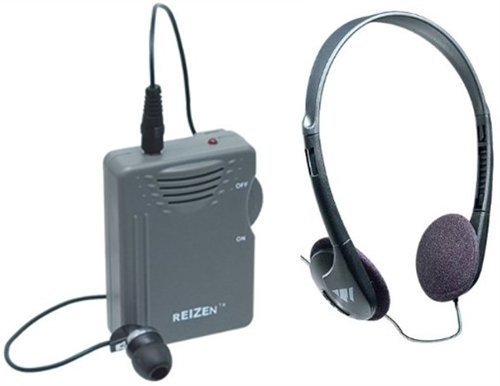
Reizen Loud Ear 120dB Gain Personal Amplifier
About this pick
Reizen markets this Elite Package with a 120 dB gain figure, a built-in microphone and a mini earphone. The page calls it a powerful personal amplifier for clear and loud hearing. It is the loudest claim in the lineup by a wide margin.
A number that high deserves caution, not excitement. Gain is not the same as comfortable listening volume, and sound that strong close to the ear can be harmful if the wheel is turned up. The listing says little beyond the headline figures, with no tone control, battery hours or other detail in the material we reviewed.
Compared with the Williams Sound's 20 to 40 dB range, the figures use different measures and should not be read side by side. Start at the lowest setting and move up slowly. It is for buyers who want maximum headroom and are prepared to be careful.
Best for: Careful users who want high output headroom and a simple built-in microphone.
Check price on AmazonSpecs
- Gain: 120 dB listed
- Microphone: Built-in
- Output: Mini earphone
- Package: Elite
Pros
- +Lists 120 dB gain, the highest claim here
- +Built-in microphone needs no extras
- +Mini earphone is small and light
- +Elite package arrives ready to try
Cons
- −Very high gain demands careful volume use
- −Listing gives little detail beyond the figures
- −No tone control or battery life stated
How We Evaluated These Personal Sound Amplifiers With Headphones
Each pick was assessed across 5 criteria weighted for real-world use.
Documented performance
We rewarded listings that publish gain and battery. The Williams Sound lists 20 to 40 dB and up to 100 hours, the IROGER lists up to 120 hours, and the Reizen lists 120 dB. The SuperEar kits publish neither.
Kit contents
We compared what ships in the box. The SE9000HP includes rechargeable cells, a charger and earbuds, the Williams Sound adds a headset, earbud and extension microphone, and the SE7500 includes two AAA cells.
Controls
Control design was compared. The IROGER and Reizen keep it to a knob, the SuperEar kits use a tactile wheel, and the Williams Sound adds tone. Fewer, bigger controls scored higher for ease.
Power and upkeep
We looked at the routine each power type requires. Built-in cells charge quickly but cannot be swapped, rechargeable AAs can be exchanged, and AAA cells must be replaced. Warranty terms were counted where listed.
Caution and clarity
Wording was weighed against what a consumer amplifier can claim. Pages that describe limits or state the device is not a hearing aid scored well. Value reflects what is included, not price.
How to Choose the Right Personal Sound Amplifiers With Headphones
By Power Preference
Power is the chore you repeat most often.
| Preference | Pick | Why |
|---|---|---|
| Longest listed hours | IROGER Rechargeable Amplifier with Headphone | Up to 120 hours |
| Swap spare cells fast | SuperEar SE9000HP Personal Sound Amplifier | Rechargeable AA |
| Replaceable cells, long run | Williams Sound PockeTalker Ultra DUO | Up to 100 hours |
| Batteries in the box | SuperEar SE7500 Personal Sound Amplifier | Two AAA |
| Stated nothing, simple | SuperEar SE5000 Sound Amplifier with Headphones | Check before buying |
Keep a spare power source at hand for any unit you rely on.
By Budget
Relative tiers describe what comes in the box.
| Tier | Pick | What you get |
|---|---|---|
| Entry | Reizen Loud Ear 120dB Gain Personal Amplifier | Built-in mic and earphone |
| Entry to mid | SuperEar SE5000 Sound Amplifier with Headphones | Headphones and earbuds |
| Mid | SuperEar SE7500 Personal Sound Amplifier | Kit with batteries |
| Mid to premium | IROGER Rechargeable Amplifier with Headphone | Rechargeable with auto gain |
| Premium | Williams Sound PockeTalker Ultra DUO | Documented gain, warranty and extras |
Documentation is worth more than a bigger number.
Rechargeable vs Replaceable Batteries
Each approach has a daily cost.
Rechargeable
A rechargeable unit needs a charging habit but avoids buying cells. The IROGER has a built-in cell and the SuperEar SE9000HP uses AA cells you can swap. Pick this if you will charge nightly.
Replaceable
Replaceable cells mean you can keep going with a spare. The Williams Sound and SuperEar SE5000 and SE7500 fall here. Pick this if you want an instant restart.
A habit you will keep matters more than the chemistry, and a spare set of cells is cheap insurance for any kit that relies on them.
By Control Style
How you adjust the sound matters in daily use.
| Style | Pick | Notes |
|---|---|---|
| One knob | IROGER Rechargeable Amplifier with Headphone | On, off and volume |
| Volume and tone | Williams Sound PockeTalker Ultra DUO | Separate controls |
| Large wheel | SuperEar SE9000HP Personal Sound Amplifier | Tactile |
| Plain wheel | SuperEar SE5000 Sound Amplifier with Headphones | Tactile |
| Built-in simple | Reizen Loud Ear 120dB Gain Personal Amplifier | Adjustable volume |
Try to use the control with cold or stiff hands, and check that the knob or wheel does not move when the unit sits in a pocket or on a belt clip.
For Everyday Conversation Specifically
Face-to-face talk needs pickup you can point.
Look for
Look for a microphone you can aim, tone control for voices and headphones that leave you comfortable for an hour. Keep the volume low and move closer to the speaker.
In this comparison
The Williams Sound has a removable microphone on an extension and tone control. The IROGER uses auto gain, and the SuperEar kits give you a wheel and a headset.
Hearing difficulty in conversation is worth a professional check.
When to Spend More
Spend on documentation and flexibility, not on volume.
| Spend more if | Save if |
|---|---|
| You want a warranty and stated gain, so choose the Williams Sound | A plain kit is enough, so the SuperEar SE5000 will do |
| You travel, so the SE9000HP dual-voltage charger helps | You stay home, so the SE7500 with AAA works |
| You want less to charge, so the IROGER lists 120 hours | You prefer swapping cells, so the Williams Sound suits |
| You want extra headroom, so consider the Reizen with care | You do not need it, so keep gain modest |
Ask the seller to confirm missing figures before you buy.
Frequently Asked Questions
Is a personal sound amplifier a hearing aid?
No. Hearing aids are regulated devices that are programmed to an individual's hearing, while a personal sound amplifier raises sound broadly. The Williams Sound page itself says it is not a hearing aid. See an audiologist if you notice hearing changes.
Which kit has the best documented specs?
The Williams Sound PockeTalker Ultra DUO lists 20 to 40 dB of acoustic gain, up to 100 hours of battery and a five year warranty. The IROGER lists charge time and hours. The SuperEar kits give very little, so the choice there rests on the accessories in the box and the look of the controls. If a detail you need is missing, ask the seller to confirm it in writing before you order.
Is 120 dB gain better?
Not automatically. Gain figures can be measured differently, and a high number just means more headroom. Sound close to the ear can be harmful, so a modest working volume is wiser.
Headphones or earbuds?
It depends on comfort and appearance. Headphones sit over the ear and are easier to handle, while earbuds are discreet but small. The Williams Sound and SuperEar kits let you try both.
How long do the batteries last?
The Williams Sound lists up to 100 hours and the IROGER up to 120, both depending on volume. The SuperEar kits do not state hours. Real life is shorter at a high setting.
Can I use these with a TV?
Some kits include a TV listening cord, such as the Williams Sound, while others simply pick up sound in the room. Check the listing before relying on a direct connection. Keep the TV at a normal level for others, then use the amplifier to fill the gap for the one listener who needs more. A short trial on a favorite program will tell you whether the cord length and the headset suit your chair.
How should I clean the headphones?
Wipe the ear pads and earbuds with a slightly damp cloth, never submerged, and let them dry fully. Replace worn pads and tips. Store the cord loosely coiled. Check the plug and the jack for lint, because a dirty connection can cause crackling that sounds like a fault in the amplifier. Keep the body away from moisture, pockets with keys and hot car dashboards.
Bottom Line
best overall: Williams Sound PockeTalker Ultra DUO Amplifier - best overall pick in this roundup.
See the full rankings above for all picks with pros, cons, and best-for summaries.
Browse on Amazon
All Prime-eligible options with current pricing.
Shop on Amazon →