7 Best Rechargeable Personal Sound Amplifiers in 2026
Seven rechargeable personal sound amplifiers compared on battery life, charging style, fit and gain limits, with clear notes on what they are not meant to do.




At a Glance
A rechargeable personal sound amplifier removes the small hassle of tiny zinc batteries, which is why this format has taken over the category. You charge it overnight, wear it through the day, and skip the fumbling with packets of cells. The seven models below run from a nearly invisible earpiece to a boxed set with stereo headphones.
One point matters before any comparison. A personal sound amplifier is a consumer gadget for boosting everyday sound, such as TV dialogue, a quiet restaurant table or birdsong on a walk. It is not a hearing aid, it is not fitted to your hearing, and it should not stand in for a hearing test. If voices seem muffled or you keep asking people to repeat themselves, an audiologist can tell you what is going on.
We evaluated each unit from its product page, its stated battery figures and the feedback pattern buyers describe. Where a listing gives no number, we say so instead of guessing. Keep the volume low at first, because loud sound close to the ear can be uncomfortable or harmful.
6 Criteria to Look For Before Buying a Rechargeable Personal Sound Amplifier
Key buying criteria so you get the right fit the first time.
Know what an amplifier is
A personal sound amplifier raises overall volume for people who want a boost in specific moments, and it is not fitted to a hearing profile the way a hearing aid is. That is why every pick here carries a reminder to get a hearing test if speech seems unclear. Treat any listing that promises to fix or treat hearing loss as a red flag. Even the strongest listed gain, the vimaydo at up to 45 dB, is a volume ceiling and not a clinical correction.
Battery life versus charge time
Rechargeable units trade battery swaps for charging, so the two numbers worth comparing are run time and charge time. The IROGER lists up to 120 hours and about one hour to charge, while the LIGINN lists about 48 hours with two to four hours to recharge. The MSA PRO at up to 20 hours suits a daily top-up routine. If you forget to charge often, favor long run time or quick charging.
Gain ceiling and volume control
More gain is not automatically better, because a high ceiling makes loud settings easier to reach. The vimaydo at up to 45 dB and the MSA PRO at 30x offer different headroom, and most listeners will use only the lower part of that range. Look for volume that is easy to feel, such as the SuperEar wheel or the LapEasy stepped levels. Always start at the lowest setting and raise slowly.
Fit style and comfort
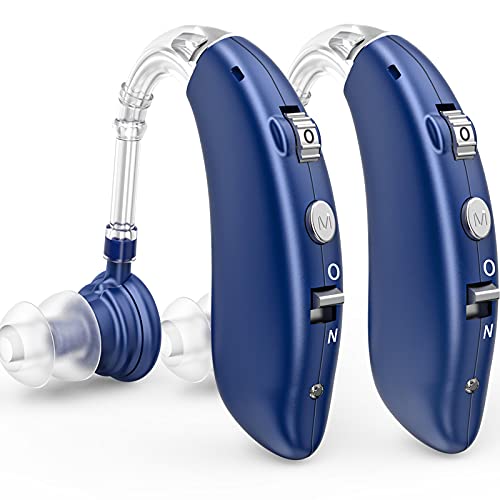
Behind-the-ear bodies like the vimaydo and the Walker's carry more electronics and sit securely, while the MSA PRO prioritizes a small footprint. The SuperEar goes a different way with a wired body unit and stereo headphones. Ear tip size changes both comfort and sound, which is why the LIGINN with eight domes is helpful. If you wear glasses, check that a BTE body does not crowd the temple arm.
Noise handling and microphone
Amplifiers boost background noise along with speech, so noise handling matters in cafes and at dinner tables. The IROGER pairs auto-gain with a directional microphone, and the LapEasy advertises a noise-reduction chip. The Walker's cites a 22 dB noise reduction rating, but that is aimed at loud outdoor impulses. Be skeptical of percentage claims with no stated method.
Ease of daily handling
A device you struggle to operate ends up in a drawer. Buttons that are too small, domes that are hard to swap, or a charging port that is hard to align can all become daily annoyances. The SuperEar wheel and LIGINN case reduce fumbling, while the MSA PRO is smaller to handle. If hand strength or vision is limited, choose the unit with the largest controls.
7 Best Rechargeable Personal Sound Amplifiers in 2026
MSA PRO Sound Amplifier 30X
About this pick
The MSA PRO is built around staying out of sight. The listing describes a small, light body that is nearly invisible once worn, and it advertises amplification of 30 times. That makes it the most low-profile unit here for someone who does not want a visible gadget in a conversation.
The tradeoff of a small shell is limited room for controls and battery. The listed run time of up to 20 hours of continuous use is respectable for a unit this small, but it is shorter than the 40 hours claimed by the vimaydo or the 120 hours claimed by the IROGER. Pages for compact units often leave charge time and ear tip sizes vague, so read the product page before ordering.
In ownership terms, a small earpiece is easy to misplace and easier to lose in a coat pocket than a bigger BTE unit. It suits a person who wants occasional boosts in quiet settings and values looks over long battery life. Compared with the LIGINN pair at about 48 hours of use per charge, you will charge this one more often.
Best for: Someone who wants a barely noticeable amplifier for conversations and TV in quiet rooms.
Check price on AmazonSpecs
- Amplification: 30x listed
- Battery run time: Up to 20 hours
- Style: Small, low profile
Pros
- +Small body that is described as barely visible
- +Lists amplification of 30 times
- +Up to 20 hours on one charge per the listing
- +Light enough to wear for a full evening
Cons
- −Shorter run time than the longest listings here
- −Tiny parts are easy to drop or misplace
- −Listing says little about charge time or tips
vimaydo Rechargeable Hearing Amplifier BTE
About this pick
The vimaydo is the highest-gain unit in this group on paper, with the listing giving up to 45 dB of amplification. Its behind-the-ear shape carries the electronics in a body that rests over the ear, which leaves room for a bigger rechargeable cell. The page cites up to 40 hours on a full charge, so it can last several days of casual use.
That much gain is a double-edged feature. A high ceiling means a small volume tweak can be louder than expected, so start at the lowest setting and move up in small steps. The page does not state a weight, a charge time or how many units come in the pack, which makes it harder to judge value against sets like the LIGINN that spell out contents.
Day to day, a built-in rechargeable cell means no button batteries to swap, which suits anyone with limited finger dexterity. Against the MSA PRO at 30x and 20 hours, the vimaydo gives you more headroom and more run time but a more visible profile. Buyers who rarely need that much boost will probably leave it near the bottom of its range.
Best for: Listeners who want a high gain ceiling and multi-day battery in a behind-the-ear shape.
Check price on AmazonSpecs
- Gain: Up to 45 dB
- Battery run time: 40 hours listed
- Style: Behind the ear
Pros
- +Lists up to 45 dB of gain, the highest here
- +Lists 40 hours per full charge
- +Built-in cell avoids button batteries
- +Behind-the-ear body is light to wear
Cons
- −High gain calls for extra caution with volume
- −Pack quantity is not clear on the listing
- −No charge time or weight is given
LapEasy Rechargeable Sound Amplifier
About this pick
The LapEasy leans on durability talking points. Its page describes a nano-coated shell that is sweat-proof and waterproof, and it names FCC and RoHS compliance, which signals basic electronics and materials checks rather than any medical clearance. An upgraded chip is said to cut noise further than a standard one, and the maker offers selectable volume levels.
Those claims are hard to verify. The page quotes a percentage improvement in noise reduction but gives no gain figure and no battery life, so you cannot compare it numerically with the vimaydo or the IROGER. Treat the water language as marketing: a sweaty walk is different from a swim, and a coating can wear over time.
It makes sense for someone who walks or gardens and does not want to baby the device. In ownership, a few discrete volume levels are simpler than a wheel for people who find fine adjustment fiddly. Next to the SuperEar boxed set, it is a lighter, more pocketable option but offers fewer included accessories.
Best for: Active wearers who want a sweat-resistant shell and simple stepped volume.
Check price on AmazonSpecs
- Shell: Nano-coated
- Compliance: FCC, RoHS noted
- Volume: Selectable levels
Pros
- +Nano-coated shell with listed sweat resistance
- +FCC and RoHS compliance is mentioned
- +Upgraded chip aimed at noise reduction
- +Stepped volume levels are simple to use
Cons
- −No gain or battery figure in the text
- −Noise reduction percentage cannot be verified
- −Water claims are broad and unspecific
IROGER Hearing Amplifier Auto-Gain
About this pick
The IROGER has the longest battery claim in this lineup, up to 120 hours, plus a one-hour full charge. Those two numbers together mean a quick top-up can cover many days. Its smart auto-gain control is meant to balance levels automatically, so sudden loud sounds are not boosted as hard as quiet speech.
A directional microphone focuses on sound in front of the wearer and reduces what comes from the sides. That helps at a dinner table when you face your companion, but it can miss a person who speaks from behind you. Auto-gain systems also act differently from one product to the next, and the listing does not explain how aggressive this one is.
In ownership, fast charging means the unit is rarely out of action, and a long run time suits travel. Compared with the MSA PRO at 20 hours or the LIGINN at about 48, it needs far fewer charges. The tradeoff is that you rely on automatic behavior rather than a manual control you can feel with your fingers.
Best for: People who want the fewest charging sessions and a mic that favors the person in front.
Check price on AmazonSpecs
- Charge time: About 1 hour
- Battery run time: Up to 120 hours listed
- Microphone: Directional
Pros
- +Lists up to 120 hours of use per charge
- +About one hour to charge fully
- +Auto-gain evens out sudden loud sounds
- +Directional mic favors the person facing you
Cons
- −Auto-gain behavior is not explained in detail
- −Mic may miss speakers behind or beside you
- −Listing gives no gain ceiling in dB
LIGINN Rechargeable Hearing Amplifier Set
About this pick
The LIGINN is sold as a complete set. The box contains two rechargeable units, eight domes in different sizes and two cleaning tools, plus a small charging case that makes it easy to carry. That is a useful package for a first purchase because ear tip fit decides comfort and sound more than most buyers expect.
The page gives a charge time of two to four hours and about 48 hours of use, which sits in the middle of this lineup. It describes the shape as small and light, but gives no gain figure, so treat volume carefully and try a lower setting first. Having a pair also means you can test one ear at a time and see whether two feels better than one.
Ownership comes down to keeping the domes clean and swapping them when they get worn. Against the IROGER at 120 hours, you will charge more often, but the case keeps charging tidy. If you are buying for someone who may lose a single unit, a pair with spare domes is a practical hedge.
Best for: First-time buyers who want spare domes, cleaning tools and a pair of units in one box.
Check price on AmazonSpecs
- Charge time: 2 to 4 hours
- Battery run time: About 48 hours
- In the box: 2 units, 8 domes, 2 cleaners
Pros
- +Two units, eight domes and cleaners in the box
- +Roughly 48 hours of use per charge
- +Charges fully in about two to four hours
- +Small, light body with a carry case
Cons
- −No gain figure appears in the listing
- −Charge time is longer than the IROGER
- −Dome sizing takes some trial and error
SuperEar SE9000HP Hearing Amplifier
About this pick
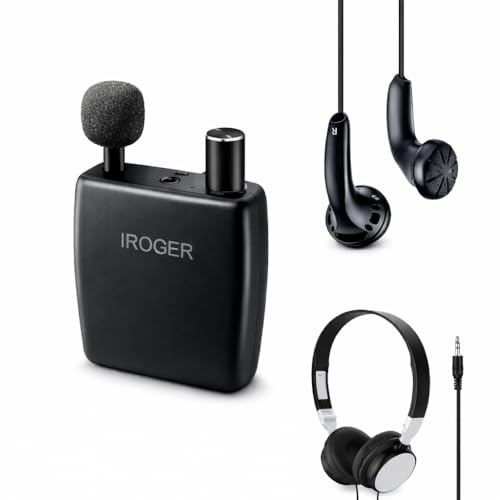
The SuperEar SE9000HP is the odd one out here, because it is a body-worn unit rather than an earpiece. The box includes the amplifier, rechargeable AA batteries, a 110V/240V charging cube, a USB cable and stereo headphones, along with discreet earbuds. A tactile volume wheel gives you something big to turn without looking.
That large control is a real plus for stiff or unsteady fingers, and a pocket or lanyard unit is easy to hold up to a speaker or place on a table. The cost is bulk: there is a wire between the device and your ears, and the setup is more visible and less convenient on a walk than the MSA PRO or the vimaydo.
It suits living-room listening, a lecture hall or a quiet reading chair, where wearing a wire is no problem. The AA cells can be swapped for freshly charged spares, so a long evening never stops on a dead battery. Compared with the LapEasy shell, this one favors comfort and control over discretion.
Best for: Seated listeners who want a big volume wheel and headphone-style comfort for TV or talks.
Check price on AmazonSpecs
- Power: Rechargeable AA cells
- Charger: 110V/240V cube, USB cable
- Control: Tactile volume wheel
Pros
- +Large tactile volume wheel is easy to find
- +Includes headphones, earbuds and charging cube
- +Rechargeable AA cells can be swapped fast
- +Works on 110V or 240V for travel
Cons
- −Wired body unit is bulkier than earpieces
- −Cable can snag when moving about
- −Less discreet than in-ear models here
Walker's Ultra Ear BTE Rechargeable
About this pick
Walker's Ultra Ear is aimed at hunting and outdoor listening, and its page highlights a 22 dB noise reduction rating along with a 105 dB volume limit. The idea is that it boosts quiet sounds like footsteps while limiting sudden loud ones such as a gunshot. Adjustable frequency tuning lets you shift emphasis toward the sounds you care about.
Those numbers do not make it a general-purpose listening aid. A 105 dB ceiling is a high output limit, so it should be used with real care in daily life, and the unit is designed for outdoor situational awareness more than conversation. Hunters and walkers will get the most out of it, while a retiree who mainly wants clearer TV will find friendlier options here.
Ownership is simple: a behind-the-ear body that charges, with controls tuned to field use. Against the vimaydo, which targets everyday amplification, the Walker's trades some comfort-first design for ruggedness and protection. It is not a medical device, and anyone with real hearing difficulty should get a hearing test first.
Best for: Outdoor users who want amplification with a built-in limit on loud noise.
Check price on AmazonSpecs
- Noise reduction: 22 dB rating
- Volume limit: 105 dB
- Tuning: Adjustable frequency
Pros
- +Lists a 22 dB noise reduction rating
- +Output limited to 105 dB per the listing
- +Adjustable frequency tuning for sound focus
- +Behind-the-ear shape stays put outdoors
Cons
- −Designed for hunting rather than daily chat
- −105 dB limit is high for casual use
- −Few comfort accessories listed
How We Evaluated These Rechargeable Personal Sound Amplifiers
Each pick was assessed across 5 criteria weighted for real-world use.
Battery and charging
We compared stated run times and charge times across the lineup. The IROGER leads on listed endurance at up to 120 hours, the vimaydo follows at 40 hours, and the MSA PRO sits at 20 hours. Where a listing gave no charge time, we noted the gap instead of estimating one.
Gain and safety limits
We looked for stated gain figures and output limits, such as the vimaydo at 45 dB and the Walker's 105 dB cap. Higher numbers earned credit for headroom but not blindly, because loud settings near the ear are a risk. Listings with no gain figure were marked as lacking.
Comfort and fit options
We weighed body style, tip options and what is included in the box. The LIGINN stood out with eight domes and cleaning tools, while the SuperEar offers headphones for comfort. Compact units like the MSA PRO scored for discretion rather than accessory depth.
Ease of control
We assessed how readily a person with limited dexterity could change volume or charge the unit. The SuperEar volume wheel and the LapEasy stepped levels led here. Small earpieces were credited for light weight but docked for tiny controls.
Claim transparency
We scored how honest each listing is about what it can do. Pages that avoid medical claims and give real numbers did better than ones with unverifiable percentage promises. This is based on product specs and buyer feedback, not hands-on measurement.
How to Choose the Right Rechargeable Personal Sound Amplifiers
By Charging Habits
How often you are willing to plug in is the quickest filter.
| Situation | Pick | Reason |
|---|---|---|
| You forget to charge for days | IROGER Hearing Amplifier Auto-Gain | Lists up to 120 hours of use |
| You want a multi-day unit with a pair | LIGINN Rechargeable Hearing Amplifier Set | About 48 hours and a carry case |
| You charge nightly anyway | MSA PRO Sound Amplifier 30X | Up to 20 hours is plenty for one day |
| You want swappable cells for long evenings | SuperEar SE9000HP Hearing Amplifier | Rechargeable AA cells swap quickly |
| You want long life without a cable | vimaydo Rechargeable Hearing Amplifier BTE | Lists 40 hours per charge |
Listed run times are best-case figures, so expect less at higher volume.
By Budget
Relative tiers help when the lineup is this varied.
| Tier | Pick | What you get |
|---|---|---|
| Entry | LapEasy Rechargeable Sound Amplifier | Basic coated shell and stepped volume |
| Entry | MSA PRO Sound Amplifier 30X | Compact build and 30x listed amplification |
| Mid | LIGINN Rechargeable Hearing Amplifier Set | Two units, domes and cleaning tools |
| Mid | vimaydo Rechargeable Hearing Amplifier BTE | 45 dB ceiling and 40 hour listing |
| Premium | SuperEar SE9000HP Hearing Amplifier | Full accessory kit and tactile control |
The IROGER and Walker's sit between tiers depending on features you value.
In-Ear Style vs Wired Body Unit
The form factor changes how you live with the device.
In-ear or behind-the-ear
These sit on the ear and move with you, which suits walks, errands and restaurants. The MSA PRO, vimaydo, LapEasy, IROGER, LIGINN and Walker's all fall here. Choose this if discretion and mobility matter more than big controls.
Wired body unit
The SuperEar SE9000HP keeps the electronics in a handheld or pocket box and sends sound through headphones or earbuds. The wheel is easy to find and the cells are swappable. Choose this if you mostly listen while seated and want simple controls.
Pick the in-ear styles for mobility and the SuperEar for living-room comfort.
By Listening Setting
Where you listen most should drive the microphone and noise choices.
| Setting | Pick | Why |
|---|---|---|
| Face-to-face dinner | IROGER Hearing Amplifier Auto-Gain | Directional mic favors the front |
| TV and reading chair | SuperEar SE9000HP Hearing Amplifier | Headphones and big volume wheel |
| Outdoor walks and birdsong | Walker's Ultra Ear BTE Rechargeable | 22 dB rating and 105 dB limit |
| Quiet rooms and lectures | MSA PRO Sound Amplifier 30X | Small and nearly invisible |
No pick here is a substitute for a hearing test.
For First-Time Users Specifically
A new wearer needs forgiving fit and safe volume.
Look for
Look for several dome sizes, a clear way to change volume and honest listing language. A pair lets you try one ear first. Keep volume low for the first week and take breaks.
In this comparison
The LIGINN supplies eight domes and two cleaners, which helps with trial fitting. The LapEasy offers stepped levels that are easy to understand. The SuperEar suits those who prefer headphones over an in-ear tip.
If sound feels unclear even when amplified, book a hearing test.
When to Spend More
A bigger outlay only pays off in certain cases.
| Spend more if | Save if |
|---|---|
| You want the vimaydo's 45 dB headroom and 40 hour battery | You only need the MSA PRO for occasional quiet-room boosts |
| You want the SuperEar's accessories and large wheel | You mostly walk and prefer the lighter LapEasy |
| You need the IROGER's 120 hour listing for travel | You charge nightly and can live with 20 hours |
| You want the LIGINN's spare domes for tricky fit | Your ear fits the standard tip already |
If hearing worries are growing, spend on an audiologist visit before an amplifier.
Frequently Asked Questions
Is a personal sound amplifier the same as a hearing aid?
No. A personal sound amplifier is a consumer device that boosts sound in general, while a hearing aid is a medical device fitted to an individual's hearing. Amplifiers are not tuned to your hearing, and listings making treatment claims should be treated with caution. If you suspect hearing loss, see an audiologist.
Which amplifier here lasts longest between charges?
The IROGER lists up to 120 hours, followed by the LIGINN at about 48 hours and the vimaydo at 40 hours. The MSA PRO lists up to 20 hours of continuous use. Real-world time drops at higher volume, so treat these as upper bounds.
How loud should I set it?
Start at the lowest setting and raise it only until speech is comfortable. Loud sound close to the ear can be uncomfortable or damaging, and a high gain ceiling like 45 dB makes loud settings easy to reach. If you need maximum volume most of the time, get a hearing test.
Does a higher dB number mean better hearing help?
Not necessarily. Gain only tells you how much louder a sound can get, not how clear it will be. Fit, microphone design and noise handling shape clarity, and most people use only the lower part of any range.
Are these safe to wear in the rain or while sweating?
The LapEasy lists a sweat-proof, waterproof coating, but the wording is broad and not a tested rating. Treat all of these as splash-cautious at best, dry them after use and keep them out of showers and pools.
Why is the SuperEar not an earpiece?
The SE9000HP is a body-worn unit with a wire to headphones or earbuds. That allows a large volume wheel and swappable AA cells, which some listeners prefer. It is less discreet on the go.
How do I clean and care for the tips?
Wipe the tips with a dry cloth, replace worn domes and keep ports free of wax. The LIGINN ships with cleaning tools and spare domes, which makes upkeep easier. Never rinse the electronics unless the maker states it is safe.
Bottom Line
best overall: MSA PRO Sound Amplifier 30X - best discreet pick pick in this roundup.
See the full rankings above for all picks with pros, cons, and best-for summaries.
Browse on Amazon
All Prime-eligible options with current pricing.
Shop on Amazon →