Wi-Fi Extender vs Mesh Wi-Fi: 6 Extenders to Consider in 2026
Wi-Fi extender vs mesh: how each works, when one weak room needs an extender, and six extenders to compare before you buy a system.




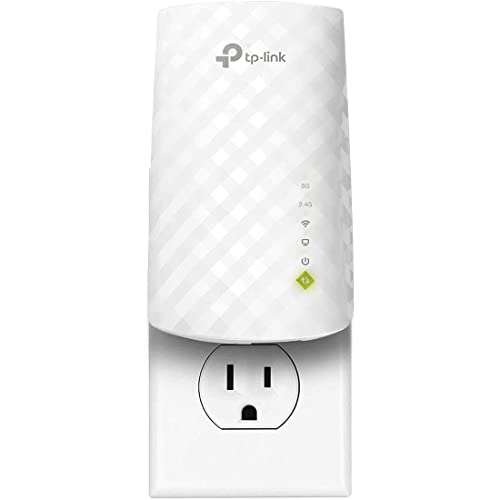

At a Glance
The choice between an extender and a mesh system is really a question about how many rooms have weak Wi-Fi and how much you want to rebuild. A single plug-in extender is a small, inexpensive fix aimed at one area. A mesh system replaces or joins your router with several matched units, so it is a bigger project that pays off when many rooms are involved.
This guide explains the difference in plain terms and then ranks six extenders for readers who decide the extender route is enough. We evaluated them based on product specs and buyer feedback, comparing bandwidth class, rated area, antenna design and extras such as Ethernet. The six picks here are all extenders, and mesh is covered as the alternative you should rule in or out first.
A good rule is that one dead room points to an extender and several dead rooms point to mesh. The sections below show where the line falls and which extender is worth buying if you stay on the cheaper side of it.
6 Criteria to Look For Before Buying a Wi-Fi Extender vs Mesh Wi-Fi: 6 Extenders to Consider
Key buying criteria so you get the right fit the first time.
How many rooms are weak
The single most useful number in this decision is how many rooms lose signal. One dead room points toward an extender such as the RE315 at 1500 sq ft, while three or four dead rooms point toward mesh. Each extender you add creates another hop and another thing to troubleshoot, so stacking several quickly loses its cost advantage. Count the rooms in a typical day before spending anything.
One network name or two
Mesh systems give one network name with seamless handoff, while many extenders create a second name. That matters for phones and tablets that you carry around the house, because they may hold onto the weaker signal. Stationary devices such as a TV or desktop do not care. If most of your devices move, mesh has a real advantage that the EX5000 or AX3000 cannot match.
Wired backhaul options
An Ethernet port lets you connect a device by cable, and an AP mode can turn a wired feed into Wi-Fi. The PEDUMMY lists both, and the TP-Link N300 model includes an Ethernet port. A cable to the far room is better than a wireless hop because it removes the speed penalty of repeating. If your house has existing Ethernet runs, use them.
Generation match with your router
An extender is limited by what it receives from the router. The AX3000 at 3 Gbps benefits from a Wi-Fi 6 router, while the RE550 at 1.9 Gbps and the RE315 at 1.2 Gbps suit Wi-Fi 5. Buying a Wi-Fi 6 extender for an old router wastes the headroom. Check the router first, and if it is very old, a mesh upgrade may be the better spend.
Rated area and honest placement
Coverage ratings such as 1500 sq ft, 2100 sq ft and 2400 sq ft are open-space maximums, so walls reduce them. Place the extender roughly midway where the signal is still strong, because one inside the dead zone only rebroadcasts a weak signal. A unit rated for 1200 sq ft like the N300 TP-Link model is meant for a studio, not a sprawling house. Buy for the room, not the rating.
Cost of growing later
An extender is cheap now but can cost more if you must keep adding units. A mesh system costs more up front and scales with extra nodes. If you expect to move, upgrade your router or add smart devices, plan for the path with more room to grow. The six extenders here suit the first step, and mesh is the second step if the first falls short.
Wi-Fi Extender vs Mesh Wi-Fi: 6 Extenders to Consider in 2026
TP-Link AX3000 WiFi 6 Dual-Band Range Extender
About this pick
The TP-Link AX3000 is the most capable extender here, with a Wi-Fi 6 standard, a 3 Gbps total rating and up to 2404 Mbps on 5GHz. Two high-gain directional antennas with beamforming focus signal toward your devices. It is rated for up to 2400 sq ft, the largest area among the name-brand extenders in this comparison.
It is the one extender that starts to overlap with mesh on coverage, so it is the pick when a single unit has to cover a big floor. The catch is that an extender still rebroadcasts what it receives, and it may create a second network name that your phone will not switch to automatically. Mesh systems avoid that with one name and seamless handoff, which is why this pick is still a compromise for roaming devices.
In practice you plug it in where the router signal is still strong, then walk toward the weak room and check the result. Compared with the RE550 at 2100 sq ft and 1.9 Gbps, it has the newer standard and 300 more rated square feet. Compared with the RE315 at 1500 sq ft, it covers a noticeably larger layout but only pays off with a Wi-Fi 6 router.
Best for: A larger home with a Wi-Fi 6 router where a mesh system feels like overkill.
Check price on AmazonSpecs
- Wi-Fi standard: Wi-Fi 6 (AX3000)
- 5GHz speed: Up to 2404 Mbps
- Rated coverage: Up to 2400 sq ft
- Antennas: Two high-gain directional, beamforming
Pros
- +Wi-Fi 6 with 3 Gbps total and 2404 Mbps on 5GHz
- +Largest name-brand coverage rating here at 2400 sq ft
- +Beamforming directional antennas target devices
- +Can stand in for a small mesh in some layouts
Cons
- −May create a second network name unlike mesh
- −Needs a Wi-Fi 6 router to use the headroom
- −Highest tier among the extender options
TP-Link AC1900 WiFi Range Extender RE550
About this pick
The RE550 is an AC1900 Wi-Fi 5 extender with 1.9 Gbps of total bandwidth, a 2100 sq ft rating and three adjustable external antennas. TP-Link lists it as a dual-band wireless repeater and notes a cybersecurity commitment tied to CISA. It is the practical middle of the group, with enough range for a two-story home and no demand for a new router.
The antennas let you tweak the pattern after installation, which is useful in a house with an awkward shape. Extenders like this one rebroadcast your router's signal, so they inherit its limits. If the router sits at one end of a long house, one RE550 often fixes the far end without the commitment of a mesh kit.
Maintenance is minimal, as there is nothing to charge or refill, though you may re-aim the antennas once. Against the AX3000 at 2400 sq ft, it gives up the newer standard but fits older routers better. Against the RE315 at 1500 sq ft and 1.2 Gbps, it adds 600 sq ft of rated area and a third antenna.
Best for: A two-story or long home with a Wi-Fi 5 router and one problem end.
Check price on AmazonSpecs
- Wi-Fi standard: Wi-Fi 5 (AC1900)
- Total bandwidth: Up to 1.9 Gbps
- Rated coverage: Up to 2100 sq ft
- Antennas: Three adjustable external
Pros
- +1.9 Gbps total bandwidth without a Wi-Fi 6 router
- +2100 sq ft rating suits a two-story home
- +Three adjustable antennas fit awkward floor plans
- +Cheaper and simpler than adding a full mesh
Cons
- −Rebroadcasts the router so inherits its limits
- −Wi-Fi 5 only, with no Wi-Fi 6 efficiency
- −Three antennas stand out on a wall outlet
TP-Link AC1200 WiFi Extender RE315
About this pick
The RE315 is a compact AC1200 dual-band extender with 867 Mbps on 5GHz, 1.2 Gbps of total bandwidth and a 1500 sq ft rating. Two adjustable external antennas help you direct coverage, and Adaptive Path Selection is TP-Link's feature for finding a better path back to the router. It is a textbook one-room fix.
That is the key point in the extender-versus-mesh debate. When only one area is weak, a single inexpensive unit solves the problem with no new network name to manage on most devices you would use only in that room. It would be the wrong tool for a house with several dead rooms, where each extra extender adds another hop and another place to troubleshoot.
Ownership is gentle, with plug-in setup and a single decision about placement. In comparison with the NETGEAR EX5000, which lists the same 1.2 Gbps and 1,500 sq ft, the RE315 stays inside TP-Link's tools. Compared with the RE550 at 2100 sq ft, it covers less but is a better fit for a smaller home.
Best for: A single dead bedroom or office in an otherwise fine network.
Check price on AmazonSpecs
- Wi-Fi standard: Wi-Fi 5 (AC1200)
- 5GHz speed: 867 Mbps
- Rated coverage: Up to 1500 sq ft
- Smart feature: Adaptive Path Selection
Pros
- +867 Mbps on 5GHz is plenty for one room
- +Two adjustable antennas help tune coverage
- +Adaptive Path Selection to improve the router link
- +Simple single-unit fix instead of a new system
Cons
- −1500 sq ft rating is an open-space best case
- −Not enough for several dead rooms at once
- −Wi-Fi 5 only
NETGEAR WiFi Extender EX5000
About this pick
The NETGEAR EX5000 is a Wi-Fi 5 extender with up to 1.2 Gbps across two bands and 1,500 sq ft of rated coverage. NETGEAR aims it at bedrooms, garages, basements and backyards, with the Nighthawk app guiding setup or a WPS press on the router and the extender. It is built for HD video, calls and everyday devices where the signal was weak.
It shows the case for choosing an extender, which is a low-effort route to fix a small number of spaces. The app is the draw for people who do not want to deal with router settings. The cost of that simplicity is the same as for any extender, which is that moving between rooms may leave your device clinging to the router.
Compared with the RE315, it matches the bandwidth and area, so the real choice is which setup experience you prefer. Compared with a mesh system, the EX5000 will not unify your network name or roam devices automatically. If you outgrow it, the sensible step is a mesh kit rather than a second EX5000.
Best for: A first-time extender buyer who wants guided app setup.
Check price on AmazonSpecs
- Wi-Fi standard: Wi-Fi 5 (AC1200)
- Total bandwidth: Up to 1.2 Gbps
- Rated coverage: Up to 1,500 sq ft
- Setup: Nighthawk app or WPS
Pros
- +Guided Nighthawk app or one-press WPS pairing
- +1.2 Gbps across two bands for HD and calls
- +Aimed at basements, garages and bedrooms
- +Cheap way to test whether an extender solves your problem
Cons
- −Does not unify network names like mesh does
- −1,500 sq ft is a best-case rating
- −Level with the RE315 on specs
TP-Link WiFi Extender with Ethernet Port, Dual Band
About this pick
This TP-Link model is a dual-band extender with an Ethernet port, advertised as giving up to 44 percent more bandwidth than single-band N300 extenders. It covers up to 1200 sq ft, the smallest rating in this group. It is the entry point for anyone who wants a wired connection from the extender.
The Ethernet port changes how you can use it, because a TV, console or desktop can plug in by cable and avoid the wireless hop. That kind of wired connection is a classic reason to choose an extender, since a mesh node for one TV would be excessive. The tradeoff is that its bandwidth class is far lower than the AC1900 and AX3000 models.
It fits a smaller space such as a studio, a spare room or a single living area. Compared with the PEDUMMY at 867 Mbps on 5GHz and 300 Mbps on 2.4GHz, this one lists a lower class but comes from a name brand. Compared with the RE315 at 1500 sq ft, it gives up area and speed for a wired port.
Best for: A TV or desktop that needs a cable in a small room.
Check price on AmazonSpecs
- Class: N300 dual-band
- Bandwidth claim: Up to 44% more than single-band N300
- Rated coverage: Up to 1200 sq ft
- Wired: Ethernet port
Pros
- +Ethernet port for a cabled TV or console
- +Dual-band design rather than single-band
- +Smallest, simplest option for a studio or spare room
- +Name-brand support behind a basic unit
Cons
- −N300 class has far less bandwidth than the AC models
- −1200 sq ft is the smallest rated area
- −Not suited to a whole-home layout
PEDUMMY WiFi Extender 1200Mbps Dual Band
About this pick
The PEDUMMY extender lists 1200 Mbps total, with 867 Mbps on 5GHz and 300 Mbps on 2.4GHz, and claims up to 5200 sq ft of coverage. It includes an Ethernet LAN port and an AP mode, which lets it create Wi-Fi from a wired connection instead of repeating a wireless one. The coverage claim is large and should be treated with caution.
AP mode is the feature that blurs the line with mesh, because a cable back to the router gives a stronger feed than a wireless hop. If you can run Ethernet to the far room, an access point there often works better than repeating wirelessly. That is a real tip for people weighing a mesh purchase.
The unit is plain and does not offer the app polish of NETGEAR or TP-Link. Compared with the RE550 at 2100 sq ft, its 5200 sq ft claim is more than double, though the number is not comparable like for like. Compared with the N300 TP-Link model, it has the higher bandwidth class at the same wired option.
Best for: A home where an Ethernet cable can reach the far room.
Check price on AmazonSpecs
- 5GHz speed: 867 Mbps
- 2.4GHz speed: 300 Mbps
- Listed coverage: Up to 5200 sq ft
- Modes: Repeater and access point
Pros
- +Access point mode can run from a wired feed
- +867 Mbps on 5GHz and 300 Mbps on 2.4GHz
- +Ethernet LAN port for a TV or console
- +Higher bandwidth class than the N300 option
Cons
- −5200 sq ft claim is hard to compare with branded ratings
- −Less polish and support than major brands
- −Plain setup without a guided app
How We Evaluated These Wi-Fi Extender vs Mesh Wi-Fi: 6 Extenders to Consider
Each pick was assessed across 5 criteria weighted for real-world use.
Fit for a single-problem home
We judged how well each extender solves one weak area, which is the job an extender does best. The RE315 at 1500 sq ft, the EX5000 at 1,500 sq ft and the N300 TP-Link at 1200 sq ft are tuned to that scenario. Units with more range earned credit only when they stayed simple to set up.
Bandwidth and generation
We compared the bandwidth class and Wi-Fi generation of each pick. The AX3000 leads with Wi-Fi 6 and 3 Gbps, the RE550 follows at 1.9 Gbps, and the RE315 and EX5000 tie at 1.2 Gbps. The PEDUMMY lists 1200 Mbps and the N300 model sits lowest in class.
Mesh-like features
We looked for extender features that approach mesh benefits, based on product specs and buyer feedback. The PEDUMMY offers AP mode and an Ethernet port, and the RE315 offers Adaptive Path Selection. None of these six unify the network name the way a mesh system does.
Setup and placement
We checked how each unit is paired and positioned. The EX5000 has a guided Nighthawk app, the RE550 and RE315 offer adjustable antennas, and the AX3000 uses directional antennas that reward careful aiming. Simpler pairing scored higher for non-technical owners.
Lineup positioning
We placed the picks against each other and against the mesh alternative. The AX3000 leads on range at 2400 sq ft, the RE550 at 2100 sq ft covers the mid-size home, and the RE315 and EX5000 cover a single area. The N300 TP-Link and PEDUMMY lead for wired devices.
How to Choose the Right Wi-Fi Extender vs Mesh Wi-Fi: 6 Extenders to Consider
By Number of Weak Rooms
Counting the rooms with poor signal is the cleanest way to decide between an extender and a mesh system.
| Weak rooms | Best pick | Reason |
|---|---|---|
| One bedroom or office | TP-Link AC1200 WiFi Extender RE315 | 867 Mbps on 5GHz and 1500 sq ft cover a single room |
| One end of a long house | TP-Link AC1900 WiFi Range Extender RE550 | 2100 sq ft and three adjustable antennas |
| Two rooms on one side, Wi-Fi 6 router | TP-Link AX3000 WiFi 6 Dual-Band Range Extender | 2400 sq ft with beamforming |
| Three or more rooms spread out | Consider a mesh system instead | More extenders add hops and second network names |
| One room, guided setup wanted | NETGEAR WiFi Extender EX5000 | Nighthawk app handles pairing |
Three or more weak rooms is the point where most households should look at mesh instead.
By Budget
Tiers are relative and do not quote prices, since they change often.
| Tier | Pick | What you get |
|---|---|---|
| Entry | TP-Link WiFi Extender with Ethernet Port, Dual Band | N300 class and 1200 sq ft with a cabled port |
| Entry to mid | PEDUMMY WiFi Extender 1200Mbps Dual Band | 1200 Mbps, AP mode and Ethernet |
| Mid | TP-Link AC1200 WiFi Extender RE315 | 867 Mbps on 5GHz for a single room |
| Mid | NETGEAR WiFi Extender EX5000 | Same class with app-guided setup |
| Upper mid | TP-Link AC1900 WiFi Range Extender RE550 | 1.9 Gbps and 2100 sq ft |
| Premium | TP-Link AX3000 WiFi 6 Dual-Band Range Extender | Wi-Fi 6 and 3 Gbps |
Extender vs Mesh System
Both aim to remove dead zones, but they work very differently, and each suits a different house.
Extender
An extender picks up your router's signal and rebroadcasts it from a new spot, often under a second network name. It costs less and installs in minutes, and it is an effective fix for one weak area. All six picks here are in this camp, from the RE315 at 1500 sq ft to the AX3000 at 2400 sq ft. Choose an extender if one or two rooms are the problem.
Mesh system
A mesh system uses several matched units that share one network name, with devices handed off automatically as you move. It is better when several rooms are weak and when devices roam. It generally costs more and needs more setup. Choose mesh if your dead zones are spread across the house.
None of the six picks here are mesh units, so skip them if roaming is your main concern.
Wired vs Wireless Backhaul
How the extender talks to the router matters as much as the extender itself.
| Situation | Best pick | Reason |
|---|---|---|
| Ethernet cable reaches the far room | PEDUMMY WiFi Extender 1200Mbps Dual Band | AP mode builds Wi-Fi from a wired feed |
| TV in the weak room needs a cable | TP-Link WiFi Extender with Ethernet Port, Dual Band | Ethernet port avoids the wireless hop |
| No cable possible, long house | TP-Link AC1900 WiFi Range Extender RE550 | Wireless link with 2100 sq ft of rating |
| No cable, strong Wi-Fi 6 router | TP-Link AX3000 WiFi 6 Dual-Band Range Extender | Highest wireless headroom of the six |
For Phones and Roaming Specifically
Phones and tablets that move around the house are where extenders show their weakness.
Look for
Look for one network name, automatic handoff and a system built to roam. If a device moves between rooms all day, a second network name will cause drops. Stationary devices are far more forgiving of an extender.
In this comparison
The TP-Link AX3000 WiFi 6 Dual-Band Range Extender is the strongest wireless extender for a mixed household. The NETGEAR WiFi Extender EX5000 is fine for a stationary TV or tablet in one room. For heavy roaming, none of the six replace a mesh system.
When to Spend More
Spend more when the layout, not the speed rating, is the real problem.
| Spend more if | Save if |
|---|---|
| Your house needs 2400 sq ft of rated area, which favors the AX3000 | Only 1500 sq ft is in question, where the RE315 is enough |
| Your router is Wi-Fi 6 and you stream across several rooms | Your router is Wi-Fi 5, so the RE550 at 1.9 Gbps is the sensible ceiling |
| Several rooms are weak and devices roam, which points toward mesh | One room is weak, so a single EX5000 solves it |
| You can run Ethernet and want the PEDUMMY AP mode | A cable is impossible and wireless is your only route |
Frequently Asked Questions
What is the main difference between an extender and mesh?
An extender rebroadcasts your router's signal from another spot, often with a second network name. A mesh system uses several matched units that share one name and hand devices off automatically. An extender is a cheap fix for one weak area, while mesh is better for several dead rooms.
Will an extender make my internet faster?
No. An extender improves coverage and does not increase the speed of your plan, and TP-Link states this in several listings. It can make a room usable that had little or no signal. If your plan itself is slow, neither an extender nor mesh will change that.
Can I use several extenders instead of mesh?
You can, but each added extender creates another hop and another network name to manage. Performance usually drops with each hop. If you need more than one or two units, mesh is usually the cleaner answer.
Which of these extenders is closest to mesh?
The TP-Link AX3000 has the most coverage at 2400 sq ft and the newest standard. The PEDUMMY has AP mode, which can build Wi-Fi from a wired link. Neither unifies the network name the way a real mesh system does.
Where should I place an extender?
Put it roughly midway between the router and the weak room, where the signal is still strong, and away from large metal objects and microwaves. Placing it inside the dead zone only rebroadcasts a weak signal. Many people think a closer-to-the-problem spot is better, which is the most common mistake.
Is a mesh system always better than an extender?
Not always. For one weak room, an RE315 or EX5000 solves the problem for much less effort. Mesh pays off when several rooms are weak and devices roam. The best choice depends on how many rooms need help.
Do coverage ratings tell me what to buy?
They are best-case open-space numbers, so walls reduce them. The RE550 is rated for 2100 sq ft, the AX3000 for 2400 sq ft, and the PEDUMMY claims 5200 sq ft. Compare ratings within the same brand class and plan around the rooms you need to fix.
Bottom Line
best overall: TP-Link AX3000 WiFi 6 Dual-Band Range Extender - best for bigger layouts pick in this roundup.
See the full rankings above for all picks with pros, cons, and best-for summaries.
Browse on Amazon
All Prime-eligible options with current pricing.
Shop on Amazon →