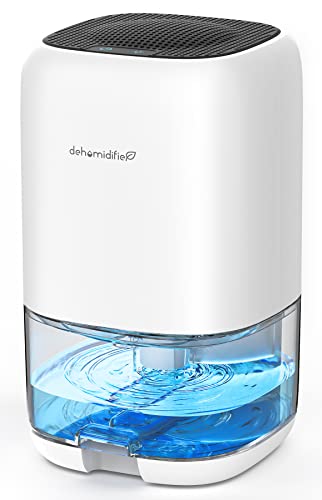
Buying a dehumidifier that is too small is the most common mistake, and it is easy to see why. The box says "up to 4,500 sq ft" or "70 pints," the room is only 800 square feet, and it seems like plenty. Then the unit runs nonstop, the basement still smells musty, and the tank needs emptying twice a day. This guide walks through how to size a dehumidifier properly, what changed with the pint ratings in 2019, and how to match a unit to your room, your drainage setup, and how much lifting you want to do.
Start With Square Footage and How Damp the Space Feels
Two things drive the size you need: the floor area you are trying to dry, and how much moisture is actually in that air. Measure the length and width of the space and multiply. If the dehumidifier will sit in an open basement, count the whole open area, not just the corner where you plan to put it, because air moves through connected rooms. Then rate the dampness honestly using three levels.
- Moderately damp: the space feels clammy in humid weather and may smell stale, but you see no wet spots.
- Very damp: it smells musty all the time, and you see condensation on pipes, windows, or walls during humid weather.
- Wet: there are damp patches or visible moisture on floors or walls, or the area has a history of seepage after heavy rain.
The table below gives planning ranges in current-label pints per day. It is based on the older capacity chart that shoppers have used for years, adjusted upward by about 30 percent to reflect the 2019 rating change explained in the next section. Treat the numbers as a starting point, then adjust for the factors later in this guide.
| Room size | Moderately damp | Very damp | Wet |
|---|---|---|---|
| 500 sq ft | 13 pints | 16 pints | 18 pints |
| 1,000 sq ft | 18 pints | 21 pints | 23 pints |
| 1,500 sq ft | 23 pints | 26 pints | 29 pints |
| 2,000 sq ft | 29 pints | 31 pints | 34 pints |
| 2,500 sq ft | 34 pints | 36 pints | 39 pints |
If your number falls between two common sizes, buy the larger one. A dehumidifier that is a little oversized simply cycles off sooner once it reaches the humidity you set, while an undersized one runs flat out and still loses the battle.
The 2019 Rating Change That Makes Old Charts Misleading
In 2019 the U.S. Department of Energy changed how dehumidifier capacity is tested. Before, the pints-per-day figure was measured in a warm room at 80°F. The new test conditions are 65°F, which is much closer to the air in a real basement or lower level. Cooler air holds less water, so a unit removes fewer pints under the new test. A dehumidifier sold as a 70 pint model before 2020 now rates at about 50 pints, even though the machine inside is essentially the same.
That matters for you in two ways. First, any sizing chart written before the change, including many still floating around retail sites and old forum posts, undersizes by roughly 30 percent if you read it against a current label. Second, you cannot compare an old "70 pint" listing against a new "50 pint" listing and conclude the first is stronger. Check whether a listing states the test conditions, and be wary when a seller shows a very large number with no temperature next to it.
Some marketing figures are labeled "at saturation," which usually means a hot, almost fully humid room at 95°F and 90 percent humidity. That is far more generous than anything inside a house. The ALORAIR 113 pint crawl space unit, for example, quotes 113 pints at saturation but 53 pints under the AHAM test in its own listing. Size by the lower, standard-test number.
Mini Peltier Units vs Compressor Dehumidifiers
There are two main technologies, and they are not interchangeable. Compressor dehumidifiers use a refrigeration coil, like a small air conditioner, and are rated in pints per day. They remove a lot of water and work best in rooms that are warm enough that the coil does not frost over.
Mini dehumidifiers usually use a thermoelectric (peltier) chip instead. They are quiet and light, but they move far less water, and they are typically rated in ounces per day rather than pints. For scale, there are 16 ounces in a pint. The NineSky 95 oz unit is rated at up to 34 oz of moisture per day, which is a little over 2 pints. Even a modest 18 pint compressor model for a 1,000 sq ft room removes about eight times that. The large 95 oz tank on a mini unit is therefore not a sign of power. It just means the tank takes a long time to fill.
That does not make mini units a poor purchase. Used where they fit, they are a sensible, low-cost fix. A small bathroom after showers, a bedroom that gets stuffy, and a closet that smells musty are all good jobs for a peltier unit.
For an even smaller space, such as a coat closet, a cabinet under a sink, or a small camper, a tiny 35 oz tank model is enough. The TABYIK unit measures about 6 inches square and 10 inches tall, and it shuts off on its own once the tank is nearly full so it never overflows.
The rule is simple: if the problem covers a whole room and you can see or smell it from the doorway, use a compressor unit. If it is confined to a closet or small enclosed space, a mini unit is fine.
Matching Common Room Sizes to a Real Unit
For an open living room, a finished basement, or a whole floor of a small home in the 1,000 to 2,000 sq ft range, a 30 to 35 pint compressor model is the usual answer. Referring back to the table, 34 pints covers a 2,000 sq ft space that is very damp, and a 1,000 sq ft space that is wet, with room to spare. The Waykar 34 pint model is a good example. It uses a rotary compressor, carries an Energy Star Most Efficient certification, and has two fan speeds and a continuous mode, so you can run it hard after a humid spell and quietly the rest of the time.
This tier is also the right choice for most people over 55 who want to avoid heavy lifting. Water weighs a little over a pound per pint, so a tank holding a few liters is several pounds when full, which is manageable for most people but adds up if you empty it several times a day. If that sounds like a chore, skip ahead to the drainage section.
Why Basements and Crawl Spaces Need More Than the Chart Says
A basement or crawl space is a harder job than a living room of the same size, for three reasons. The air is cooler, so any unit removes less water than its warm-room rating suggests. The ground, foundation walls, and sometimes a sump pit keep adding moisture all the time. And the area is often poorly sealed from the outdoors, so humid air keeps coming in.
Because of this, go up at least one size from the table for any below-grade space, and two sizes if it is wet. A 1,500 sq ft basement that is very damp calls for 26 pints on paper, which really points you to a 50 pint class unit in practice.
Look for auto-defrost. In a cool space, frost can build up on the coil and stop the unit from working. Auto-defrost senses this and pauses the compressor or runs the fan until the coil clears, so the dehumidifier keeps going instead of icing over. The Waykar 80 pint model includes auto-defrost, a 3.5 liter tank, and a 3.3 foot drain hose, which suits a large basement well.
Crawl spaces are the extreme case. They are low, cold, damp, and rarely visited, so you want a unit built to run unattended, with continuous drainage and a good defrost system. The ALORAIR commercial model mentioned above is designed for exactly that, with an advanced auto-defrost system and a 6-year limited warranty, and it is the better fit when moisture is persistent rather than occasional.
Drainage: Tank, Gravity Hose, or Pump
Capacity gets all the attention, but drainage decides whether you actually enjoy owning the machine. There are three options.
- Tank: simplest, and fine for small units. A full tank in the mid-size range weighs several pounds, and a large basement unit can fill it in a day or less in humid weather.
- Gravity drain hose: a garden-style hose runs from the unit to a floor drain or sink lower than the dehumidifier. It costs nothing and has no moving parts, but needs a drain below the level of the unit.
- Built-in or add-on pump: the pump pushes water up and out through a small tube, so it can reach a utility sink, a window, or a drain above floor level.
If there is no floor drain, a pump is what turns a chore into something you forget about. The hOmeLabs 50 pint model builds the pump into the unit and adds app control, so you can check or adjust settings without going downstairs. For a unit you already own, standalone condensate pumps are also sold separately.
If you are shopping specifically for ease of emptying, compare options in our guide to dehumidifiers with pumps.
Target Humidity and How to Measure It
Aim to keep indoor relative humidity between 30 and 50 percent. Below 30 percent the air starts to feel dry and can bother skin and throats. Above 50 percent, mold and dust mites become more likely. Most dehumidifiers let you set a target, and a setting of 45 to 50 percent is a reasonable start for a basement.
The built-in humidity readout on a dehumidifier measures the air right next to the unit, so it can read lower than the rest of the room. A separate hygrometer, which is an inexpensive battery-powered digital gauge, gives you a truer picture. Place it away from the dehumidifier at about chest height, and check it over a few days rather than at one moment. If the reading stays above 50 percent after the dehumidifier has run for 24 hours, the unit is too small, the room has too many leaks, or the space needs better air movement.
Common Sizing Mistakes to Avoid
- Trusting a square footage claim on the box. "Up to 4,500 sq ft" is often a best-case figure for a lightly damp room at warm temperatures. Check the pint rating and test conditions instead.
- Using a mini unit for a room-sized problem. A 34 oz per day thermoelectric unit cannot dry a damp basement, however large its tank.
- Ignoring temperature. A basement at 60°F will cut the output of almost any unit. Auto-defrost and a size up compensate.
- Forgetting open doors and connected rooms. A dehumidifier fights the whole connected volume of air, not just the room it sits in.
- Buying with no plan for drainage. A big unit with a tiny tank means emptying it constantly. Think about the stairs and your back before you buy.
- Treating the dehumidifier as a fix for a leak. If water is entering through a foundation crack or a downspout is dumping beside the wall, correct that first, or the unit will run forever.
Frequently Asked Questions
What size dehumidifier do I need for a 1,000 sq ft room?
For a moderately damp 1,000 sq ft space, about 18 pints per day on a current label is a good target. A very damp room needs roughly 21, and a wet one 23 or more. If the room is below grade or cool, move up to a 30 to 35 pint unit. Open doorways to other rooms also increase the load.
Is a bigger dehumidifier always better?
Within reason, yes. A unit that is somewhat oversized reaches your target humidity faster and then shuts off, which can save energy compared with a smaller unit running all day. The downsides are a higher purchase price, more weight, and a larger tank. Going two sizes over for a small room is wasteful, but one size over is rarely a mistake.
Why does my old 70 pint dehumidifier say 50 pints on the new model?
The test changed in 2019. Capacity is now measured at 65°F instead of 80°F, and cooler air holds less moisture, so the same machine earns a lower number. A 70 pint unit under the old test rates around 50 pints under the new one. The two labels describe about the same dehumidifier, so do not read the lower number as a downgrade.
Can a small dehumidifier work in a basement?
Only if the area is tiny, such as a closet-sized storage nook. A mini thermoelectric unit removes about 2 pints a day and loses further ground in cool air. For any real basement, use a compressor model with auto-defrost, and add a drain hose or pump so it can run unattended.
How often should I empty the tank?
In humid weather, a mid-size tank can fill once or twice a day, and a large basement unit can fill even faster. Most units shut off automatically when the tank is full, so they will not overflow, but they also stop drying until you empty them. If you do not want to check every day, use a drain hose or a pump.
What humidity level should I set?
Keep the room between 30 and 50 percent relative humidity. For a basement or crawl space, setting the dehumidifier at 45 to 50 percent is a reasonable balance between dryness and running time. Confirm the result with a separate hygrometer rather than relying only on the readout on the machine.