Coffee Maker vs French Press
We compared two drip coffee makers and two French presses on brew time, cleanup, and real first-year cost so you can decide which brewing method actually fits.


At a Glance
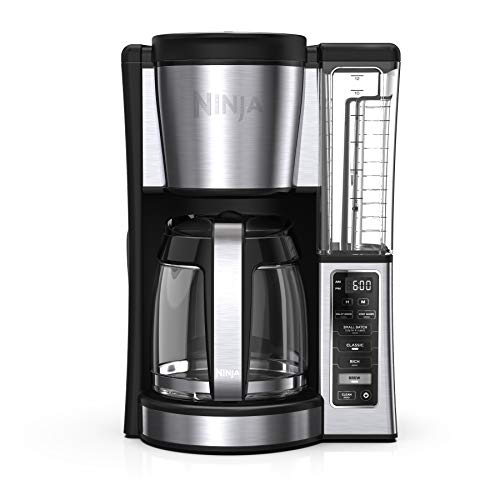
Ninja Fresh Brew Coffee Maker, 12 Cup Glass Carafe, Stainless Steel, CE251
↓ See why we picked itCafe Du Chateau French Press Coffee Maker, 34 oz Glass, Stainless Steel
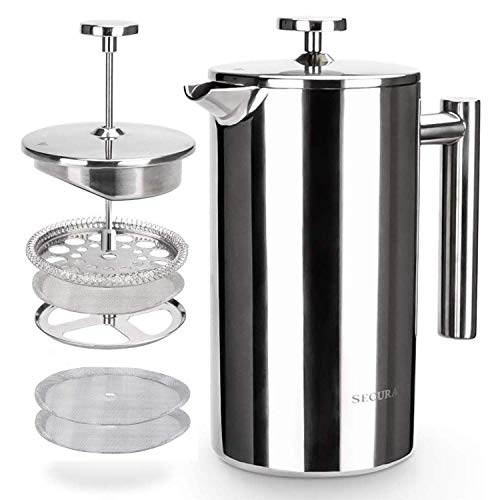
↓ See why we picked itSecura French Press Coffee Maker, 304 Grade Stainless Steel Insulated Coffee Press with 2 Extra Screens, 34oz
↓ See why we picked itDrip coffee makers and French presses solve the same problem, getting brewed coffee into a cup, with almost nothing else in common. One is an electric appliance that runs on a schedule with no hands-on involvement; the other is a manual glass or steel vessel that needs your attention for every step and no electricity at all.
We compared two current drip machines and two current French presses on the details that actually decide which one fits your routine: brew time and cleanup effort, a rough coffee-to-water comparison point, and what a realistic first year of ownership costs for each approach, filters and electricity for drip versus no filters or electricity but more manual grounds cleanup for French press.
6 Criteria to Look For Before Buying a Coffee Maker vs French Press
Key buying criteria so you get the right fit the first time.
Coffee-to-water ratio as a baseline
As a rough comparison point, both methods work well around 1 to 2 tablespoons of ground coffee per 6oz of water, roughly a 1:15 to 1:17 ratio. French press typically uses a coarser grind at the higher end of that ratio for full immersion brewing, while drip machines work well across a wider grind range since water passes through once rather than steeping. Getting this wrong is one of the more common reasons a french press purchase disappoints once it actually arrives, since coffee-to-water ratio as a baseline affects real day-to-day use in a way marketing photos and bullet points don't always make obvious. Before buying, check the specific listing's stated details on coffee-to-water ratio as a baseline rather than assuming every french press in this comparison handles it the same way, since this is exactly the kind of detail that varies more than buyers expect within the same price range.
Brew time
A French press steeps for about 4 minutes plus a minute or two to plunge and pour, so figure 5 to 6 minutes hands-on. A programmable drip machine like the BLACK+DECKER can be set the night before and requires zero active minutes the next morning, even though the brew cycle itself takes 5 to 10 minutes. This is the kind of detail that looks minor in a spec list but shapes how satisfied you actually are with a french press weeks after buying, since brew time plays out differently in daily use than it does on paper. Read the product listing and recent reviews specifically for mentions of brew time, since this detail is often understated in the bullet points but shows up clearly once real buyers have used the french press for a while.
Cleanup effort
French press cleanup means hand-washing the mesh filter and disposing of wet grounds every time, since the filter mechanism is not dishwasher-safe on most models. A drip machine's paper filter and grounds go straight in the trash with the basket, and the carafe and basket are typically dishwasher safe. Buyers who skip past cleanup effort tend to be the ones leaving disappointed reviews later, not because the french press was defective, but because this specific detail didn't match what they actually needed. Compare how each french press in this roundup actually handles cleanup effort rather than assuming they're interchangeable on this point, since the listings here differ on it more than the headline specs suggest.
First-year cost estimate
A daily drip habit runs roughly $15 to $25 per year in paper filters plus a few dollars in electricity, on top of the $30 to $90 machine price for the two picks here. A French press has zero filter or electricity cost after purchase, so the $25 to $40 upfront price is close to the full first-year cost, offset only by slightly more grounds used per cup with full-immersion brewing. First-year cost estimate is easy to overlook next to flashier specs, but it's frequently the difference between a french press that fits your routine and one that quietly becomes a hassle. Confirm the exact detail on first-year cost estimate directly from the current listing before ordering, since this is one of the more common places where two similarly priced french press options genuinely diverge.
Hands-off routine vs manual control
A drip machine is the better fit for a household that wants coffee ready automatically with no attention, especially with a 24-hour programmable timer. A French press is the better fit for someone who wants direct control over strength and steep time and does not mind a few minutes of hands-on process each morning. Getting this wrong is one of the more common reasons a french press purchase disappoints once it actually arrives, since hands-off routine vs manual control affects real day-to-day use in a way marketing photos and bullet points don't always make obvious. Before buying, check the specific listing's stated details on hands-off routine vs manual control rather than assuming every french press in this comparison handles it the same way, since this is exactly the kind of detail that varies more than buyers expect within the same price range.
Plastic parts and materials
Drip machines generally include plastic reservoirs, filter baskets, and housings. Both French presses in this comparison use glass or steel with metal filtration, which some buyers prefer for fewer plastic parts in contact with hot water. This is the kind of detail that looks minor in a spec list but shapes how satisfied you actually are with a french press weeks after buying, since plastic parts and materials plays out differently in daily use than it does on paper. Read the product listing and recent reviews specifically for mentions of plastic parts and materials, since this detail is often understated in the bullet points but shows up clearly once real buyers have used the french press for a while.
Coffee Maker vs French Press
BLACK+DECKER 12-Cup Drip Coffee Maker with Vortex Brewing
About this pick
This is a straightforward 12-cup programmable drip machine with a standard paper-filter basket and a 24-hour auto-brew timer, the entry point for the hands-off drip approach. Set it up the night before and it brews on its own with no attention needed the next morning.
At under $35 it is the cheapest way into automatic drip brewing here, and the sneak-a-cup pause feature lets you pour a cup mid-cycle without a mess. Ongoing cost is paper filters and electricity, both modest but recurring.
Best for: Anyone who wants a full pot ready automatically with zero hands-on brewing effort.
Check price on AmazonSpecs
- Feature 1: 12-cup glass carafe
- Feature 2: 24-hour programmable
- Feature 3: Sneak-a-cup pause
- Feature 4: Auto shutoff
Pros
- +Lowest price of the four products in this comparison
- +24-hour programmable timer for fully hands-off brewing
- +12-cup capacity covers a household in one cycle
Cons
- −Requires ongoing paper filter purchases
- −Glass carafe on a warming plate rather than thermal
Ninja Fresh Brew Coffee Maker, 12 Cup Glass Carafe, Stainless Steel, CE251
About this pick
The Ninja Fresh Brew adds a permanent filter, so you can skip paper filters entirely if you prefer, plus a small-batch setting that avoids diluting a partial pot. It still runs fully automatically once programmed, keeping the core hands-off appeal of drip brewing.
A clean-setting descale button and an adjustable warming plate round out the feature set. It costs more upfront than the basic BLACK+DECKER model but the permanent filter can reduce ongoing filter costs over time.
Best for: Buyers who want automatic drip brewing but prefer a reusable filter over paper.
Check price on AmazonSpecs
- Capacity: 12-cup carafe
- Filtration: Permanent filter included
- Feature 3: Small batch function
- Feature 4: 24-hour delay brew
Pros
- +Permanent filter reduces ongoing paper filter costs
- +Small batch function avoids diluted coffee on partial pots
- +Built-in descale/clean setting
Cons
- −Nearly 3x the price of the basic BLACK+DECKER drip pick
- −Still requires electricity and a warming plate, unlike a French press
Cafe Du Chateau French Press Coffee Maker, 34 oz Glass, Stainless Steel
About this pick
This French press uses a 4-level stainless steel filtration system and a 34oz borosilicate glass carafe, brewing in about 4 to 5 minutes with no cord, pod, or electricity required. You control the grounds-to-water ratio and steep time directly, which gives more control over strength than a drip machine's fixed cycle.
Cleanup means hand-washing the mesh filter and disposing of the wet grounds, since the filter mechanism does not go in a standard dishwasher basket the way a drip machine's paper filter basket does. It is fully portable with no power source needed, which also makes it usable while camping or traveling.
Best for: Buyers who want direct control over brew strength and no reliance on electricity or filters.
Check price on AmazonSpecs
- Capacity: 34oz capacity
- Material: 4-level steel filtration
- Feature 3: No electricity needed
- Feature 4: 4-5 minute brew
Pros
- +No electricity, pods, or paper filters required
- +Direct control over steep time and strength
- +Fully portable for camping or travel
Cons
- −Requires hand-washing the mesh filter after every use
- −Manual process start to finish, no programmable or hands-off option
Secura French Press Coffee Maker, 304 Grade Stainless Steel Insulated Coffee Press with 2 Extra Screens, 34oz
About this pick
The Secura is an all-stainless-steel French press rather than glass, which makes it more durable for daily use or travel and removes the risk of a dropped glass carafe shattering. It includes two extra filter screens, useful since screens are the one part that can wear out with heavy use.
At under $30 it is the lowest-cost product in this entire comparison, drip or French press, and like the Cafe Du Chateau it needs no electricity, filters, or pods, just hot water and ground coffee. Cleanup is the same manual mesh-rinsing process as any French press.
Best for: Budget-focused buyers who want a durable, all-steel French press with no electricity or filters.
Check price on AmazonSpecs
- Capacity: 34oz (1L) capacity
- Material: 3-layer steel filter
- Feature 3: 2 extra screens included
- Feature 4: All-steel construction
Pros
- +Lowest price of any product in this comparison
- +All-steel construction is more durable than glass
- +Includes two spare filter screens
Cons
- −Steel body means you cannot watch the brew visually like a glass press
- −Same hand-washing cleanup requirement as any French press
How We Evaluated These Coffee Maker vs French Press
Each pick was assessed across 5 criteria weighted for real-world use.
Brew time and hands-on involvement
We compared total time from start to cup for each method, separating programmable hands-off time from active, manual steps that require your attention.
Cleanup process
We looked at what each method requires after brewing, from a dishwasher-safe drip basket to hand-washing a French press mesh filter.
First-year ownership cost
We estimated realistic annual filter and electricity costs for drip machines against the near-zero ongoing cost of a French press, layered on top of each product's purchase price.
Control over brew strength
We assessed how much direct control each method gives over grounds-to-water ratio and extraction time, since a drip machine runs a fixed cycle while a French press is fully manual.
Fit for daily routine
We weighed which household situations favor a hands-off automatic routine versus a more manual, controlled process, since the right choice depends on lifestyle more than either method being objectively better.
How to Choose the Right Coffee Maker vs French Press
By Daily Routine
The core decision usually comes down to how much morning attention you want to give your coffee.
| Your Routine | Recommended Pick |
|---|---|
| Want coffee ready automatically, no attention needed | BLACK+DECKER 12-Cup Drip |
| Want automatic brewing but prefer a reusable filter | Ninja Fresh Brew |
| Want full control over strength, don't mind a manual process | Cafe Du Chateau French Press |
| Want manual control on the lowest budget | Secura French Press |
Brew Time and Cleanup Compared
Drip coffee maker
5 to 10 minute brew cycle that requires no attention once started or programmed. Cleanup is a paper filter and grounds in the trash, with a dishwasher-safe basket and carafe.
French press
About 4 minutes of steeping plus 1 to 2 minutes to plunge and pour, all hands-on. Cleanup means hand-washing the mesh filter and disposing of wet grounds every time.
First-Year Cost Estimate
Based on a daily one-pot or one-press habit, machine price plus realistic ongoing costs.
| Method | Machine Price | Annual Ongoing Cost | Approx. First-Year Total |
|---|---|---|---|
| BLACK+DECKER 12-Cup Drip | $31.49 | ~$15-25 (filters + electricity) | ~$46-56 |
| Ninja Fresh Brew (permanent filter) | $89.99 | ~$5-10 (mostly electricity) | ~$95-100 |
| Cafe Du Chateau French Press | $39.99 | ~$0 | ~$40 |
| Secura French Press | $25.69 | ~$0 | ~$26 |
French press ongoing cost is near zero since there are no filters or electricity, though full-immersion brewing does use slightly more ground coffee per cup than a paper-filtered drip.
Who Benefits From Each Method
Drip coffee maker
Best for a hands-off daily routine, larger households needing a full pot at once, and anyone who wants coffee ready automatically before they are even in the kitchen.
French press
Best for buyers who want direct control over strength, prefer fewer plastic parts in contact with hot water, and don't mind a few minutes of manual process and hand-washing per use.
Neither method is objectively better; the right choice depends on how much manual involvement you actually want each morning.
Coffee-to-Water Ratio Reference
Useful as a starting point regardless of which method you choose.
| Method | Rough Ratio | Typical Grind |
|---|---|---|
| Drip coffee maker | 1:15 to 1:17 (coffee:water) | Medium |
| French press | 1:12 to 1:15 (coffee:water) | Coarse |
Frequently Asked Questions
Does a French press make stronger coffee than a drip machine?
It can, since full immersion brewing extracts more oils and body, and you control the steep time directly. A drip machine's strength is fixed by its cycle, though some models include a strength or bold-brew setting that adjusts flow rate to increase extraction.
Is a French press cheaper to own long-term than a drip coffee maker?
Yes, in ongoing costs. A French press has no paper filters or electricity use after purchase, while a daily drip habit runs roughly $15 to $25 per year in filters plus a small electricity cost. The tradeoff is that French press brewing uses slightly more ground coffee per cup with full immersion.
Which is easier to clean, a coffee maker or a French press?
A drip coffee maker is generally easier. Its paper filter and grounds go straight in the trash, and the basket and carafe are typically dishwasher safe. A French press requires hand-washing the mesh filter after every use, since the plunger mechanism is not dishwasher-safe on most models.
Can I use a French press without electricity?
Yes, that is one of its main advantages. You only need hot water, which can come from a stovetop kettle, making a French press fully usable while camping, traveling, or during a power outage, unlike an electric drip machine.
How much coffee should I use for a French press versus a drip machine?
Both work well in the range of 1 to 2 tablespoons of ground coffee per 6oz of water. French press typically sits toward the higher end of that ratio with a coarser grind for full immersion, while drip machines work across a wider grind range since water passes through the grounds only once.
Is a drip coffee maker better for a household with multiple coffee drinkers?
Generally yes, since a 12-cup drip machine like the picks here brews a full pot automatically in one cycle. A French press can be scaled up in size, but larger presses still require the same manual steeping, plunging, and hand-washing process for every batch.
Bottom Line
best overall: BLACK+DECKER 12-Cup Drip Coffee Maker with Vortex Brewing - best drip pick pick in this roundup.
See the full rankings above for all picks with pros, cons, and best-for summaries.
Browse on Amazon
All Prime-eligible options with current pricing.
Shop on Amazon →