Bread Maker vs Stand Mixer (2026)
A bread maker bakes hands-free; a stand mixer only kneads. We compare both approaches with real models to help you decide which fits your baking habits.


At a Glance
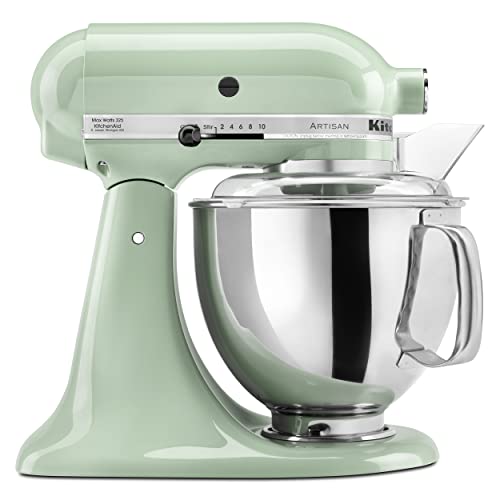
KitchenAid Artisan 5-Qt Tilt Head Stand Mixer, KSM150PS
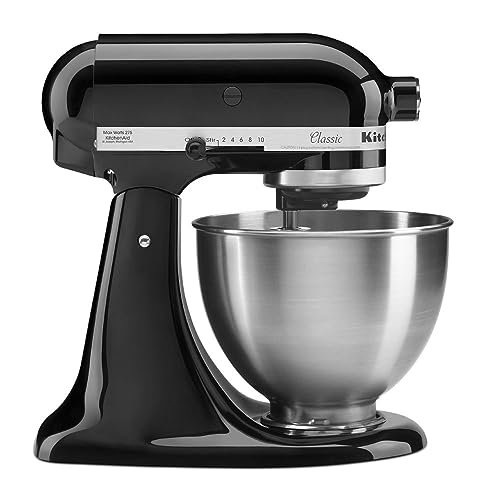
↓ See why we picked itKitchenAid Classic Series 4.5 Quart Tilt-Head Stand Mixer, K45SS
↓ See why we picked itKBS Pro 710W 2.2LB Bread Maker, Dual Heaters, 17-in-1
↓ See why we picked itNEWBULIG Bread Maker Machine 2 LB, Automatic Breadmaker Compact
↓ See why we picked itA bread maker and a stand mixer solve overlapping but genuinely different problems. A bread maker mixes, kneads, proofs, and bakes a loaf entirely inside one closed machine with no oven involved, while a stand mixer with a dough hook only handles the mixing and kneading step, still requiring you to shape the dough, let it rise in a separate bowl, and bake it in a conventional oven.
That difference in scope is the whole decision: a stand mixer is a more versatile tool that also handles cookie dough, cake batter, and whipped cream, while a bread maker does one thing, a fully baked loaf, with far less hands-on involvement. This guide compares two real bread makers against two real KitchenAid stand mixers to make that tradeoff concrete.
6 Criteria to Look For Before Buying a Bread Maker vs Stand Mixer (2026)
Key buying criteria so you get the right fit the first time.
What each machine actually automates
A bread maker like the KBS Pro or NEWBULIG handles mixing, kneading, proofing, and baking all inside one machine. A stand mixer like either KitchenAid here only handles mixing and kneading, leaving proofing, shaping, and oven baking to you.
Versatility beyond bread
Both KitchenAid stand mixers handle cookies, cakes, whipped cream, and other tasks beyond bread dough. Neither bread maker in this guide does anything but bake loaf-shaped bread, so a stand mixer is the better buy if bread is just one of several things you bake.
Price gap between the two approaches
Both bread makers here cost meaningfully less than either KitchenAid mixer, with the NEWBULIG costing a small fraction of the Artisan or Classic Series. If bread is your only goal, a bread maker is also the cheaper path to it.
Hands-on time required
A bread maker requires loading ingredients and selecting a program, then walking away. A stand mixer requires you to knead, then separately proof, shape, and bake the dough yourself, meaningfully more hands-on time even though the machine does the hardest physical kneading work.
Shape flexibility
A stand mixer's kneaded dough can be shaped into rolls, pizza crust, bagels, or any hand-formed shape before baking in a conventional oven. A bread maker only produces the loaf shape of its own baking pan.
Bowl or pan capacity
The KitchenAid Artisan's 5 qt bowl handles more dough at once than the Classic Series' 4.5 qt bowl, and both bread makers here cap around 2 to 2.2 lb per bake. Match capacity to how much dough you typically work with in one session.
Bread Maker vs Stand Mixer (2026)
KitchenAid Artisan 5-Qt Tilt Head Stand Mixer, KSM150PS
About this pick
The Artisan handles bread dough kneading well with its included dough hook, but that's only one of many things it does, unlike a dedicated bread maker which does nothing but bake bread. Its 5-quart bowl comfortably kneads dough for a large loaf or two smaller ones, and the tilt-head design makes it easy to swap between the dough hook, whisk, and flat beater for other baking tasks entirely.
After kneading, you still need to transfer the dough to a bowl for proofing, shape it by hand, let it rise again, and bake it in a conventional oven, several manual steps a bread maker skips entirely by handling the whole process inside one machine. That's the core tradeoff: more hands-on involvement and more dishes, in exchange for a tool that also makes cookies, cakes, and whipped cream.
For anyone who already bakes a variety of things beyond bread, the Artisan's versatility likely justifies its price on its own, with bread dough kneading as a bonus capability rather than the main reason to buy it. If bread is genuinely the only thing you want to make, a dedicated bread maker does that specific job with far less manual effort.
Best for: Bakers who want one versatile machine for bread dough, cookies, cakes, and more
Check price on AmazonSpecs
- Bowl capacity: 5 qt
- Attachments: Dough hook, whisk, flat beater
Pros
- +Handles dough kneading plus a wide range of other baking tasks
- +Large 5 qt bowl
- +Well-established reliability and parts availability
Cons
- −Only kneads, doesn't proof or bake the loaf
- −Requires more manual steps and cleanup than a bread maker
KitchenAid Classic Series 4.5 Quart Tilt-Head Stand Mixer, K45SS
About this pick
The Classic Series is KitchenAid's more basic tilt-head mixer, with a slightly smaller 4.5-quart bowl than the Artisan but the same core dough-kneading capability via its included dough hook. Like the Artisan, it only handles the mixing and kneading stage of bread making, not proofing or baking, so the same multi-step manual process applies.
Its smaller bowl is worth noting specifically for bread dough: a full 2-pound loaf's worth of dough can feel like a tighter fit than in the Artisan's larger bowl, though it handles standard single-loaf batches without issue. It's positioned as the more accessible entry point into KitchenAid's stand mixer lineup, with the same attachment ecosystem as the pricier Artisan.
For comparing against a bread maker, the calculation is the same as with the Artisan: you're gaining a versatile machine that does far more than bread, at the cost of a more hands-on process for the bread itself, including proofing time and a separate oven bake most bread maker owners skip entirely.
Best for: Bakers who want stand mixer versatility at a lower entry price
Check price on AmazonSpecs
- Bowl capacity: 4.5 qt
Pros
- +Same core kneading capability as the pricier Artisan
- +Full attachment ecosystem compatibility
- +Handles standard single-loaf dough batches well
Cons
- −Smaller bowl than the Artisan, tighter for larger dough batches
- −Same multi-step manual process as any stand mixer for bread
KBS Pro 710W 2.2LB Bread Maker, Dual Heaters, 17-in-1
About this pick
This is the dedicated-bread-maker side of the comparison: load ingredients, select a program, and the machine handles mixing, kneading, proofing, and baking entirely on its own, with no oven, no separate proofing bowl, and no hand-shaping required. That's the core appeal against a stand mixer, dramatically less hands-on involvement for the specific task of baking a loaf of bread.
At 710W it has enough motor power for most dough types, and its 17-program menu covers basic, whole wheat, French, and gluten-free cycles automatically, versus a stand mixer where you'd need to know and execute each of those recipes' proofing and baking steps yourself. It's also priced at roughly a third of either KitchenAid mixer here, a real cost consideration if bread is your primary goal.
The tradeoff is versatility: this machine only bakes bread-shaped loaves in its own pan, it doesn't make cookies, cakes, or whipped cream, and it can't knead dough for you to then shape into rolls, pizza crust, or bagels the way a stand mixer's dough hook allows. For someone whose primary goal is hands-free bread with minimal effort, this is the more direct tool for that one job.
Best for: Bakers who mainly want hands-free bread with minimal manual involvement
Check price on AmazonSpecs
- Capacity: 2.2 lb
- Process: Fully automatic, mix through bake
Pros
- +Fully automatic from mixing through baking
- +Roughly a third of the price of either stand mixer here
- +17 built-in programs cover most bread types automatically
Cons
- −Only bakes loaf-shaped bread in its own pan
- −Can't be used for cookies, cakes, or shaped dough like rolls or pizza
NEWBULIG Bread Maker Machine 2 LB, Automatic Breadmaker Compact
About this pick
This is the lowest-cost way to get the full hands-free bread maker experience in this comparison, at a small fraction of what either KitchenAid stand mixer costs. It shares the same fundamental advantage as the KBS Pro: mixing, kneading, proofing, and baking all happen automatically inside one machine, with no oven or manual shaping required.
Its compact design keeps the footprint small, and while it doesn't match the KBS Pro's dispenser or broader program count, it covers the core automatic bread-making process that's the entire point of choosing a bread maker over a stand mixer in the first place. For someone testing whether they'll actually use a bread maker regularly before investing more, this is a low-risk way to find out.
Against either stand mixer, the comparison is stark on price and effort for bread specifically: a fraction of the cost, dramatically less hands-on work, but zero versatility beyond baking loaf-shaped bread. If your only goal is easy homemade bread and you don't bake other things, this kind of budget bread maker delivers that specific outcome more directly than a stand mixer ever will.
Best for: Buyers who want to try hands-free bread making at the lowest possible cost
Check price on AmazonSpecs
- Capacity: 2 lb
- Process: Fully automatic, mix through bake
Pros
- +Lowest price in this entire comparison
- +Fully automatic from mixing through baking
- +Compact footprint
Cons
- −Fewer programs and features than the KBS Pro
- −Same single-purpose limitation as any bread maker
How We Evaluated These Bread Maker vs Stand Mixer (2026)
Each pick was assessed across 5 criteria weighted for real-world use.
Process Automation
We compared how much of the bread-making process each machine actually automates, since a stand mixer only kneads while a bread maker handles the entire process through baking.
Versatility Beyond Bread
We assessed each machine's usefulness for tasks beyond bread dough, finding both stand mixers handle a much broader range of baking tasks than either dedicated bread maker.
Price Comparison
We compared price across all four picks, noting both bread makers cost meaningfully less than either stand mixer, a real factor if bread is your primary goal.
Hands-On Time
We estimated the manual effort required by each approach, from a bread maker's load-and-walk-away process to a stand mixer's multi-step knead, proof, shape, and bake process.
Capacity and Output
We compared bowl and pan capacity across the four picks, and noted that a stand mixer's kneaded dough can be shaped into forms a bread maker's fixed pan can't produce.
How to Choose the Right Bread Maker vs Stand Mixer (2026)
By Primary Goal
| What you mainly want | Recommended pick |
|---|---|
| Hands-free bread with minimal effort | KBS Pro or NEWBULIG bread maker |
| A versatile tool for bread, cookies, cakes, and more | KitchenAid Artisan or Classic Series |
By Budget
| Budget range | Recommended pick |
|---|---|
| Lowest price, bread only | NEWBULIG Bread Maker |
| Mid-range, bread only | KBS Pro Bread Maker |
| Premium, full versatility | KitchenAid Artisan or Classic Series |
Bread Maker vs Stand Mixer
Bread Maker (KBS Pro, NEWBULIG)
Fully automatic from mixing to baking. Lower price, far less hands-on effort, but only bakes loaf-shaped bread.
Stand Mixer (KitchenAid Artisan, Classic Series)
Only kneads; you proof, shape, and bake separately. Higher price, more effort, but far more versatile beyond bread.
Shaped Bread vs Loaf-Pan Bread
| Preference | Recommended pick |
|---|---|
| Rolls, pizza crust, bagels, hand-shaped loaves | KitchenAid stand mixer |
| Standard loaf-pan sandwich bread | KBS Pro or NEWBULIG bread maker |
For Occasional Bakers Specifically
Look at how often you'd actually use each machine before committing to the pricier, more versatile option.
Look for
Honest self-assessment of whether you bake beyond bread often enough to justify a stand mixer's higher price and manual effort.
In this comparison
If bread is genuinely your only goal, the NEWBULIG or KBS Pro deliver that outcome for a fraction of either KitchenAid mixer's price and effort.
When to Spend More
Spend more if
You bake cookies, cakes, and other items regularly beyond bread, or want the flexibility to shape dough into rolls and pizza crust. Go with a KitchenAid stand mixer.
Save if
Your primary or only goal is homemade loaf bread with minimal hands-on effort. A dedicated bread maker delivers that more directly and cheaply.
Frequently Asked Questions
Can a stand mixer actually make bread from start to finish?
Not on its own. A stand mixer with a dough hook handles mixing and kneading, but you still need to transfer the dough to a separate bowl for proofing, shape it by hand, let it rise again, and bake it in a conventional oven. A bread maker handles all of those steps automatically inside one machine.
Is a bread maker's bread as good as bread made with a stand mixer?
Both can produce good bread, but they tend to differ in shape and crust. Bread makers produce a uniform loaf-pan shape with a fairly consistent crust, while stand-mixer-kneaded dough baked in a conventional oven can be shaped freely and often develops a different crust texture depending on your oven and baking method.
Which is cheaper, a bread maker or a stand mixer?
In this comparison, both bread makers cost meaningfully less than either KitchenAid stand mixer, with the budget NEWBULIG model costing a small fraction of the mixers' price. If bread is your only goal, a bread maker is also the more affordable path to it.
Do I need both a bread maker and a stand mixer?
Only if you regularly do both: bake hands-free loaf bread often enough to want a dedicated machine for it, and also bake cookies, cakes, or shaped bread items that need a stand mixer's versatility. Many households find one or the other covers their actual baking habits.
Can I make pizza dough in a bread maker?
Most bread makers, including both models in this guide, include a dough-only cycle that mixes and kneads pizza dough, which you'd then remove and shape by hand before baking in a conventional oven. This is functionally similar to what a stand mixer does for pizza dough, just without the versatility for other mixing tasks.
Why do stand mixers cost more than bread makers?
Stand mixers are built as multi-purpose kitchen tools with a more powerful and durable motor designed to handle a wide range of attachments and tasks over many years, which generally costs more to manufacture than a single-purpose bread maker built around one specific automated process.
Is it worth buying a bread maker if I already own a stand mixer?
It depends on how much you value hands-free convenience specifically. A stand mixer can already knead bread dough, so a bread maker's main added value is skipping the proofing, shaping, and oven-baking steps entirely, which matters most if you want bread on a regular basis without the extra hands-on time.
Bottom Line
best overall: KitchenAid Artisan 5-Qt Tilt Head Stand Mixer, KSM150PS - best stand mixer for versatility pick in this roundup.
See the full rankings above for all picks with pros, cons, and best-for summaries.
Browse on Amazon
All Prime-eligible options with current pricing.
Shop on Amazon →