6 Best Wi-Fi Extenders in 2026
Compare six Wi-Fi extenders by coverage, band setup, Ethernet ports and Wi-Fi generation, with plain advice on picking one for a dead room.




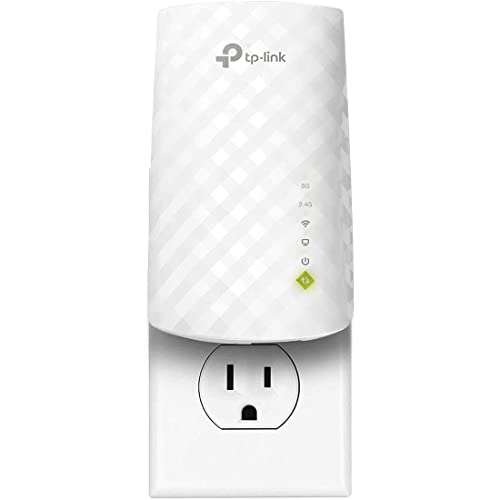

At a Glance
Almost every home has one room where the signal fades: the back bedroom, the basement den, the garage workshop, or the patio chair where you like to read. A Wi-Fi extender is the plug-in box that catches the router's signal and repeats it further into the house. For most people over 55, and for the adult children setting these up on a visit, it is the least expensive way to fix a weak spot without rewiring anything.
The catch is that extenders are often misunderstood. They stretch coverage, they do not make the internet plan faster, and where you plug one in matters more than most spec sheets admit. The six models below range from a simple dual-band AC1200 plug to a Wi-Fi 6 unit with directional antennas, so the right one depends on how big your home is and what you connect.
We evaluated these picks from product specs and the feature lists published by each maker, then ranked them by how clearly they solve a dead-zone problem for someone who wants the setup to be uneventful.
6 Criteria to Look For Before Buying a Wi-Fi Extender
Key buying criteria so you get the right fit the first time.
Match your router's Wi-Fi generation
An extender cannot be faster than the router it listens to, and a mismatch wastes money in either direction. If your router is Wi-Fi 6, a Wi-Fi 6 extender such as the TP-Link AX3000 with 3 Gbps of bandwidth keeps up, while an AC1200 plug like the TP-Link RE315 will cap devices at Wi-Fi 5 speeds. If your router is older Wi-Fi 5, the NETGEAR EX5000 at 1.2 Gbps is a sensible fit and the extra cost of Wi-Fi 6 buys little. Check the router's label or settings page for its standard before shopping.
Read coverage figures as best-case
Square footage on the box is measured in open space, and every wall, floor and appliance takes a bite. The NETGEAR EX5000 lists 1,500 sq ft and the TP-Link RE550 lists 2,100 sq ft, but a brick wall or a long hallway can cut that reach noticeably. A good rule is to count the rooms you need to cover rather than the number on the carton. For one weak bedroom, the 1,200 sq ft TP-Link Ethernet-port model is already enough, and the PEDUMMY claim of 5,200 sq ft should not change that plan.
Dual band matters more than the big number
Dual-band units use 5 GHz for speed over shorter distances and 2.4 GHz for reach through walls. The TP-Link RE315 pairs 867 Mbps on 5 GHz with a 2.4 GHz band, which suits a mix of newer and older devices. A single-band extender sharing one radio for both jobs can cut throughput roughly in half, so confirm that any extender you buy lists two bands. The TP-Link Ethernet-port model states up to 44% more bandwidth than single-band N300 units, which shows how much the second band is worth.
An Ethernet port solves stubborn devices
Some devices never behave well on wireless, especially a smart TV, a console, or a desktop computer. An extender with a LAN port lets you wire that device straight into the extender, which removes one wireless link from the chain. The PEDUMMY 1200Mbps and the TP-Link Ethernet-port model both list a port, so either can serve a living room TV. If you do not own a short network cable, add one to the order, since a cable is cheap and the improvement is immediate.
Placement beats raw specification
An extender placed inside the dead zone only rebroadcasts a weak signal, which is the most common reason people say a unit did not help. The better spot is roughly halfway between the router and the dead room, in an outlet where the extender still shows a strong link. The three-antenna TP-Link RE550 gives you more angles to adjust once it is there, while the two-antenna RE315 asks you to be more careful about the first outlet you try. Move it one outlet at a time until the signal light reads good, rather than guessing from room to room.
Setup and long-term support
The easiest installs use either a WPS button on the router and extender or a guided phone app. The NETGEAR EX5000 offers both the Nighthawk app and WPS, while the TP-Link AX3000 and RE550 follow TP-Link's usual app and browser routes. Established makers also tend to publish firmware updates, and TP-Link notes it signs the CISA cybersecurity commitment. Lesser-known brands such as PEDUMMY can offer the same raw bandwidth figure as the RE315, but updates and help are harder to count on.
6 Best Wi-Fi Extenders in 2026
TP-Link AX3000 WiFi 6 Dual-Band Range Extender
About this pick
The TP-Link AX3000 is the most capable single extender in this group on paper. It is a dual-band Wi-Fi 6 unit with 3 Gbps of total bandwidth, including speeds up to 2404 Mbps on the 5 GHz band. Two high-gain directional antennas with beamforming aim the signal at your devices instead of spraying it evenly in every direction.
That extra capability matters most in larger homes. The listing claims coverage up to 2,400 sq ft, which is the highest of the six picks that are made by a named brand. It also fits households with a Wi-Fi 6 router, where a weaker extender would hold the connection back. If your router is an older Wi-Fi 5 model, you will not see the full benefit, and a cheaper pick may be enough.
In day-to-day ownership it behaves like the other plug-in units: place it halfway between the router and the dead room, pair it, and leave it alone. The directional antennas can be angled, so a little patience at the outlet pays off. Next to the TP-Link AC1200 RE315, which tops out at 867 Mbps on 5 GHz, the AX3000 offers nearly three times the 5 GHz ceiling. The cost of that headroom is a larger unit that is overkill for a one-room fix.
Best for: Larger homes with a Wi-Fi 6 router and several streaming devices.
Check price on AmazonSpecs
- Wi-Fi standard: Wi-Fi 6 (AX3000)
- Total bandwidth: 3 Gbps
- 5 GHz speed: Up to 2404 Mbps
- Coverage: Up to 2,400 sq ft
- Antennas: Two high-gain directional
Pros
- +Wi-Fi 6 with up to 2404 Mbps on the 5 GHz band
- +Covers up to 2,400 sq ft in the maker's listing
- +Beamforming steers signal toward connected devices
- +Two directional antennas can be angled by hand
Cons
- −Oversized for a single weak bedroom or den
- −Full speed needs a Wi-Fi 6 router to match
TP-Link AC1900 WiFi Range Extender RE550
About this pick
The RE550 is a dual-band Wi-Fi 5 repeater rated at 1.9 Gbps total bandwidth. Three adjustable external antennas give it the widest antenna set among the Wi-Fi 5 units here. The listing claims coverage up to 2,100 sq ft, a clear step above the 1,500 sq ft stated for the RE315 and the NETGEAR EX5000.
It suits a two-story home where a single weak area sits a floor away from the router. Because the antennas swivel, you can tilt one toward the stairs and another along the hallway. The tradeoff is size: with three antennas sticking out, it takes more room at the outlet and can block a second socket on a cramped plate. It also lacks the Wi-Fi 6 features of the AX3000, so newer phones will not reach their top speeds through it.
TP-Link states that it is a signatory of the CISA cybersecurity commitment, a small reassurance for buyers who worry about firmware care on cheap network gear. Setup follows the usual pattern of pairing with the router and then placing the unit midway. Compared with the AC1200 RE315 at 867 Mbps on 5 GHz, the RE550 raises the combined ceiling to 1.9 Gbps, which helps when a TV, a laptop and a tablet all draw from it together.
Best for: Two-story homes needing more reach than a basic AC1200 plug.
Check price on AmazonSpecs
- Wi-Fi standard: Wi-Fi 5 (AC1900)
- Total bandwidth: 1.9 Gbps
- Coverage: Up to 2,100 sq ft
- Antennas: Three adjustable external
Pros
- +Three adjustable antennas can be aimed along hallways
- +Rated for up to 2,100 sq ft of coverage
- +1.9 Gbps dual-band total handles several devices
- +Maker signs the CISA cybersecurity commitment
Cons
- −Antennas make it bulky at a crowded outlet
- −Wi-Fi 5 only, so no Wi-Fi 6 features
TP-Link AC1200 WiFi Extender RE315
About this pick
The RE315 is the plain, well-judged middle of the TP-Link range. It is an AC1200 dual-band extender with 1.2 Gbps of total bandwidth, split as 867 Mbps on 5 GHz and the remainder on 2.4 GHz. Two adjustable external antennas cover up to 1,500 sq ft, and Adaptive Path Selection is meant to pick the better route between the router and your device.
It makes sense for a typical apartment or a single-floor house where one or two rooms lose signal. Browsing, video calls and HD streaming sit comfortably inside its limits. It is not designed for a crowd of simultaneous 4K streams or for a large two-story layout, where the 2,100 sq ft RE550 has more reach.
Ownership is uneventful, which is the point. You plug it in, pair it, and move it to the halfway spot if the first location gives a weak link. The antennas fold and tilt for tight corners. At 1,500 sq ft it matches the NETGEAR EX5000 on coverage while using TP-Link's own app and router pairing, so the choice between those two often comes down to which brand your household already knows.
Best for: Apartments and single-floor homes with one or two weak rooms.
Check price on AmazonSpecs
- Wi-Fi standard: Wi-Fi 5 (AC1200)
- 5 GHz speed: 867 Mbps
- Coverage: Up to 1,500 sq ft
- Antennas: Two adjustable external
Pros
- +867 Mbps on 5 GHz is plenty for HD streaming
- +Dual band keeps 2.4 GHz range for thick walls
- +Two antennas tilt to suit awkward outlets
- +Covers up to 1,500 sq ft in the listing
Cons
- −Wi-Fi 5 limits speed with a newer router
- −Not enough reach for a large two-story home
NETGEAR WiFi Extender EX5000
About this pick
The NETGEAR EX5000 is a Wi-Fi 5 dual-band extender rated at 1.2 Gbps across two bands and up to 1,500 sq ft. NETGEAR positions it for bedrooms, garages, basements and backyards, the rooms where a router signal usually gives out. Setup can run through the Nighthawk app with guided steps, or you can press WPS on the router and then on the extender.
The guided app is the reason to look at it. For a parent being walked through the process by phone, a step-by-step screen is easier to describe than a browser setup page. It does not add the ports or the extra range found on some competitors, and it keeps to the same 1,500 sq ft figure as the TP-Link RE315.
In practice it is a set-it-and-forget-it plug. The same placement rule applies as with every extender: go halfway, not into the dead zone. If you later upgrade to a Wi-Fi 6 router, the EX5000 will still work, but it will cap devices at Wi-Fi 5 speeds, so the Wi-Fi 6 TP-Link AX3000 is the better long-term match for that upgrade path.
Best for: Buyers who want guided app setup and a familiar brand.
Check price on AmazonSpecs
- Wi-Fi standard: Wi-Fi 5 (AC1200)
- Total bandwidth: 1.2 Gbps
- Coverage: Up to 1,500 sq ft
- Setup: Nighthawk app or WPS
Pros
- +Guided Nighthawk app walks through the install
- +WPS button offers a no-app pairing route
- +Rated for 1,500 sq ft across two bands
- +Aimed at bedrooms, garages and basements
Cons
- −Wi-Fi 5 caps speed under a Wi-Fi 6 router
- −No Ethernet port listed for this model
TP-Link Dual Band WiFi Extender with Ethernet Port
About this pick
This compact TP-Link unit pairs a dual-band radio with an Ethernet port. TP-Link states it offers up to 44% more bandwidth than single-band N300 extenders and covers up to 1,200 sq ft. That coverage is the smallest of the group, so it is a pick for a modest apartment or one problem room.
The Ethernet port is the feature that sets it apart from the plain plug-ins. You can run a cable to a smart TV, a game console or a desktop that sits near the extender, giving that device a steady wired link instead of competing for wireless airtime. For a living room TV that buffers, that wired connection often matters more than extra coverage figures.
The tradeoff is reach and headroom. At 1,200 sq ft it falls short of the RE315 at 1,500 sq ft and far short of the RE550 at 2,100 sq ft. The listing gives no model number for it, so check the listing title when you order. Set it midway between router and room, plug the cable into the TV, and the gadget will do its job quietly.
Best for: Small homes and anyone wiring a TV or console to the extender.
Check price on AmazonSpecs
- Bands: Dual band 5 GHz and 2.4 GHz
- Coverage: Up to 1,200 sq ft
- Wired port: Ethernet port
- Bandwidth gain: Up to 44% over single-band N300
Pros
- +Ethernet port gives a TV a steady wired link
- +Dual band beats single-band N300 by up to 44%
- +Small footprint fits any outlet
- +Simple choice for one problem room
Cons
- −Smallest stated coverage of the six picks
- −Listing gives no model number to verify
PEDUMMY WiFi Extender 1200Mbps
About this pick
The PEDUMMY is a lesser-known brand that offers 1200 Mbps of dual-band bandwidth, split as 867 Mbps on 5 GHz and 300 Mbps on 2.4 GHz. It includes an Ethernet port and an access point mode, so it can feed a wired device or create a new wireless network from a cable. Its listing claims coverage up to 5,200 sq ft.
That coverage figure deserves caution. It is a best-case number for open space, and it is well above what the TP-Link RE550 claims at 2,100 sq ft, a brand that publishes its own security commitment. The listing also notes that wireless extenders do not raise your internet speed. If budget is the priority and the home is modest, the dual-band spec is respectable, but the support and firmware track record of a smaller brand is harder to judge than that of TP-Link or NETGEAR.
AP mode is the standout practical feature: with a network cable running to a distant room, you can turn the box into a wireless access point, which is often the most reliable fix of all. Compared with the TP-Link RE315, which has the same 867 Mbps 5 GHz figure, this unit adds AP mode but offers less certainty on after-sale help.
Best for: Budget shoppers who value AP mode and a wired port.
Check price on AmazonSpecs
- Total bandwidth: 1200 Mbps
- 5 GHz speed: 867 Mbps
- 2.4 GHz speed: 300 Mbps
- Claimed coverage: Up to 5,200 sq ft
- Modes: Extender and AP mode
Pros
- +Same 867 Mbps 5 GHz speed as pricier AC1200 units
- +AP mode turns a network cable into Wi-Fi
- +Ethernet port serves a TV or console
- +Dual band covers walls and speed needs
Cons
- −Brand support is harder to judge than major makers
- −5,200 sq ft claim is a best-case figure
How We Evaluated These Wi-Fi Extenders
Each pick was assessed across 5 criteria weighted for real-world use.
Coverage and reach
We compared the square footage each maker lists, from 1,200 sq ft on the TP-Link Ethernet-port unit to 2,400 sq ft on the AX3000. We treated these as best-case figures and weighted antenna count and design as secondary signals of real reach. Claims far beyond the group, like the 5,200 sq ft for the PEDUMMY, were noted but not rewarded.
Band setup and bandwidth
We looked at whether each unit is dual band, which Wi-Fi generation it uses, and how much it lists on 5 GHz. The AX3000 leads at 2404 Mbps on 5 GHz, ahead of the RE550 at 1.9 Gbps total and the 867 Mbps of the RE315, EX5000 class and PEDUMMY. Higher numbers earned credit only when they matched a realistic home router.
Ease of setup
Setup was judged from the pairing routes each listing describes: WPS push-button, app, or browser. The NETGEAR EX5000 scored well for its guided Nighthawk app plus WPS fallback. Units that required more guesswork from the buyer scored lower, because older buyers and helpers on a phone call need steps that are easy to describe.
Wired options and flexibility
An Ethernet port and an access point mode extend what a unit can do beyond repeating Wi-Fi. The PEDUMMY lists both, and the TP-Link Ethernet-port model lists a port. We gave these modest credit, since a wired link often helps a TV more than extra wireless speed would.
Brand support and value
We considered the maker's track record, published security commitments, and how much of the price goes toward real capability. The TP-Link RE315 leads on balance of coverage and features, the RE550 leads on reach for Wi-Fi 5 homes, and the AX3000 leads on headroom. Our assessments rest on specs and buyer feedback, not hands-on lab work.
How to Choose the Right Wi-Fi Extenders
By Home Size
Match the unit to the area you need to cover, remembering that stated coverage is a best-case figure.
| Situation | Pick | Why |
|---|---|---|
| One-bedroom apartment, one weak room | TP-Link Dual Band WiFi Extender with Ethernet Port | Up to 1,200 sq ft is plenty and the port can feed a TV. |
| Single-floor house, two weak rooms | TP-Link AC1200 WiFi Extender RE315 | Up to 1,500 sq ft with 867 Mbps on 5 GHz. |
| Two-story home, router on one floor | TP-Link AC1900 WiFi Range Extender RE550 | Up to 2,100 sq ft and three adjustable antennas. |
| Large home with a Wi-Fi 6 router | TP-Link AX3000 WiFi 6 Dual-Band Range Extender | Up to 2,400 sq ft and 2404 Mbps on 5 GHz. |
| Basement or garage next to the router floor | NETGEAR WiFi Extender EX5000 | Aimed at basements and garages with guided setup. |
When two rooms in different directions are weak, one extender will not fix both, and mesh may suit better.
By Budget
Tiers are relative, so compare them against each other rather than against a fixed amount.
| Tier | Pick | What you get |
|---|---|---|
| Entry | TP-Link Dual Band WiFi Extender with Ethernet Port | Dual band, 1,200 sq ft and a wired port. |
| Entry with extras | PEDUMMY WiFi Extender 1200Mbps | 867 Mbps on 5 GHz plus AP mode, from a smaller brand. |
| Mid | TP-Link AC1200 WiFi Extender RE315 | A balanced Wi-Fi 5 plug at 1,500 sq ft. |
| Mid | NETGEAR WiFi Extender EX5000 | The same coverage with guided app setup. |
| Premium | TP-Link AX3000 WiFi 6 Dual-Band Range Extender | Wi-Fi 6, 3 Gbps and the largest coverage. |
Wi-Fi 5 vs Wi-Fi 6
The generation of your router decides how much a newer extender can help.
Wi-Fi 5 (AC) extenders
Wi-Fi 5 units cover most homes with older routers and work fine for streaming and calls. In this lineup that includes the TP-Link AC1200 RE315, the TP-Link AC1900 RE550 and the NETGEAR EX5000. Pick these if your router is a few years old and your devices are not demanding.
Wi-Fi 6 (AX) extenders
Wi-Fi 6 adds capacity for many connected devices and higher peak speeds. The TP-Link AX3000 is the only Wi-Fi 6 pick here, with 3 Gbps of bandwidth. Choose it if your router is Wi-Fi 6 or you plan to upgrade soon, and choose Wi-Fi 5 if you simply need a room fixed on a tight budget.
Wired or Wireless Connection
Ask which devices need the steadiest link, because that decides whether a port matters.
| Need | Pick | Reason |
|---|---|---|
| Wire up a living room TV | TP-Link Dual Band WiFi Extender with Ethernet Port | The port connects a TV without added wireless congestion. |
| Turn a network cable into Wi-Fi | PEDUMMY WiFi Extender 1200Mbps | AP mode converts a cabled drop to a wireless network. |
| Wireless only for phones and tablets | TP-Link AC1200 WiFi Extender RE315 | Two bands handle phones without needing a port. |
| Extra antennas for awkward layouts | TP-Link AC1900 WiFi Range Extender RE550 | Three antennas can be aimed along a hallway. |
For Streaming and Gaming Specifically
Streaming and gaming reward a strong link more than a long reach.
Look for
A dual-band or better unit with a strong 5 GHz link, ideally with a wired port so a console or TV skips the wireless hop. Place the extender where it still sees a strong router signal, since an extender cannot improve a weak input.
In this comparison
The TP-Link AX3000 offers the highest 5 GHz speed at 2404 Mbps, the TP-Link Ethernet-port model and the PEDUMMY add a LAN port, and the NETGEAR EX5000 keeps things simple for streaming TVs. For the lowest lag, wire the console to a port and pair it with a good 5 GHz link.
When to Spend More
Upgrade only when a specific limit in your home calls for it.
| Spend more if | Save if |
|---|---|
| Your router is Wi-Fi 6 and you stream in several rooms: pick the TP-Link AX3000. | Your router is older Wi-Fi 5: the TP-Link AC1200 RE315 is enough. |
| Your home has two floors: the TP-Link RE550 reaches up to 2,100 sq ft. | Your home is one floor: the NETGEAR EX5000 at 1,500 sq ft is plenty. |
| You want a major maker's update record: choose TP-Link or NETGEAR. | You only need AP mode on a small budget: the PEDUMMY covers it. |
| Several family members stream at once: the AX3000 handles more devices. | One person streams in one room: the TP-Link Ethernet-port unit works. |
Frequently Asked Questions
Will a Wi-Fi extender make my internet faster?
No. An extender improves coverage so a far room can reach the connection you already pay for, but it cannot raise the speed of your internet plan. In fact, an extender can reduce throughput slightly, because it has to receive and then retransmit the signal. Pick one for coverage, and call your provider if the problem is the plan itself.
Where should I plug in the extender?
Place it roughly halfway between the router and the dead zone, in an outlet where the extender still gets a strong signal from the router. Plugging it into the dead room only rebroadcasts a weak signal. Try one outlet, check the signal light, and shift to a closer outlet if the link reads poor.
Should I choose the TP-Link RE315 or the NETGEAR EX5000?
Both list 1,500 sq ft and 1.2 Gbps across two bands, so performance is broadly similar. The NETGEAR EX5000 offers guided setup in the Nighthawk app and WPS, which suits anyone who prefers walking through screens. The TP-Link RE315 adds two adjustable antennas and Adaptive Path Selection. Choose by which setup style you find simpler.
Is a bigger coverage number always better?
Not necessarily. Coverage figures describe open space, and walls and floors shorten them. A claim like 5,200 sq ft on the PEDUMMY should not be treated as proof of long range. Look instead at band setup, antenna design and the maker's reputation, and buy for the rooms you actually need to fix.
Do I need a mesh system instead?
An extender suits a single weak area, while a mesh system replaces your router coverage across the whole home with one network name. If you have dead spots in three or more rooms or want devices to hand off between locations automatically, mesh is the better answer. If only one room is the trouble, a plug-in unit like the RE315 is simpler.
Do extenders work with any router?
Standalone extenders from makers like TP-Link and NETGEAR are built to pair with standard Wi-Fi routers, usually through WPS or an app. Check that your router has a normal Wi-Fi network, and keep the router's password handy for setup. Provider-branded pods can be more restricted, so read the listing before you buy.
How long should an extender last and does it need upkeep?
Extenders have no moving parts, so most issues come from software rather than wear. Restart the unit every so often if it drops connections, and install firmware updates when the maker offers them. Dust the vents occasionally. A unit from a maker that publishes updates, such as TP-Link or NETGEAR, is easier to keep running.
Bottom Line
best overall: TP-Link AX3000 WiFi 6 Dual-Band Range Extender - best overall pick in this roundup.
See the full rankings above for all picks with pros, cons, and best-for summaries.
Browse on Amazon
All Prime-eligible options with current pricing.
Shop on Amazon →