6 Best Stainless Steel Garden Trowels in 2026
Six stainless steel garden trowels compared by blade thickness, width, handle and length, for rust-resistant digging in clay, loam and raised beds.
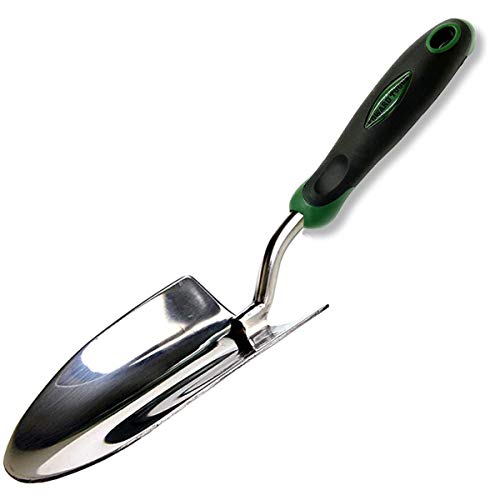


At a Glance
Stainless steel earns its place in the garden for a plain reason: it keeps working after a season of neglect. A trowel left in a damp bucket or dropped by the compost heap will pit and bloom with rust if it is plain steel, but stainless stays clean with a rinse and a wipe. It is also stiff enough to dig into firm ground without flexing, which is why gardeners who have bent a cheap aluminum blade tend to step up to steel.
The six picks here are all described as stainless steel in their listings, and they differ in the details that decide daily comfort. The Edward Tools trowel is a one-piece bend-proof design with an oversized head. The LRLXE trowel has a 2.5 mm thick blade with a serrated edge and a built-in depth scale. The Kemaier has a widened blade of about 3.7 inches. The WORKPRO and MOTEECRAG tools use wooden handles, and the Corona ComfortGEL adds a cushioned grip on a 13 and a half inch tool.
We evaluated each pick from its listing specs and typical buyer feedback, so measurements and materials are as the makers describe them. Stainless steel resists rust well but is not indestructible, so we paid close attention to how each blade joins the handle, since that joint is where most trowels fail.
6 Criteria to Look For Before Buying a Stainless Steel Garden Trowel
Key buying criteria so you get the right fit the first time.
Blade thickness and bend resistance
A thin stainless blade will flex like any other metal. Thickness is the best predictor of whether a trowel survives clay and stones. The LRLXE lists a 2.5 mm blade hardened to HRC50, the MOTEECRAG is described as thick, and the Edward Tools is a one-piece steel design. A flexible blade bends first at the neck. Test a trowel by pressing the tip against the ground and leaning, and avoid any blade that gives.
How the blade joins the handle
The joint is the weak point of most trowels. The Edward Tools trowel is one piece, the Kemaier uses a full tang with hand-welded joints and the others rely on a handle fitted over a stem. A one-piece or welded tang cannot wobble loose. If you buy a wooden-handled tool like the WORKPRO or MOTEECRAG, check the ferrule, and tighten or glue it if it starts to move.
Blade width and shape
Width trades capacity for precision. The Kemaier at about 3.7 inches and the MOTEECRAG head at 6 by 3.2 inches move the most soil, while the narrower LRLXE and WORKPRO slip between plants more easily. A V-shaped tip, as on the LRLXE, penetrates firm ground. Choose by the work you do most, and consider a second narrow trowel if you do both.
Handle material and comfort
Stainless steel blades come with different handles. Wood, on the WORKPRO and MOTEECRAG, is warm and light but needs care. Rubber, on the LRLXE, grips well when wet. Gel, on the Corona ComfortGEL, cushions the palm best. Bare steel, on the Edward Tools, is toughest but hardest on the hand. Pick the handle you will happily hold for twenty minutes.
Length and leverage
Longer handles provide leverage and reach, shorter ones provide precision. The Corona at 13 and a half inches is the longest, the WORKPRO at 11 inches is mid-sized, and the others sit between. A longer tool is more comfortable in raised beds, and a shorter one fits an apron and works better in crowded borders. If you garden from a kneeling pad on the ground, the Corona's extra reach means fewer shuffles along the bed, whereas the compact LRLXE suits a standing planter or a patio box.
Extras that save time
Small features reduce tool changes. The LRLXE has a depth scale and a serrated edge, which replace a ruler and a knife. A hanging hole or a cushioned grip makes storage and long sessions easier. These extras add little to the price but a lot to daily use, so count them when comparing otherwise similar stainless tools.
6 Best Stainless Steel Garden Trowels in 2026
Edward Tools Bend-Proof Garden Trowel
About this pick
The Edward Tools trowel is the simplest argument for stainless steel in this guide. It is made as one piece of polished stainless steel, which the listing says makes it bend-proof and the best hand shovel for rocky or heavy clay soils. With no weld or rivet between blade and handle, there is no joint to loosen, which removes the failure point that ends the life of most hand trowels.
The oversized head is the other half of the pitch. A larger blade moves more soil per scoop, so planting holes take fewer passes and filling a pot is quick. In heavy ground, a single piece of steel lets you lean on the tool and lever out a stubborn root without hearing a creak. Polished stainless also releases soil more cleanly than a rough casting, so you scrape less between holes.
The tradeoff is comfort. A one-piece steel tool has no cushioned grip, so the steel itself is what you hold, which can feel cold and hard in a long session. Gloves help. Compared with the Corona ComfortGEL, the Edward Tools trowel is plainer and tougher but less kind to the palm. Compared with the Kemaier, it has a bigger head but no welded handle detail. Choose it when durability matters most. Wipe it dry after use and hang it on a hook.
Best for: Heavy clay and rocky soil where a one-piece tool will not bend or loosen.
Check price on AmazonSpecs
- Construction: One-piece stainless steel
- Head: Oversized
- Finish: Polished, rust resistant
Pros
- +One-piece steel has no joint to fail
- +Oversized head moves more soil
- +Polished surface releases soil cleanly
- +Resists rust with little care
Cons
- −Bare steel handle can feel hard and cold
- −Large head is clumsy in crowded beds
LRLXE Heavy Duty Stainless Steel Garden Trowel
About this pick
The LRLXE trowel is the most feature-rich stainless tool in the group. The listing describes a blade made from 2.5 mm thick stainless steel with a high-temperature quenching process that reaches HRC50 hardness, a 3 inch serrated edge for cutting root and thin stems, a sharp V-shaped tip for deep soil and a built-in measurement scale. A non-slip rubber handle completes the package.
Each feature has a clear use. The V-shaped tip lets you push the blade into packed soil rather than hacking at it. The serrated edge saws through fibrous roots and cuts plant twine, so you do not need a separate knife. The ruler on the blade lets you plant bulbs and seedlings at an exact depth without guessing, a tool-in-one that suits vegetable growers and anyone planting spring bulbs by the dozen.
The sharper blade also needs more respect. A serrated edge and a pointed tip can catch a glove or scratch a knuckle if you reach into a crowded bed, and the rubber handle is a plain cylinder rather than a sculpted grip. Compared with the Edward Tools one-piece trowel, the LRLXE is more versatile but joins its handle with a ferrule rather than a single cast. Compared with the Kemaier, it is narrower and sharper. Wipe it dry, and cover the edge when carrying it in a bag.
Best for: Bulb and seedling planting where depth marks and a sharp serrated edge both help.
Check price on AmazonSpecs
- Blade thickness: 2.5 mm
- Hardness: HRC50 after quenching
- Features: Serrated edge and depth scale
Pros
- +Depth scale removes planting guesswork
- +Serrated edge cuts roots and twine
- +Quenched blade resists bending
- +V-shaped tip penetrates firm soil
Cons
- −Sharp edge needs careful handling
- −Plain rubber handle is not sculpted
Kemaier Heavy Duty Stainless Steel Garden Trowel
About this pick
The Kemaier stainless trowel is built around a widened blade that the listing says measures about 3.7 inches across, wider than most hand trowels. That width increases soil capacity and speeds up digging, which is useful for planting shrubs, filling raised beds and moving compost. The handle is a full tang design, hand-welded to the blade with full welds, and the maker describes the trowel as bend-resistant.
A full tang handle means the steel runs through the grip rather than stopping at a short stem, so the force you apply on the handle goes directly into the blade. The hand-welded joints add reassurance for anyone who has snapped a trowel at the neck. The wide blade is a bonus for scooping loose material, because it holds more per pass than a narrow pointed blade.
The tradeoff is that wide blades are poor at close work. In a crowded border, 3.7 inches is too broad to slip between plants without nudging roots. It also costs a little more weight and leaves a larger hole than you may want for small bulbs. Compared with the LRLXE, the Kemaier digs more but measures less, and compared with the Edward Tools trowel it adds a defined handle. Use it for larger planting holes and for mixing soil, and clean it after each session to keep the welds free of grit.
Best for: Large planting holes, raised beds and soil mixing where a wide blade saves passes.
Check price on AmazonSpecs
- Blade width: About 9.5 cm (3.7 inches)
- Handle: Full tang, hand-welded
- Material: Stainless steel
Pros
- +Wide blade carries more soil per scoop
- +Full tang handle transmits force to the blade
- +Hand-welded joints resist snapping
- +Bend-resistant stainless blade
Cons
- −Wide head is clumsy between plants
- −Leaves a bigger hole than needed for small bulbs
WORKPRO 11 Inch Stainless Steel Garden Hand Trowel
About this pick
The WORKPRO trowel is the traditional choice in this guide. At 11 inches overall it has a polished stainless steel blade, which the listing calls high hardness and highly resistant to rust and corrosion, mounted in a wooden handle. The maker says the shape suits digging in tough soil, removing stubborn weeds and mixing soil, and describes the handle as giving easy wrist movement and reducing hand fatigue.
A wooden handle gives the trowel a warm, natural feel that suits people who dislike the touch of rubber. Wood is also light, which keeps the weight low at the hand end and helps balance the steel at the blade. The 11 inch length is short enough to feel precise and long enough to give a decent grip, a middle size that handles most tasks. The polished blade slides through soil well and resists sticking.
As with all wood handles, upkeep matters. If the trowel stays wet, the handle can crack or loosen at the joint, so dry it and hang it up. Compared with the MOTEECRAG, which also uses wood, the WORKPRO is shorter and simpler. Compared with the Corona ComfortGEL, it has no cushion but costs nothing in plastic wear. It is a good, honest tool for gardeners who value a classic design and are willing to look after it with a wipe and a hook.
Best for: Gardeners who like a classic wooden handle on a rust-resistant stainless blade.
Check price on AmazonSpecs
- Length: 11 inches
- Blade: Polished stainless steel
- Handle: Wooden
Pros
- +Polished stainless blade resists rust
- +Wooden handle is warm and light
- +11 inch length suits most jobs
- +Handle shape eases wrist movement
Cons
- −Wood can loosen if left wet
- −No cushioned grip for long sessions
MOTEECRAG Heavy Duty Stainless Steel Garden Trowel
About this pick
The MOTEECRAG trowel has a large head, listed at 6 by 3.2 inches, which moves more soil per scoop than a standard trowel. The blade is described as thick stainless steel that resists bending in hard soil or rocky ground, and the wooden handle is sanded smooth, which the maker says makes it fit naturally in the hand and reduce wrist strain. It is positioned for digging, weeding, potting and transplanting.
The large head is its signature. At 6 inches long and over 3 inches wide, it works like a very small shovel, which makes it quick for filling pots, planting perennials and scooping fertilizer. The thick blade resists the flexing you feel when a thin trowel meets a root. The smooth wooden handle avoids the sharp edges and splinters that a rough handle can leave, and the sanding is a small touch that affects comfort over a long session.
The drawback is that the same large head is not a tool for tight places. In a crowded herb bed it is hard to place, and in a small pot it can dislodge neighboring plants. Compared with the Kemaier, it is longer and narrower, and compared with the WORKPRO, it is larger. Keep the wooden handle dry, hang the trowel after use and expect to wipe the blade with a rag. It is the best scoop in this lineup for filling containers.
Best for: Filling pots, planting perennials and moving soil quickly with a large head.
Check price on AmazonSpecs
- Head size: 6 x 3.2 inches
- Blade: Thick stainless steel
- Handle: Sanded wood
Pros
- +6 by 3.2 inch head scoops generously
- +Thick blade resists bending
- +Smooth sanded handle avoids splinters
- +Handles digging, weeding and potting
Cons
- −Large head is awkward in tight beds
- −Wood handle needs to stay dry
Corona Premium Stainless Steel ComfortGEL Garden Trowel
About this pick
The Corona ComfortGEL is the longest trowel in this guide at 13 and a half inches overall, and the only one with a cushioned gel grip. The listing describes a premium stainless steel blade with rust-resistant construction and a smooth soil release, plus a ComfortGEL handle that is cushioned, non-slip and meant to reduce hand fatigue. The extra length is described as added reach and leverage for planting, transplanting and soil work.
The cushioned grip is a clear comfort win over the bare steel of the Edward Tools or the plain wood of the WORKPRO. A gel layer spreads pressure across the palm and absorbs small shocks, so the hand stays relaxed even after many holes. The extra length gives you a longer lever, which helps when you work in raised beds or reach across a border. A blade that releases soil smoothly saves scraping.
The tradeoff is bulk. At 13 and a half inches it is harder to pocket in an apron, and the longer handle can feel unwieldy for fine work between close plants. Compared with the MOTEECRAG, the Corona has a smaller head but a much softer handle. Compared with the LRLXE, it lacks a depth scale. Wash the gel grip with mild soap, hang the trowel when you are done and keep it out of strong sunlight to protect the grip material.
Best for: Long sessions in raised beds and borders where a cushioned grip and extra reach help.
Check price on AmazonSpecs
- Length: 13 and a half inches overall
- Blade: Premium stainless steel
- Grip: ComfortGEL cushioned
Pros
- +Cushioned ComfortGEL grip spreads pressure
- +13 and a half inch length adds leverage
- +Stainless blade releases soil smoothly
- +Rust-resistant construction
Cons
- −Long handle is less precise in tight spots
- −No depth scale on the blade
How We Evaluated These Stainless Steel Garden Trowels
Each pick was assessed across 5 criteria weighted for real-world use.
Blade build
We compared blade thickness and construction. The LRLXE's 2.5 mm quenched blade and the Edward Tools one-piece design lead for bend resistance, the Kemaier follows with its full tang, and the MOTEECRAG's thick stainless blade rounds out the strong group.
Handle comfort
We looked at what you actually hold. The Corona's ComfortGEL grip leads, the LRLXE's rubber follows, the wooden WORKPRO and MOTEECRAG are comfortable but need care, and the Edward Tools' bare steel is toughest but least cushioned.
Capacity and precision
We compared head size. The MOTEECRAG at 6 by 3.2 inches and the Kemaier at about 3.7 inches wide lead for capacity, while the LRLXE and WORKPRO are narrower for close work. A tool that matches a clear job scored higher.
Useful extras
We credited features that replace other tools. The LRLXE's depth scale and serrated edge, the Corona's cushioned grip and the Kemaier's full tang all add practical value beyond plain digging.
Upkeep and rust
All six are stainless steel, which resists rust, so we focused on the other parts. Wooden handles on the WORKPRO and MOTEECRAG need drying, the gel grip on the Corona benefits from shade, and the one-piece Edward Tools needs almost nothing.
How to Choose the Right Stainless Steel Garden Trowels
By Soil Type
Soil decides how stiff a blade you need and how wide a head you want.
| Soil or bed | Recommended pick | Why |
|---|---|---|
| Heavy clay and rocky ground | Edward Tools Bend-Proof Trowel | One-piece steel will not loosen or bend |
| Firm soil with roots | LRLXE Stainless Trowel | Serrated edge and V-shaped tip cut and penetrate |
| Loose loam and large holes | Kemaier Stainless Trowel | Wide blade moves the most soil |
| Raised beds and borders | Corona ComfortGEL Trowel | Long handle and cushioned grip |
| Pots and containers | MOTEECRAG Stainless Trowel | Large head scoops generously |
By Budget
These tiers are relative, and no dollar figures are quoted because prices change often.
| Budget tier | Recommended pick | What you get |
|---|---|---|
| Entry | WORKPRO 11 Inch Trowel | A classic stainless blade on a wooden handle |
| Entry to mid | Edward Tools Bend-Proof Trowel | A one-piece tool that will not loosen |
| Mid | MOTEECRAG Stainless Trowel | A large head with a sanded wooden handle |
| Mid to upper | Corona ComfortGEL Trowel | A long tool with a cushioned grip |
| Upper | LRLXE or Kemaier Trowel | Quenched blade with a scale, or a wide hand-welded tool |
Paying more for a stronger joint is better value than paying for a longer list of features.
Wood Handle vs Rubber and Gel Grip
The handle material changes how the tool feels and how it ages.
Wood
The WORKPRO and MOTEECRAG use wooden handles that feel warm and natural. They are light but need drying and an occasional oil. The MOTEECRAG's smooth sanded finish avoids splinters.
Rubber and gel
The LRLXE uses non-slip rubber, and the Corona uses a ComfortGEL cushion. These grip better when wet and spread pressure across the palm. The Edward Tools has neither, because it is all steel. Choose wood for tradition, rubber or gel for comfort and grip.
In short: wood for feel, gel for comfort, bare steel for durability.
By Handle Length
Length affects leverage, reach and storage.
| Preference | Recommended pick | Reason |
|---|---|---|
| Longest reach | Corona ComfortGEL Trowel | 13 and a half inches overall |
| Mid length | WORKPRO 11 Inch Trowel | 11 inches, easy to carry |
| Short and precise | LRLXE Stainless Trowel | Narrow blade for close work |
| Compact strength | Edward Tools Bend-Proof Trowel | One piece, easy to store |
For Bulb Planting Specifically
Bulbs need a hole of the right depth, cleanly dug.
Look for
A depth scale on the blade, a pointed or V-shaped tip and a blade narrow enough not to disturb the neighboring bulbs. Measure from the base of the bulb, and plant at about three times its height.
In this comparison
The LRLXE is the best match because it carries a built-in measurement scale and a V-shaped tip. The Kemaier is better when you are planting a large group of bulbs together in one wide hole.
When to Spend More
Upgrade where the joint or the grip is what you will notice.
| Spend more if | Save if |
|---|---|
| Your soil is clay or stone and the Edward Tools one-piece is needed | Your soil is loose and the WORKPRO is plenty |
| You plant bulbs often and the LRLXE scale pays off | You plant by eye and a plain blade is enough |
| You work for hours and the Corona ComfortGEL cushions your palm | You work for minutes with the MOTEECRAG |
| You move a lot of soil and the Kemaier wide blade saves passes | You do mainly fine planting where a narrow blade fits |
A trowel is a small purchase, so buy the tool that you will reach for first.
Frequently Asked Questions
Why choose stainless steel for a trowel?
Stainless steel resists rust, so the blade stays clean if the tool is left damp or stored in a shed. It is also stiff enough to dig firm ground, which makes it a better long-term choice than a thin aluminum blade. It is not unbreakable, so look at thickness and at how the blade joins the handle.
Is stainless steel stronger than carbon steel?
Not always. Carbon steel can be harder and hold an edge longer, but it rusts if left wet. Stainless steel trades a little hardness for rust resistance. A thick stainless blade, like the LRLXE at 2.5 mm hardened to HRC50, is plenty strong for most gardens.
What is a full tang handle?
A full tang means the steel of the blade extends through the handle rather than stopping at a short stem. The Kemaier uses a full tang with hand-welded joints, which transmits force directly to the blade and resists snapping. A one-piece tool like the Edward Tools achieves a similar result with no joint at all.
Do wooden handles last on stainless trowels?
They can last for years if kept dry. The WORKPRO and MOTEECRAG both use wood, and both benefit from a wipe after use and storage on a hook. If a handle loosens, tighten or glue the ferrule. A rubber or gel grip, as on the LRLXE and Corona, needs less care.
Should I buy a wide or narrow blade?
A wide blade, like the Kemaier or MOTEECRAG, moves more soil and suits large holes and pots. A narrow blade, like the LRLXE or WORKPRO, fits between plants and suits bulbs and seedlings. Many gardeners keep one of each, but if you buy only one, match it to the job you do most.
How do I clean and store a stainless trowel?
Rinse off soil, dry the blade with a rag and hang the tool by the handle. Stainless is forgiving, but dried-on soil holds moisture and can mark the surface. Wipe wooden handles and check the joint each season. Store the tool in a dry place rather than in the rain.
Can a serrated edge replace a knife?
Partly. The LRLXE has a 3 inch serrated edge that cuts roots and thin stems, which is handy for dividing small clumps or cutting twine. It will not replace a proper pruning knife for woody stems. Keep the edge covered when carrying it and handle it with care.
Bottom Line
best overall: Edward Tools Bend-Proof Garden Trowel - best overall pick in this roundup.
See the full rankings above for all picks with pros, cons, and best-for summaries.
Browse on Amazon
All Prime-eligible options with current pricing.
Shop on Amazon →