Best Self-Emptying Robot Vacuums
We compared eight current self-emptying robot vacuums on dock bag capacity, dust leakage risk, dock noise, clog recovery.




At a Glance
Tikom Robot Vacuum and Mop, Robotic Vacuum Cleaner with Self-Emptying Base
↓ See why we picked itShark AV2501S AI Ultra Robot Vacuum with Matrix Clean, 30-Day Capacity HEPA Bagless Self Empty Base
↓ See why we picked itShark Navigator Robot Vacuum + Self-Empty Base (White, AV2110S)
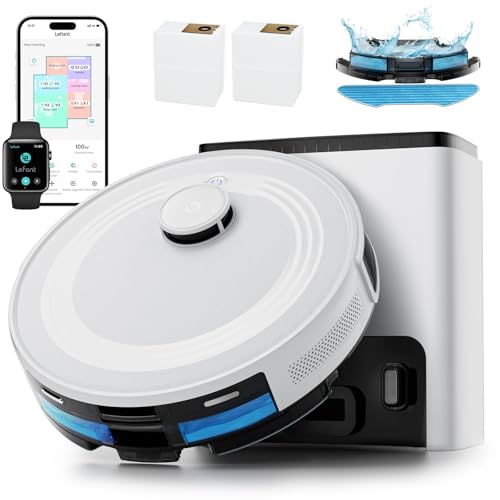
↓ See why we picked itLefant Robot Vacuum and Mop, 75-Day Self-Emptying, 6000Pa Suction (M2 Plus)
↓ See why we picked iteufy Omni C20 Robot Vacuum and Mop Combo for Hardwood and Carpet
↓ See why we picked itroborock Q7 M5+ Robot Vacuum and Mop, Up to 7-9 Weeks Self-Empty, 10000Pa
↓ See why we picked itA self-emptying dock is supposed to mean you barely touch your robot vacuum, but the reality varies a lot from model to model. Some docks hold weeks of debris in a sealed bag, others use a bagless bin that needs more frequent handling, and dock noise during evacuation can range from a quick whoosh to a jarring roar that wakes the house.
We researched eight current, distinct self-emptying models rather than color variants of the same machine, and focused on the details that actually change day-to-day ownership: how much debris the dock holds and how long that is claimed to last, how messy bag or bin changes tend to be, how loud the evacuation cycle is, how well each model recovers from a clog, and what replacement bags or filters cost over a year.
6 Criteria to Look For Before Buying a Self-Emptying Robot Vacuum
Key buying criteria so you get the right fit the first time.
Dock bag or bin capacity and claimed days between emptying
Claimed intervals in this comparison range from no stated figure up to Lefant's 75-day and roborock's 7-to-9-week claims. These figures depend heavily on home size, floor area covered per cycle, and how much debris and pet hair your household actually generates, so treat manufacturer claims as a ceiling, not a guarantee. Getting this wrong is one of the more common reasons a self-emptying robot vacuums purchase disappoints once it actually arrives, since dock bag or bin capacity and claimed days between emptying affects real day-to-day use in a way marketing photos and bullet points don't always make obvious. Before buying, check the specific listing's stated details on dock bag or bin capacity and claimed days between emptying rather than assuming every self-emptying robot vacuums in this comparison handles it the same way, since this is exactly the kind of detail that varies more than buyers expect within the same price range.
Dust leakage risk during bag replacement or bin emptying
Sealed-bag docks generally trap dust more effectively when you remove and replace the bag, while bagless bins like the Shark AI Ultra's HEPA base require you to empty the bin directly, which carries more exposure to fine dust. If you have allergies, this difference matters more than the capacity number. This is the kind of detail that looks minor in a spec list but shapes how satisfied you actually are with a self-emptying robot vacuums weeks after buying, since dust leakage risk during bag replacement or bin emptying plays out differently in daily use than it does on paper. Read the product listing and recent reviews specifically for mentions of dust leakage risk during bag replacement or bin emptying, since this detail is often understated in the bullet points but shows up clearly once real buyers have used the self-emptying robot vacuums for a while.
Dock noise during evacuation
The evacuation cycle, when the robot's onboard bin gets suctioned into the dock, is often the loudest moment in a robot vacuum's routine. Check current owner reviews for noise complaints specific to each model before placing a dock near a bedroom or open living space. Buyers who skip past dock noise during evacuation tend to be the ones leaving disappointed reviews later, not because the self-emptying robot vacuums was defective, but because this specific detail didn't match what they actually needed. Compare how each self-emptying robot vacuums in this roundup actually handles dock noise during evacuation rather than assuming they're interchangeable on this point, since the listings here differ on it more than the headline specs suggest.
Clog recovery
Debris can jam the tube between the robot and the dock, especially with pet hair or larger debris. Look for owner feedback on how easy each model's clog-clearing process is, since some docks require more disassembly than others to clear a stuck line. Clog recovery is easy to overlook next to flashier specs, but it's frequently the difference between a self-emptying robot vacuums that fits your routine and one that quietly becomes a hassle. Confirm the exact detail on clog recovery directly from the current listing before ordering, since this is one of the more common places where two similarly priced self-emptying robot vacuums options genuinely diverge.
Annual bag or filter replacement cost
Sealed-bag docks require repurchasing bags over time, while bagless bins avoid that recurring cost but may need filter replacement instead. Factor this ongoing cost into the total price of ownership rather than judging models on sticker price alone. Getting this wrong is one of the more common reasons a self-emptying robot vacuums purchase disappoints once it actually arrives, since annual bag or filter replacement cost affects real day-to-day use in a way marketing photos and bullet points don't always make obvious. Before buying, check the specific listing's stated details on annual bag or filter replacement cost rather than assuming every self-emptying robot vacuums in this comparison handles it the same way, since this is exactly the kind of detail that varies more than buyers expect within the same price range.
Vacuum-only vs vacuum-and-mop mechanism complexity
Combo vacuum-and-mop robots add water tanks and mop pad handling at the dock, which means more components that can eventually need service compared to a vacuum-only design like the Roomba 105 in this comparison. This is the kind of detail that looks minor in a spec list but shapes how satisfied you actually are with a self-emptying robot vacuums weeks after buying, since vacuum-only vs vacuum-and-mop mechanism complexity plays out differently in daily use than it does on paper. Read the product listing and recent reviews specifically for mentions of vacuum-only vs vacuum-and-mop mechanism complexity, since this detail is often understated in the bullet points but shows up clearly once real buyers have used the self-emptying robot vacuums for a while.
Best Self-Emptying Robot Vacuums
iRobot Roomba 105 Vac Robot Vacuum with AutoEmpty Dock
About this pick
The Roomba 105 pairs a straightforward vacuum-only robot with iRobot's AutoEmpty dock, which pulls debris out of the robot's onboard bin after each cleaning run. As the current top pick in this comparison, it carries the strongest combination of rating and review volume of any model we researched here, which matters for a dock-based product where long-term reliability is the real question.
Because it skips mopping entirely, the mechanism inside stays simpler than combo vacuum-and-mop docks, which tends to mean fewer points of failure at the dock itself. Buyers who specifically want mopping in the same device will need to look at one of the combo models below instead.
Best for: Buyers who want a proven, widely reviewed self-emptying vacuum without needing mopping in the same unit.
Check price on AmazonSpecs
- Feature 1: AutoEmpty dock
- Brand: iRobot brand reliability
- Feature 3: Vacuum-only, no mopping
- Connectivity: App and voice control
Pros
- +Highest review count of any model in this comparison
- +Simpler vacuum-only mechanism means fewer dock failure points
- +Backed by iRobot's established AutoEmpty dock design
Cons
- −No mopping function, vacuum only
- −Price is mid-range rather than the cheapest option here
ILIFE A30 Pro Robot Vacuum and Mop, 10000Pa Max Suction
About this pick
The A30 Pro combines vacuuming and mopping in one robot with 10000Pa of claimed max suction, positioning it as a budget-friendly entry into the self-emptying category. Combo vacuum-and-mop robots generally carry more moving parts at the dock than vacuum-only models, since the mop pad and water system add another maintenance step alongside debris emptying.
At under $180 it undercuts most of the other combo units in this comparison, making it a reasonable starting point for buyers who want both cleaning modes without paying premium pricing.
Best for: Budget-conscious buyers who want vacuum and mop in one self-emptying robot.
Check price on AmazonSpecs
- Suction Power: 10000Pa max suction
- Mopping: Vacuum and mop combo
- Feature 3: Self-emptying dock
- Feature 4: Budget price point
Pros
- +Lowest price of the combo vacuum-and-mop models here
- +Strong claimed suction for the price point
Cons
- −No verified rating data available yet for this specific listing
- −Combo mechanism adds more maintenance than vacuum-only docks
Tikom Robot Vacuum and Mop, Robotic Vacuum Cleaner with Self-Emptying Base
About this pick
Tikom's entry pairs a vacuum-and-mop robot with a self-emptying base at a mid-range price point between the cheaper ILIFE model and the pricier Shark and roborock options in this comparison. It targets buyers who want a straightforward first self-emptying robot without stepping up to a premium brand.
As with any newer entrant in this category, buyers should read current owner reviews on the listing itself for real-world dock reliability, since we do not have verified long-term rating data to report here.
Best for: First-time robot vacuum buyers who want an accessible entry point into self-emptying docks.
Check price on AmazonSpecs
- Feature 1: Self-emptying base
- Mopping: Vacuum and mop combo
- Connectivity: App control
- Feature 4: Mid-range price
Pros
- +Combines vacuum and mop in a self-emptying base
- +Priced between budget and premium options here
Cons
- −No verified rating data available yet for this specific listing
Shark AV2501S AI Ultra Robot Vacuum with Matrix Clean, 30-Day Capacity HEPA Bagless Self Empty Base
About this pick
The AI Ultra uses a bagless HEPA base claimed to hold up to 30 days of debris, which puts it on the higher end of dock capacity in this comparison. Bagless designs like this trade the convenience of a sealed bag for lower ongoing cost, since there is no bag to repurchase, but emptying the bin directly does carry more dust exposure risk than a sealed-bag system.
Shark markets this model specifically around pet hair pickup and Matrix Clean home mapping, making it a strong candidate for multi-pet households that want a long stretch between manual bin emptying.
Best for: Pet owners who want a long claimed run between manual bin emptying and do not mind a bagless base.
Check price on AmazonSpecs
- Capacity: 30-Day capacity HEPA bagless base
- Connectivity: Matrix Clean home mapping
- Collection: Bagless self-empty design
- Feature 4: Built for pet hair
Pros
- +30-day claimed capacity, among the longest in this comparison
- +No recurring bag cost since the base is bagless
- +HEPA filtration built into the base
Cons
- −Bagless emptying carries more dust exposure risk than sealed-bag docks
- −No verified rating data available yet for this specific listing
Shark Navigator Robot Vacuum + Self-Empty Base (White, AV2110S)
About this pick
The Navigator AV2110S brings Shark's self-empty base to their Navigator line at a more compact footprint than the AI Ultra above, without the 30-day capacity claim or Matrix Clean mapping. It is a simpler, more affordable route into the Shark ecosystem for buyers who do not need the top-tier feature set.
As a newer listing, we do not have verified long-term rating data for this specific model here, so buyers should check current reviews on the product page for real-world dock performance and noise levels before deciding.
Best for: Buyers who want a Shark self-emptying dock without paying for the top-tier AI Ultra feature set.
Check price on AmazonSpecs
- Feature 1: Self-empty base
- Feature 2: Shark Navigator line
- Color/Finish: White finish
- Design: Vacuum-focused design
Pros
- +More affordable than the AI Ultra within the same Shark lineup
- +Compact dock footprint
Cons
- −No verified rating data available yet for this specific listing
- −Lacks the 30-day capacity and home mapping of the AI Ultra
Lefant Robot Vacuum and Mop, 75-Day Self-Emptying, 6000Pa Suction (M2 Plus)
About this pick
Lefant markets the M2 Plus around a 75-day claimed interval between dock emptyings, the longest stated figure of any model in this comparison, alongside 6000Pa suction and a roller brush tuned for carpet. If that claim holds up in real use, it would mean the least frequent dock maintenance of any option here.
It is also the lowest-priced model in this comparison, which makes the 75-day claim worth verifying against current owner reviews rather than taking at face value, since dock capacity claims can vary from real-world results depending on home size and debris volume.
Best for: Budget buyers prioritizing the longest claimed stretch between dock emptyings.
Check price on AmazonSpecs
- Feature 1: 75-Day self-emptying claim
- Suction Power: 6000Pa suction
- Feature 3: 140 min runtime
- Feature 4: Roller brush for carpet
Pros
- +Lowest price of the eight models in this comparison
- +Longest claimed emptying interval (75 days) in this comparison
- +Roller brush specifically designed for carpet
Cons
- −No verified rating data available yet for this specific listing
- −75-day claim should be checked against current owner reviews before relying on it
eufy Omni C20 Robot Vacuum and Mop Combo for Hardwood and Carpet
About this pick
The Omni C20 is eufy's all-in-one dock system, combining self-emptying with mopping designed to handle both hardwood and carpet in the same home. As the highest-priced model in this comparison, it targets buyers who want the full combo feature set, including mop pad handling at the dock, rather than a simpler vacuum-only setup.
Omni-style docks generally add more components than a vacuum-only base, such as water tanks and mop washing, which means more that can eventually need service, but also more capability out of one machine for mixed-flooring homes.
Best for: Mixed hardwood and carpet homes wanting a full all-in-one combo dock and are willing to pay for it.
Check price on AmazonSpecs
- Size: Omni all-in-one dock
- Mopping: Vacuum and mop combo
- Material: Built for hardwood and carpet
- Feature 4: Premium price tier
Pros
- +All-in-one dock handles both vacuuming and mop washing
- +Designed specifically for mixed flooring types
Cons
- −Highest price of the eight models in this comparison
- −No verified rating data available yet for this specific listing
roborock Q7 M5+ Robot Vacuum and Mop, Up to 7-9 Weeks Self-Empty, 10000Pa
About this pick
The Q7 M5+ claims up to 7 to 9 weeks between dock emptyings, a stretch beaten only by the Lefant's 75-day claim in this comparison, paired with 10000Pa suction and combined vacuum-and-mop cleaning. roborock's Q-series generally positions itself as a mid-to-premium option, and the price here reflects that tier.
A multi-week claimed interval like this depends heavily on debris volume and how many rooms the robot covers per cycle, so buyers in larger or pet-heavy homes should treat the upper end of that range as optimistic rather than guaranteed.
Best for: Buyers who want a long claimed dock interval from an established robot vacuum brand.
Check price on AmazonSpecs
- Feature 1: Up to 7-9 weeks self-empty claim
- Suction Power: 10000Pa suction
- Mopping: Vacuum and mop combo
- Feature 4: roborock Q-series
Pros
- +Claimed 7-9 week self-empty interval, among the longest here
- +Strong claimed suction with mop combo functionality
Cons
- −No verified rating data available yet for this specific listing
- −Upper end of the claimed emptying interval likely varies by home size and debris volume
How We Evaluated These Self-Emptying Robot Vacuums
Each pick was assessed across 5 criteria weighted for real-world use.
Dock capacity claims vs realistic home size
We compared each model's stated emptying interval against what is realistic for typical home sizes and debris volume, rather than taking multi-week claims at face value.
Bagged vs bagless dust exposure
We looked at whether each dock uses a sealed bag or a bagless bin, since that difference directly affects dust exposure risk during emptying and ongoing bag replacement cost.
Mechanism complexity
We weighed vacuum-only designs against combo vacuum-and-mop systems, since added water tanks and mop handling generally mean more potential points of failure at the dock.
Available rating and review data
We used verified rating and review data where available, and clearly flagged listings without established review history rather than presenting review counts we could not confirm.
Price positioning across the category
We placed each model within the current price range for self-emptying robot vacuums, from the lowest-cost Lefant model to the premium eufy Omni C20, so buyers can see where each option sits on cost.
How to Choose the Right Self-Emptying Robot Vacuums
By Priority
Different buyers care about different tradeoffs in this category. Match your priority to a specific pick.
| Priority | Recommended Pick |
|---|---|
| Most established rating and review history | iRobot Roomba 105 Vac |
| Lowest price with mop included | ILIFE A30 Pro |
| Longest claimed days between emptying | Lefant M2 Plus (75-day claim) |
| Pet hair and long bagless capacity | Shark AV2501S AI Ultra |
| Mixed hardwood and carpet homes | eufy Omni C20 |
By Household Type
Household size and pet ownership change which tradeoffs matter most.
| Household | Recommended Pick |
|---|---|
| Single person, vacuum only needed | iRobot Roomba 105 Vac |
| Budget household wanting vacuum and mop | ILIFE A30 Pro or Tikom |
| Multi-pet household | Shark AV2501S AI Ultra |
| Larger home, mixed flooring, willing to spend more | eufy Omni C20 or roborock Q7 M5+ |
Bagged vs Bagless Docks
Sealed-bag dock
Traps dust more effectively during bag changes but requires recurring bag purchases over time. Most models in this comparison without a stated bagless design fall into this category.
Bagless bin
The Shark AI Ultra's HEPA base avoids recurring bag cost but requires direct bin emptying, which carries more dust exposure risk. Better suited to buyers without significant allergies.
If allergies are a concern in your household, a sealed-bag dock is generally the safer choice despite the recurring cost.
Vacuum-Only vs Vacuum-and-Mop
Vacuum only
The Roomba 105 is the only vacuum-only model in this comparison. Fewer components at the dock generally means fewer potential failure points and simpler maintenance.
Vacuum and mop combo
The remaining seven models combine vacuuming and mopping, which adds water tanks and mop pad handling at the dock in exchange for one machine covering both cleaning modes.
If you already mop separately or only have carpet, a vacuum-only dock is the simpler and likely more reliable long-term choice.
When to Spend More
Spend more if
You want mixed-flooring versatility, the longest claimed emptying intervals, or a HEPA bagless base for pet hair. The eufy Omni C20, roborock Q7 M5+, and Shark AI Ultra justify their higher price for these specific needs.
Save if
You want a reliable, well-reviewed vacuum-only option or a straightforward budget combo unit. The Roomba 105 and Lefant M2 Plus cover those needs at a lower price than the premium combo docks.
Frequently Asked Questions
How much dust actually escapes during dock emptying?
It depends on the dock design. Sealed-bag docks generally contain dust more effectively during bag changes, while bagless bins require you to empty debris directly, which carries more exposure to fine dust. If allergies are a concern, prioritize a sealed-bag model and check current owner reviews for dust complaints.
Are the claimed days-between-emptying figures accurate?
Manufacturer claims like Lefant's 75-day figure or roborock's 7-to-9-week claim assume moderate debris volume and home size. Larger homes, pet-heavy households, or homes with more carpet will generally see shorter real-world intervals than the advertised maximum.
How loud is the self-emptying process?
The evacuation cycle, when the robot's bin gets suctioned into the dock, is typically the loudest moment in a robot vacuum's routine, often louder than the vacuum's normal cleaning noise. If dock placement near a bedroom or office matters to you, check current owner reviews for noise-specific feedback on the model you are considering.
What happens if the dock gets clogged?
Clogs can occur in the tube between the robot and the dock, especially with pet hair or larger debris. Most models allow you to clear this manually, though ease of access varies. Check current owner reviews for how straightforward clog clearing is on the specific model you are considering.
Do bagless docks save money over time?
Bagless bins like the Shark AI Ultra's HEPA base avoid the recurring cost of buying replacement bags, though most bagless designs still need periodic filter replacement. Sealed-bag docks avoid filter costs but require ongoing bag purchases, so total cost depends on your specific model and usage.
Is a vacuum-and-mop combo worth it over a vacuum-only model?
It depends on whether you already mop separately. Combo models add water tanks and mop pad handling at the dock, which means more components that can eventually need service compared to a vacuum-only design like the Roomba 105 in this comparison, but they cover both cleaning modes in one machine.
Bottom Line
best overall: iRobot Roomba 105 Vac Robot Vacuum with AutoEmpty Dock - best overall pick in this roundup.
See the full rankings above for all picks with pros, cons, and best-for summaries.
Browse on Amazon
All Prime-eligible options with current pricing.
Shop on Amazon →