3 Best Seat Lift Cushions in 2026
Three true seat lift cushions compared: a self-powered gas spring, a plug-in pneumatic lift and an inflatable remote model, with stated limits and fit notes.


At a Glance
Vive Inflatable Seat Assist Lifting Cushion with Remote
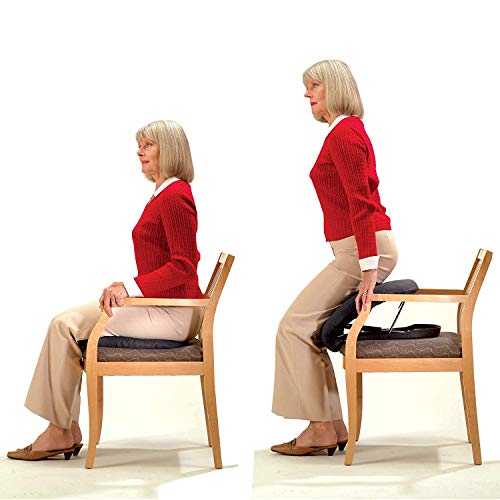
↓ See why we picked itA seat lift cushion is a portable cushion that raises or tilts the seat as you stand up, so you start the rise from a higher, more forward position. It sits on a chair or firm sofa and does not replace the furniture. That makes it a lighter, cheaper and more portable idea than a full lift chair, but it also means the chair underneath matters a great deal.
Search results for this keyword are crowded with thick foam booster pads and gel comfort cushions that do not lift anyone, so this guide is deliberately short. Only three products in the data we reviewed are genuine lifting cushions: the Carex Upeasy Seat Assist Plus, the Seat Boost Air and the Vive Inflatable Seat Assist. They use three different mechanisms, a self-powered gas spring, a plug-in pneumatic lift and an inflatable cushion with a pump, and we did not pad the list with riser pads or color variants. We evaluated each one from its product page.
Because this is support equipment, check the stated weight limit against the user, confirm the chair type is on the maker's approved list, and make sure the chair cannot slide. A clinician or occupational therapist can confirm which style, if any, suits a person's strength, balance and transfers. Nothing here is medical advice or a claim of medical benefit.
6 Criteria to Look For Before Buying a Seat Lift Cushion
Key buying criteria so you get the right fit the first time.
Spring, pneumatic or inflatable
Seat lift cushions raise the seat in three different ways, and the mechanism decides what you maintain and how it feels. The Carex Upeasy Seat Assist Plus uses a hydro-pneumatic gas spring with no power, the Seat Boost Air uses a pneumatic lift with up, down and stop buttons, and the Vive uses an inflatable cushion with a plug-in pump. A spring is the simplest but has no stop control, while powered styles let you pause. Pick the mechanism you will actually be comfortable operating every day.
Stated weight capacity
Every lifting cushion is rated for a particular user weight, and mismatching it can make the lift too forceful or too weak. The Seat Boost Air states 220 lb and the Vive states 250 lb. The Carex advertises up to 70 percent assistance, so confirm its stated user weight band on the current page. Choose a cushion where the user sits well inside the stated range, since these are manufacturer figures. Never assume a cushion is set up for a heavier or lighter person.
Lift height and angle
The way a cushion raises you matters as much as how much. The Seat Boost Air states a 35 degree lifting angle, and the Carex says its design lifts without pushing you forward. A steep angle can feel abrupt for some users, and a shallow one may not help enough. Consider how far you need to be raised to put your feet flat and your knees at a comfortable bend. A clinician can advise on whether the stated angle suits your balance. Compare how far the seat rises against your chair height, since a chair that is already high may need less lift than a low sofa.
Chair and surface compatibility
A lifting cushion depends on the chair under it, and every maker has exclusions. The Seat Boost Air is not recommended for wheelchairs or chairs with non-locking wheels, and the Carex line says it suits most armchairs and firm sofas. Soft, sagging or reclining seats can let a cushion shift. Choose a firm chair with arms and make sure it cannot slide. If the chair rolls or reclines, the cushion is the wrong tool.
Power source and controls
How the cushion is controlled changes where and when you can use it. The Carex needs no power at all, the Seat Boost Air has single up, down and stop buttons, and the Vive uses a plug-in pump with a remote. A plug-in model needs an outlet nearby and a safe cord path. If power cuts or travel are concerns, the Carex has an advantage. If you want to stop partway, choose a controlled lift. Power cords also need a safe route across the floor so they do not become a trip hazard.
Weight, storage and cleaning
Portability decides whether the cushion moves between chairs and rooms. The Carex weighs 9 lb with a built-in handle, and the Seat Boost Air is compact enough to store under a bed with a hidden carry handle. The Carex cover wipes clean with a damp, soapy cloth, and the Vive carries warranty notes for the pump and cushion. Consider how often you will move it. A cushion that stays on one chair can be heavier than one carried daily.
3 Best Seat Lift Cushions in 2026
Carex Upeasy Seat Assist Plus
About this pick
The Carex Upeasy Seat Assist Plus is the plain, self-powered option in this group. It uses a hydro-pneumatic gas spring that releases as you stand, giving up to 70 percent assistance with no batteries or outlet. The maker calls its patented design LeveLift and says it provides a gentle rise without pushing forward, and the page lists a 15 inch base width.
It weighs 9 lb and has a built-in handle, so it can move between rooms or go in a car trunk for a visit. The page says it works on most armchairs and firm sofas and is meant for people who can walk independently. The cover is waterproof and wipes clean with a damp, soapy cloth. The listing text we reviewed does not give a full weight range in the points we saw, so confirm the user weight band on the current page.
Ownership is easy because there is nothing to charge and nothing to plug in. The trade-off is that a spring mechanism assists the rise but offers no stop-anywhere control, unlike the Seat Boost Air with its up, down and stop buttons. Compared with the Vive at 250 lb it has no pump, and compared with the Seat Boost Air at 35 degrees it quotes a percentage rather than an angle. If you want the simplest no-power cushion for a firm armchair, this is it.
Best for: Firm armchairs where a simple, no-power cushion is preferred over a remote.
Check price on AmazonSpecs
- Lift support: Up to 70%
- Mechanism: Hydro-pneumatic gas spring, no power
- Weight: 9 lb with built-in handle
- Base width: 15 in
Pros
- +No batteries, cords or outlet needed
- +States up to 70% assistance from the spring
- +Only 9 lb with a built-in handle
- +Waterproof cover wipes clean
Cons
- −No stop-anywhere control on the lift
- −Full weight range not in the text reviewed
- −Needs a firm chair or armchair
Seat Boost Air Pneumatic Seat Assist Cushion
About this pick
The Seat Boost Air is a pneumatic cushion with a stated 220 lb capacity and a 35 degree lifting angle. It has single up, down and stop buttons, so you choose how high it goes and can stop partway. The page says the user sits nearly flush with the couch or chair rather than perched on a wobbly booster, and that the handles can be removed for a wider seat width.
Setup needs no tools, and the cushion has a hidden carry handle and a non-slip soft pad. It is compact enough to store under a bed. The listing says it is not recommended for wheelchairs or chairs with non-locking wheels. The stop button is the useful difference here, since it lets you set a height that suits your knees and your chair.
The 220 lb capacity is the lowest stated in this trio next to the Vive's 250 lb, so heavier users should look elsewhere. Compared with the Carex, it adds control but also adds a power source and a control button to manage. If you want a lift you can pause and a cushion that sits low when lowered, this one earns its place.
Best for: Users who want to stop the lift at a chosen height and sit nearly flush.
Check price on AmazonSpecs
- Stated capacity: 220 lb
- Lift angle: 35 degrees
- Controls: Single up, down and stop buttons
- Storage: Compact, fits under a bed
Pros
- +Up, down and stop buttons for control
- +States a 35 degree lifting angle
- +Sits nearly flush and stores under a bed
- +Removable handles widen the seat
Cons
- −Stated capacity of 220 lb is modest
- −Not for wheelchairs or non-locking wheels
- −Needs a power source for the controls
Vive Inflatable Seat Assist Lifting Cushion with Remote
About this pick
The Vive Inflatable Seat Assist uses air instead of a spring or a mechanical tilt. A plug-in pump with a remote inflates the cushion evenly to give a gentle lift and then deflates it to lower. The page states a 250 lb capacity and an 18 by 18 inch size, and it describes use on chairs, couches, armchairs and office seats.
Inflation is a smooth, even rise, which some people prefer to a spring release. The page notes a one-year warranty on the pump and a six-month guarantee on the cushion. An air-filled design needs a firm base chair and careful use, because an inflatable surface can feel less steady than a rigid frame. The text we reviewed does not state the lift height or angle, so check the page for that.
In ownership the pump and cable are the extra pieces, and the inflatable cushion needs protecting from sharp objects. Compared with the Carex at 9 lb with no power, it adds a pump and remote, and compared with the Seat Boost Air at 220 lb it states a higher capacity. If capacity and a remote matter more than a quiet spring, the Vive is the choice.
Best for: Heavier users up to its stated 250 lb who want a remote-controlled inflatable lift.
Check price on AmazonSpecs
- Stated capacity: 250 lb
- Size: 18 by 18 in
- Pump: Plug-in, remote controlled
- Warranty: One year pump, six months cushion
Pros
- +Stated 250 lb capacity is the highest here
- +Remote and pump handle lift and lowering
- +Inflates evenly for a gentle rise
- +Warranty periods stated for pump and cushion
Cons
- −Lift height not stated in the text reviewed
- −Inflatable surface needs a firm chair underneath
- −Needs an outlet for the plug-in pump
How We Evaluated These Seat Lift Cushions
Each pick was assessed across 5 criteria weighted for real-world use.
Does it actually lift
We kept only products that raise or tilt the seat as the user stands. The Carex, Seat Boost Air and Vive all qualify, while thick foam riser pads and gel comfort cushions in the same search results do not. That filter is why this guide has only three picks.
Stated capacity and assistance
We recorded each stated capacity and assistance claim, from the Seat Boost Air at 220 lb to the Vive at 250 lb and the Carex up to 70 percent. We treated them all as manufacturer claims. Where a page did not give a figure in the text we reviewed, we said so.
Control and mechanism
We compared the spring release of the Carex with the stop-anywhere buttons of the Seat Boost Air and the remote pump of the Vive. We weighed how much control each gives and what it asks of the user. The Seat Boost Air leads on control, and the Carex leads on simplicity.
Compatibility and exclusions
We looked at which chairs each maker approves or excludes, including the Seat Boost Air's note on wheelchairs and non-locking wheels. We considered how likely each was to suit an ordinary armchair. Exclusion lists were treated as important, not as small print.
Portability and ownership
We compared weight, handles, storage and cleaning, such as the Carex at 9 lb and the Seat Boost Air's under-bed storage. We noted warranty periods on the Vive. Ease of daily use counted as much as headline specs.
How to Choose the Right Seat Lift Cushions
By Mechanism
The way the cushion lifts decides how you operate it and what it needs.
| Situation | Pick | Why |
|---|---|---|
| Wants no power at all | Carex Upeasy Seat Assist Plus | A gas spring gives up to 70% assistance with no outlet. |
| Wants to pause the lift partway | Seat Boost Air Pneumatic Seat Assist Cushion | Has up, down and stop buttons and a 35 degree angle. |
| Prefers a remote and a smooth rise | Vive Inflatable Seat Assist Lifting Cushion with Remote | A pump and remote inflate the cushion evenly. |
| Travels often and needs to carry it | Carex Upeasy Seat Assist Plus | Weighs 9 lb with a built-in handle. |
| Needs to store it out of sight | Seat Boost Air Pneumatic Seat Assist Cushion | Compact enough to store under a bed. |
A clinician or occupational therapist can confirm which mechanism suits the user.
By Budget
Relative tiers help match what you pay to what you need.
| Tier | Pick | What you get |
|---|---|---|
| Entry to mid | Carex Upeasy Seat Assist Plus | A no-power spring lift at 9 lb. |
| Mid | Vive Inflatable Seat Assist Lifting Cushion with Remote | A remote pump and 250 lb stated capacity. |
| Mid to premium | Seat Boost Air Pneumatic Seat Assist Cushion | A controlled 35 degree lift with stop control. |
Tier placement reflects relative listing positioning and may shift, so check the current product page.
Powered vs Unpowered
Power changes control, convenience and where the cushion can go.
Unpowered
An unpowered cushion needs nothing but a firm chair, so it works through a power cut and in other people's homes. The Carex is the pick here at 9 lb and up to 70% assistance. Choose this side if simplicity and carrying matter most. The trade-off is that you cannot stop the lift partway.
Powered
A powered cushion adds controls and lets you set the height. The Seat Boost Air gives stop control at a 35 degree angle, and the Vive uses a plug-in pump at a stated 250 lb. Choose this side if you want more say in how high it goes. The trade-off is an outlet, a cord and more to maintain.
If a cord path is a trip risk in your room, favor the unpowered option.
By User Weight
The stated weight limit must sit comfortably above the user.
| User | Pick | Why |
|---|---|---|
| Under 220 lb with a firm chair | Seat Boost Air Pneumatic Seat Assist Cushion | Stated 220 lb capacity and a 35 degree lift. |
| Between 220 lb and 250 lb | Vive Inflatable Seat Assist Lifting Cushion with Remote | States 250 lb, the highest in this list. |
| Light to average build wanting simple assistance | Carex Upeasy Seat Assist Plus | Confirm the stated user weight band on the page first. |
A lighter person on a cushion set for a heavier person can get an overly energetic lift.
For Armchairs Specifically
Armchairs are the most common home for a lifting cushion.
Look for
Look for a firm seat with sturdy arms and a chair that does not slide on the floor. The cushion should be on the maker's approved list and the user should have something to hold when rising. Avoid reclining or wheeled chairs entirely.
In this comparison
The Carex is designed for most armchairs and firm sofas at 9 lb. The Seat Boost Air removes its handles for a wider seat, and the Vive uses an 18 by 18 inch cushion. Check each page against the width between your chair's arms.
Confirm the setup with a clinician or occupational therapist.
When to Spend More
A higher tier is worth it in some situations only.
| Spend more if | Save if |
|---|---|
| You want stop control like the Seat Boost Air offers | A simple spring lift like the Carex is enough |
| You need the Vive's stated 250 lb capacity | The user is well under 220 lb |
| You want a remote and a smooth inflated rise | You prefer no cords and no pump |
| You want under-bed storage and removable handles | The cushion will stay on one chair |
Fit and chair type matter more than price.
Frequently Asked Questions
Why does this guide have only three picks?
Most items in this search are foam booster pads or comfort cushions that raise the seat height slightly but do not lift as you stand. Only the Carex, Seat Boost Air and Vive actually lift. We chose not to pad the list with products that do not do the job.
How do I choose between a spring and a powered cushion?
A spring cushion like the Carex needs no outlet and is the simplest, but it has no stop control. A powered cushion like the Seat Boost Air lets you stop partway, while the Vive adds a remote and a pump. Pick based on whether you want control or simplicity. Both kinds need a firm chair.
Which chairs are not suitable?
Makers commonly exclude wheelchairs, cars, reclining chairs and chairs with wheels. The Seat Boost Air page says it is not recommended for wheelchairs or chairs with non-locking wheels. Check the exclusions for your exact chair. If the chair can slide or recline, do not use a lifting cushion on it.
Does the weight rating really matter?
Yes. The Seat Boost Air states 220 lb and the Vive states 250 lb, and the Carex is matched to a weight band. A lighter person on a cushion set for a heavier person can get a lift that is too energetic. Choose a cushion rated for the actual user.
How do I look after a lifting cushion?
The Carex cover wipes clean with a damp, soapy cloth. A powered cushion needs a safe cord path and protection from sharp objects if it is inflatable like the Vive. If a spring feels stiff after a long time unused, work through the maker's instructions. Do not force a stuck mechanism.
Is a lifting cushion a replacement for a lift chair?
No. A cushion raises or tilts the seat of an existing chair, and it only suits people who can already bear weight on their legs. A lift chair is a different product. A clinician or occupational therapist can advise which one fits a given person.
Can I use a lifting cushion in a car?
Only if the maker says so. The Carex line lists automobiles among its not recommended uses, and the Seat Boost Air page excludes wheeled chairs. A car seat is also contoured and angled, which changes how a cushion sits. Check the exact page for your cushion before trying it in a vehicle.
What should I do before using one for the first time?
Put the cushion on a firm chair with arms, place the chair against a wall or on a non-slip surface so it cannot slide, and check the weight setting or rating for the user. Practice the rise with someone nearby and a handhold within reach. Ask a clinician or occupational therapist to review the technique, especially after surgery or a change in balance.
Bottom Line
best overall: Carex Upeasy Seat Assist Plus - best self-powered pick in this roundup.
See the full rankings above for all picks with pros, cons, and best-for summaries.
Browse on Amazon
All Prime-eligible options with current pricing.
Shop on Amazon →