6 Best Plug-In Wi-Fi Extenders in 2026
Six wall-outlet Wi-Fi extenders that fix weak rooms without a tangle of cords, compared on antennas, band speed, Ethernet ports and the standard they support.




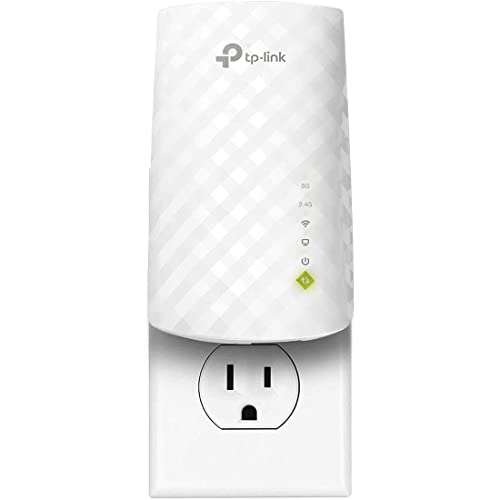

At a Glance
TP-Link Dual Band Extender with Ethernet Port
↓ See why we picked itThe appeal of a plug-in extender is that it lives in the wall and needs no shelf, no cord and no desk space. You push it into an outlet, pair it, and it quietly repeats your signal from that spot. For older homes with few surfaces and for anyone who dislikes visible clutter, that form factor beats a box that has to sit on furniture.
Choosing one is about more than the plug, though. Outlets are fixed in place, so the spot you can use may not be the spot with the best signal, and external antennas can crowd a duplex outlet. A smart choice weighs how the unit sits against the wall, whether it blocks the second socket, and what standard it carries inside.
We evaluated six wall-mounted extenders based on product specs and buyer feedback, comparing antenna layout, band speed, wired ports and Wi-Fi generation. Keep in mind that an extender widens coverage but does not raise the speed of your internet plan.
6 Criteria to Look For Before Buying a Plug-In Wi-Fi Extender
Key buying criteria so you get the right fit the first time.
Mind the outlet footprint
A plug-in unit sits against the wall, and wide bodies or protruding antennas can block the second socket in a duplex outlet. Measure the free space around the outlet before buying, and favor slimmer designs for crowded spots. The TP-Link RE550 has three external antennas and the most width of the group, while the RE315 has two. A hallway outlet with a lamp or charger beside it fits a compact unit better. Outlets behind furniture or low near the floor also hurt reception, so chest height is the better target. If the only free outlet is awkward, a slim body gives you the most flexibility.
Choose the outlet before the model
The best outlet is roughly halfway between the router and the weak room, where the router signal is still strong. An outlet inside the dead zone only repeats a weak signal. Walk through the house with a phone and note where the connection falls off, then pick the outlet a short step earlier. Larger units such as the RE550 at 2100 square feet forgive a poor outlet better than the 1200 square foot TP-Link Ethernet model. Two or three trial spots cost nothing, since you can pair, check the indicator light and move on. Keep each test at least a few minutes so the link has time to settle.
Prefer adjustable antennas where space allows
Movable antennas let you tilt coverage toward a stairwell or down a hall after the plug is in place. The RE550 offers three and the RE315 two, while the NETGEAR EX5000 keeps tuning to the app. Directional models like the RE615X need aiming too, because beamforming works best when pointed sensibly. If the outlet is awkward, adjustable antennas are the cheapest way to correct it. As a rule of thumb, point one antenna up and one sideways so both floors and the hallway get signal. Re-aim after any furniture change, because the best angle shifts.
Look for a built-in Ethernet port
A port next to the plug saves a long cable and lets a TV or console skip wireless entirely. Among these picks the RE615X, the TP-Link Ethernet model and the PEDUMMY list a port, while the RE315 and EX5000 listings do not. Access point mode on the PEDUMMY goes further if you already have a cable in the wall. Think about what sits near the outlet before choosing. A TV cabinet with a socket behind it is the classic case for a unit that doubles as a wired bridge. Without a port, that same TV would depend on a wireless hop that is more likely to stutter.
Match the standard to your router
Wi-Fi 6 helps only when both the router and the devices support it, and TP-Link notes that extenders do not raise your internet speed. The RE615X at 1.8 Gbps suits a Wi-Fi 6 setup, while the RE550 at 1.9 Gbps and the NETGEAR EX5000 at 1.2 Gbps suit Wi-Fi 5. Paying for a newer standard behind an older router buys nothing. Check the router label first. The label or the admin page normally names the standard, such as AC for Wi-Fi 5 or AX for Wi-Fi 6. Matching the pair avoids paying for features that stay switched off.
Judge setup simplicity
Most buyers want to plug in, press a button and be done. WPS pairing is the quickest method, and an app like NETGEAR's Nighthawk is the fallback that guides each step. The RE315, RE550 and EX5000 all support push-button pairing, and the EX5000 adds the app. Skip any unit whose instructions assume you can type router addresses without guidance.
6 Best Plug-In Wi-Fi Extenders in 2026
TP-Link RE615X AX1800 Wi-Fi 6 Extender
About this pick
The RE615X brings together the three features that matter most for a wall unit: Wi-Fi 6, a wired port and sizable coverage. It lists 1.8 Gbps of dual-band bandwidth, two high-gain directional antennas with beamforming, and a rated reach of up to 2100 square feet. The Ethernet port lets you attach a streaming box or console right where the outlet is.
Its value depends on the router behind it. Wi-Fi 6 only pays off when the main router and your devices speak the same standard, and TP-Link states clearly that extenders do not increase internet speed. Directional antennas also make placement matter, since pointing them at a wall reduces any benefit.
Ownership is mostly about picking the right outlet, ideally one halfway between the router and the dead room. At 2100 square feet it matches the RE550 on coverage while adding Wi-Fi 6, and its 1.8 Gbps sits well above the 1.2 Gbps of the RE315 and NETGEAR EX5000. Because it includes a port, it also does a job the PEDUMMY performs, but with a more established brand behind it.
Best for: Wi-Fi 6 homes that also want a wired port at the outlet.
Check price on AmazonSpecs
- Standard: Wi-Fi 6 AX1800
- Total bandwidth: 1.8 Gbps
- Listed coverage: 2100 sq ft
- Wired port: Ethernet port
Pros
- +Wi-Fi 6 with 1.8 Gbps total bandwidth
- +Ethernet port for a TV or console
- +Beamforming directional antennas
- +2100 sq ft listed coverage
Cons
- −Gains vanish behind a Wi-Fi 5 router
- −Directional antennas need careful aiming
- −Extra capability exceeds a small flat's needs
TP-Link AC1900 RE550 Range Extender
About this pick
If wall space is generous and the house is large, the RE550 gives the most Wi-Fi 5 muscle in this guide. Its listing shows 1.9 Gbps of total bandwidth, three adjustable external antennas and a rated coverage of up to 2100 square feet. The extra antenna gives you more ways to angle the signal toward a hallway or a staircase.
Three antennas mean the unit is wider and can crowd the second outlet in a duplex receptacle, which is the main drawback of the plug-in format. It also lacks Wi-Fi 6, so a modern router will limit how much of its newer capability you reach. For many homes, though, the older standard is a perfectly good match.
Set-up takes minutes with WPS or a browser, and then you can adjust the antennas upward or sideways without touching the base. Against the RE615X it offers 100 Mbps more listed total bandwidth but no wired port, and against the RE315 at 1500 square feet it adds 600 square feet of listed range. It is a sensible pick when outlet position forces you to be a distance from the weak room.
Best for: Larger or multi-floor homes where the outlet sits far from the dead zone.
Check price on AmazonSpecs
- Standard: AC1900 Wi-Fi 5
- Total bandwidth: 1.9 Gbps
- Antennas: 3 adjustable external
- Listed coverage: 2100 sq ft
Pros
- +1.9 Gbps total is the highest in this group
- +Three antennas can be angled by hand
- +2100 sq ft listed reach
- +Works with any Wi-Fi router
Cons
- −Wider body can crowd a nearby outlet
- −No Wi-Fi 6 support
- −No Ethernet port in the listing
TP-Link AC1200 RE315 Dual Band Extender
About this pick
The RE315 balances footprint and features better than the larger units. It carries two adjustable external antennas, 1.2 Gbps of dual-band bandwidth with 867 Mbps on 5 GHz, and Adaptive Path Selection that chooses a cleaner route back to the router. Rated coverage is up to 1500 square feet.
It shares its limits with every compact unit: less headroom for heavy use and a coverage figure that shrinks behind walls. There is no wired port in the listing, so anything that wants a cable needs a different model. Still, two antennas leave more room for neighboring plugs than three would.
This is the model to reach for when the outlet is in a hallway and the goal is one weak bedroom. It offers the same 1.2 Gbps as the NETGEAR EX5000 but lets you rotate two antennas instead of relying on an app. With the RE550 you gain 600 square feet and a third antenna, and with the RE615X you gain Wi-Fi 6, so the RE315 earns its place purely on simplicity.
Best for: A hallway outlet feeding one nearby bedroom or den.
Check price on AmazonSpecs
- Standard: AC1200 Wi-Fi 5
- 5 GHz speed: 867 Mbps
- Listed coverage: 1500 sq ft
- Antennas: 2 adjustable external
Pros
- +Two antennas keep the plug footprint modest
- +867 Mbps on 5 GHz for streaming
- +Adaptive Path Selection routing
- +Straightforward match for a small gap
Cons
- −No Ethernet port in the listing
- −Less headroom for a busy household
- −1500 sq ft is a best-case rating
NETGEAR EX5000 AC1200 WiFi Extender
About this pick
NETGEAR keeps the experience tidy with a guided Nighthawk app, or a quick WPS press on both devices. That makes it a friendly option for a wall unit that you do not want to fiddle with once it is plugged in. It runs Wi-Fi 5 on two bands for a rated 1.2 Gbps and a stated reach of 1500 square feet.
There is little to adjust after installation, which suits some buyers and frustrates others. You will not find movable antennas to correct a poor outlet position, so the room choice matters more. The format also offers no Wi-Fi 6, so it is the safe, simple option rather than the ambitious one.
If the outlet is well placed, the EX5000 is easy to live with and rarely needs attention. Its bandwidth equals the RE315 at 1.2 Gbps, though you trade antenna tuning for the app, and it sits below the RE615X at 1.8 Gbps. A person who wants to plug in, tap through a short app guide and forget about it will find it the least stressful of the group.
Best for: Someone who wants app-guided setup and nothing else to manage.
Check price on AmazonSpecs
- Standard: Wi-Fi 5 AC1200
- Total bandwidth: 1.2 Gbps
- Listed coverage: 1500 sq ft
- Setup: WPS or Nighthawk app
Pros
- +Nighthawk app guides the installation
- +WPS pairing as a quick alternative
- +1.2 Gbps across two bands
- +Clean, no-tuning ownership
Cons
- −No adjustable antennas to aim
- −Wi-Fi 5 only
- −Same coverage rating as the cheaper RE315
TP-Link Dual Band Extender with Ethernet Port
About this pick
This smaller TP-Link model combines dual-band operation with a wired port at the lowest rung of the brand's range in this guide. TP-Link says it delivers up to 44% more bandwidth than single-band N300 extenders and covers up to 1200 square feet. The Ethernet port lets a streaming stick or a printer ride along without needing wireless at all.
Its limits are the numbers: the 1200 square foot rating is the lowest in this comparison, and the listing gives no per-band speeds to compare. It is not designed for a big house or for a busy household. Think of it as the right size for a studio apartment, an extra bedroom or a basement corner.
As a plug-in it is among the least obtrusive, since it needs fewer antennas than the bigger models. It undercuts the RE315's 1500 square feet and the RE550's 2100, but it gives you an Ethernet port that the RE315 and the NETGEAR EX5000 listings do not mention. Pick it when one wired device is the reason you are buying an extender at all.
Best for: A small room where one device needs a cable.
Check price on AmazonSpecs
- Bands: Dual band 2.4 and 5 GHz
- Listed coverage: 1200 sq ft
- Wired port: Ethernet port
- Bandwidth gain: 44% over N300 single band
Pros
- +Ethernet port at a small, simple tier
- +Dual band beats single-band N300 models
- +Trusted brand and easy pairing
- +Fits a small footprint
Cons
- −Lowest listed coverage at 1200 sq ft
- −No per-band speed figures stated
- −Too modest for large homes
PEDUMMY 1200Mbps Dual Band WiFi Extender
About this pick
The PEDUMMY offers a LAN port and an access point mode on a plug-in body, which opens up a use that a pure repeater cannot match. If you already have a cable running to a far room, AP mode turns the outlet into a clean second access point instead of a weaker repeat. The listing gives 867 Mbps on 5 GHz, 300 Mbps on 2.4 GHz and coverage up to 5200 square feet.
The coverage number is an upper limit, and the brand carries less history than TP-Link or NETGEAR. You are also limited to Wi-Fi 5, so a newer router will leave some of its potential unused. For the right buyer, the flexibility matters more than the pedigree.
Setup is quick, and the physical form is typical of a wall unit. It matches the RE315 on 5 GHz speed at 867 Mbps, but where the RE615X offers Wi-Fi 6 and the RE550 offers a third antenna, this one offers modes. Use it where you can run a cable, and the extender becomes more than a repeater.
Best for: Homes with a spare cable run that can use AP mode.
Check price on AmazonSpecs
- 5 GHz speed: 867 Mbps
- 2.4 GHz speed: 300 Mbps
- Wired port: Ethernet LAN
- Modes: Repeater and access point
Pros
- +Access point mode for cabled rooms
- +LAN port for a wired device
- +867 Mbps on the 5 GHz band
- +Large listed coverage for the class
Cons
- −Smaller brand with less support history
- −5200 sq ft claim is optimistic
- −No Wi-Fi 6 radio
How We Evaluated These Plug-In Wi-Fi Extenders
Each pick was assessed across 5 criteria weighted for real-world use.
Physical footprint and antenna layout
We looked at how many antennas each unit has and how they stick out of the wall plug. The RE550 has the widest layout with three, the RE315 two, and the TP-Link Ethernet model the smallest list of features. Slimmer designs earned points for fitting a crowded outlet.
Wired ports and extra modes
We checked which listings include a LAN port or an access point mode, because a wall plug is often placed near a TV. The RE615X, the TP-Link Ethernet model and the PEDUMMY mention ports. AP mode counted as a notable plus for the PEDUMMY.
Band speed and standard
We compared total bandwidth and generation: the RE615X at 1.8 Gbps Wi-Fi 6, the RE550 at 1.9 Gbps Wi-Fi 5, and the 1.2 Gbps class of the RE315 and EX5000. Band-by-band figures were credited when stated, like the PEDUMMY's 867 Mbps on 5 GHz.
Setup and pairing
We weighed WPS, browser and app routes. The NETGEAR EX5000 offers both the Nighthawk app and WPS, which suited the plug-and-forget use case. Units that mention no guided tool were scored more conservatively.
Lineup positioning
Each pick was ranked against its siblings. The RE615X leads on features, the RE550 on antennas and raw bandwidth, the RE315 on compactness, the EX5000 on guided setup, the small TP-Link model on entry-level Ethernet and the PEDUMMY on modes. Popularity and pricing played no part.
How to Choose the Right Plug-In Wi-Fi Extenders
By Outlet Location
Where the outlet is often decides the winner more than the spec sheet.
| Outlet situation | Pick | Reason |
|---|---|---|
| Hallway outlet with a neighbor plugged in | TP-Link AC1200 RE315 | Two antennas leave room for the second socket |
| Outlet far from the weak room | TP-Link AC1900 RE550 | 2100 sq ft and three antennas to compensate |
| Outlet behind the TV | TP-Link RE615X Extender | Ethernet port feeds a streaming box |
| Basement or utility corner | TP-Link Ethernet Port Extender | Small and simple at 1200 sq ft |
| Outlet near a cable drop | PEDUMMY 1200Mbps Extender | AP mode uses the cable run |
An outlet halfway between the router and the weak room is the target.
By Budget
Relative tiers keep the choice honest.
| Tier | Pick | What you get |
|---|---|---|
| Entry | TP-Link Ethernet Port Extender | Dual band and a wired port at 1200 sq ft |
| Entry to mid | TP-Link AC1200 RE315 | 867 Mbps 5 GHz in 1500 sq ft |
| Mid | NETGEAR EX5000 | Guided setup in 1500 sq ft |
| Mid | PEDUMMY 1200Mbps Extender | AP mode and a LAN port |
| Premium | TP-Link AC1900 RE550 | Three antennas at 1.9 Gbps |
| Premium | TP-Link RE615X Extender | Wi-Fi 6 with a port |
Compact does not mean cheap, and large does not mean better.
Compact Plug vs Large Antenna Style
The body shape changes what you can do after installation.
Compact plug side
Slim bodies with fewer antennas fit crowded outlets and look tidy. The TP-Link Ethernet model and the RE315 fall here, with the NETGEAR EX5000 also on the quieter side. Choose this when outlet space is tight.
Large antenna side
Wider bodies with more antennas give you aiming control and more listed reach. The RE550 with three antennas and the RE615X with directional antennas sit here. Choose this when range matters more than looks.
Small rooms suit compact plugs, and sprawling houses suit the larger antenna models.
By Wired Needs
A port near the outlet changes which model makes sense.
| Need | Pick | Reason |
|---|---|---|
| Smart TV beside the outlet | TP-Link RE615X Extender | Ethernet port with Wi-Fi 6 |
| Single printer or stick | TP-Link Ethernet Port Extender | Port at the simplest tier |
| Cabled room needing a second access point | PEDUMMY 1200Mbps Extender | AP mode over a cable |
| No wired devices at all | NETGEAR EX5000 | App setup, no port needed |
| Only phones and tablets | TP-Link AC1200 RE315 | 867 Mbps 5 GHz is plenty |
If nothing needs a cable, skip paying for a port.
For Older Homes Specifically
Older houses have their own quirks with thick walls and sparse outlets.
Look for
Look for stronger antenna options and higher listed coverage, since plaster, brick and long hallways absorb signal. Choose a plug that does not block the few outlets you have, and consider AP mode if a cable run exists.
In this comparison
The TP-Link RE550 with three antennas at 2100 square feet handles thick walls best, while the RE315 at 1500 square feet suits smaller layouts. The PEDUMMY adds AP mode when a cable is available.
Test the signal on a phone at the intended outlet before you commit to it.
When to Spend More
Some upgrades pay off and some do not.
| Spend more if | Save if |
|---|---|
| Your router is Wi-Fi 6 and the RE615X at 1.8 Gbps fits | Your router is older and the RE315 at 1.2 Gbps is enough |
| Your outlet is far and the RE550 at 2100 sq ft is needed | One bedroom is the whole problem |
| You need a port and AP mode like the PEDUMMY offers | You have no wired devices and the NETGEAR EX5000 will do |
| Several people stream from the dead room | Only one person uses that room |
If three or more rooms fail, a mesh system serves better than any single plug.
Frequently Asked Questions
Are plug-in extenders better than desktop ones?
They are not better in raw performance, only in convenience. A plug-in saves shelf space and hides cords, while desktop units sometimes have more antennas or ports. The choice depends on your outlet position and what is nearby. Pick the model whose features fit the spot, not the form. A tidy wall plug in a living room can look better than a box on a shelf, but a desktop style may suit a bookcase. Consider who will notice it daily.
Will a plug-in extender block my second outlet?
It can, particularly models with wide bodies or antennas that stick out sideways. The TP-Link RE550 has three antennas and takes the most room, while the RE315 with two is easier to fit. Check the free space around the outlet before buying. A short extension cord is a last-resort workaround.
Where is the best outlet for the extender?
Choose one halfway between the router and the room with weak signal, where the router signal is still strong. A spot inside the dead zone only rebroadcasts a weak signal. Keep it away from microwaves and big metal objects. Confirm with a phone before settling.
Do I need Wi-Fi 6 in a plug-in extender?
Only if your router and devices support it. The RE615X at 1.8 Gbps is built for that case, but behind a Wi-Fi 5 router it will not give extra speed. TP-Link says extenders do not increase internet speed. Most older homes do well with Wi-Fi 5.
Can I connect a TV directly to the extender?
If the model has an Ethernet port, yes. The RE615X, the TP-Link Ethernet model and the PEDUMMY list ports. A cable generally gives steadier streaming than a wireless link. Models without a port need the TV to use Wi-Fi.
Why does my plug-in extender create a second network?
Many extenders broadcast a separate network name, so devices only switch if you move them. Naming it clearly during setup avoids confusion. Mesh systems hide this by using one name. If it bothers you, a mesh kit is a better fit.
How long do plug-in extenders last?
They have no moving parts, so they often run for years, but heat and aging firmware can cause trouble. Unplugging a unit that is acting up and plugging it back in clears most issues. Check for firmware updates through the app or browser. Brands with established support, like TP-Link and NETGEAR, tend to update longer. A unit that keeps overheating or disconnecting after a reset is worth replacing rather than nursing along. Keep the original box or order details in case you need a return.
Bottom Line
best overall: TP-Link RE615X AX1800 Wi-Fi 6 Extender - best overall pick in this roundup.
See the full rankings above for all picks with pros, cons, and best-for summaries.
Browse on Amazon
All Prime-eligible options with current pricing.
Shop on Amazon →