5 Best Outdoor Wi-Fi Extenders in 2026
Five weatherproof and solar outdoor Wi-Fi extenders compared on range, antennas, mounting and power, for yards, patios, garages and workshops.


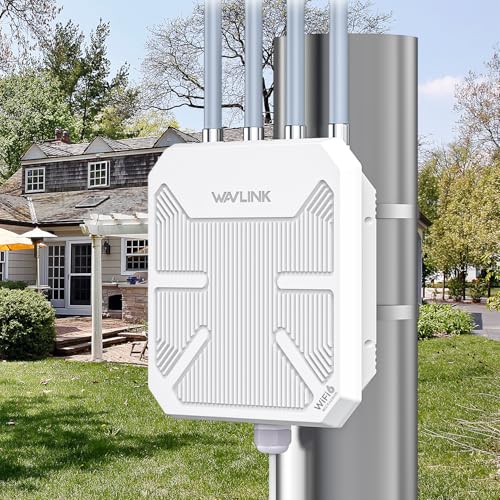


At a Glance
Getting Wi-Fi to the patio, the garden shed or the far end of a yard is a different problem from fixing a dead bedroom. Outdoor signal has to cross exterior walls and open air, and the hardware must survive rain, heat and cold. A standard plug in extender kept indoors usually cannot do the job, which is why a small group of weatherproof models exists.
The choices break down by how they get power and how they connect. Some run on mains or Power over Ethernet and use long fiberglass antennas for reach, some are add-ons to an indoor mesh system, and one runs on solar power for places with no outlet. Each approach has trade-offs in speed, setup effort and flexibility.
We evaluated five outdoor options based on product specs and buyer feedback, concentrating on weather rating, antenna design, speed class and what each one needs from your existing network.
6 Criteria to Look For Before Buying a Outdoor Wi-Fi Extender
Key buying criteria so you get the right fit the first time.
Weather rating and durability
An outdoor device must handle rain, dust, heat and cold, so look for a stated ingress rating. The WAVLINK AX1800 lists IP67, which is the strongest claim in this lineup, and the BrosTrend AX3000 is described as built for rain, heat and cold. Do not rely on an indoor extender in a covered porch for long. A proper rating is worth more than extra antennas if the unit will sit in the open. Cold climates deserve extra attention, because batteries and plastics behave differently below freezing. The BrosTrend AX3000 states that it operates in rain, heat and cold, which is the kind of broad claim to look for. Also check how the cables enter the unit, since a sealed housing with an open cable gland can still let water in.
Power method
How the unit gets power decides where you can put it. The BrosTrend AX3000 uses gigabit PoE, the AQUZO E8 uses solar and the WAVLINK AX1800, AX3000 and Deco X20-OUTDOOR need a powered location. Think about where your nearest outlet or Ethernet run is before choosing. A great extender with no power at the mounting spot is just an expensive paperweight. An outdoor rated outlet or a weatherproof junction box is a sensible addition for any mains powered model. If you pick PoE, remember to budget for the injector that sits indoors and the cable length between it and the unit.
Antennas and claimed range
Long fiberglass antennas push a stronger signal along the ground. The WAVLINK AX3000 uses four 8dBi detachable antennas with a 200 to 300 meter claim, while the AQUZO claims 120 meters. These claims assume open ground, so expect considerably less once trees, sheds and walls intervene. Plan for roughly half of the claimed distance in a typical yard. Antenna gain also shapes the signal, because high gain omni antennas such as the 8dBi ones on the WAVLINK AX3000 spread the signal flatter and wider rather than up and down. That is helpful across a yard but can leave a second floor window with less coverage.
Band and speed
The 2.4 GHz band travels farther but is slower, and 5 GHz is faster but shorter range. The WAVLINK AX1800 and Deco X20-OUTDOOR offer 1200 Mbps class speeds on 5 GHz, while the AQUZO runs only 300 Mbps on 2.4 GHz. For a camera or a smart sprinkler, 2.4 GHz is fine. For streaming or video calls on the patio, pick a 5 GHz capable model. Remember that the speed listed is a link rate between the unit and its client, and your actual internet speed is still capped by your plan and by how strongly the extender hears your indoor router. A fast outdoor unit that receives a weak indoor signal will deliver weak results.
Ecosystem requirements
Some outdoor units only extend a matching indoor system. The Deco X20-OUTDOOR requires an indoor mesh system and will not work alone, whereas the WAVLINK and BrosTrend models connect wirelessly to a standard router. Read the requirement line before buying. Mixing brands will not give you the seamless handoff you may expect. The WAVLINK AX1800 and AX3000 connect to a standard router, which makes them the easier fit for most households. If you own Deco indoors, the X20-OUTDOOR becomes the logical match, because the same app controls everything.
Security and mounting
An outdoor device is physically exposed, so strong security and secure mounting both matter. The BrosTrend AX3000 lists WPA3, while others rely on standard WPA2. Mount units high, under an eave if possible, to reduce tampering and weather exposure. Change default passwords on any unit that has a settings page. Securing the connection also protects against neighbors or passersby borrowing your bandwidth, since outdoor signals travel farther than indoor ones. The BrosTrend AX3000 with WPA3 is the strongest on paper in this lineup.
5 Best Outdoor Wi-Fi Extenders in 2026
WAVLINK AX1800 Outdoor Wi-Fi 6 Extender IP67
About this pick
The WAVLINK AX1800 is a Wi-Fi 6 outdoor extender with dual band speeds of 1201 Mbps on 5 GHz and 574 Mbps on 2.4 GHz. It carries an IP67 weatherproof rating, which is the highest dust and water protection tier among the picks that list one. The listing also states that it is Starlink compatible, and it is designed to push Wi-Fi beyond the walls of the house.
It is the best balance of speed, protection and flexibility here. Wi-Fi 6 helps when several phones, cameras or tablets share the outdoor signal, and the IP67 rating means rain and dust are not a concern. The compromise is that it is a fixed outdoor unit, so you need to plan a mounting spot and a power route rather than just plugging in.
Setup begins with picking a spot that still sees a strong signal from the house, usually under an eave or on an exterior wall. Compared with the AX3000 models from WAVLINK and BrosTrend, it is slower on paper but also closer to what most yards need. Against the AQUZO solar unit at 300 Mbps on 2.4 GHz, it is a far faster device with a more demanding installation.
Best for: Yards and patios needing fast weatherproof Wi-Fi 6
Check price on AmazonSpecs
- Speed class: AX1800 Wi-Fi 6
- 5 GHz speed: 1201 Mbps
- 2.4 GHz speed: 574 Mbps
- Weather rating: IP67
Pros
- +IP67 rating shrugs off rain and dust
- +1201 Mbps on 5 GHz for fast nearby devices
- +Wi-Fi 6 handles several outdoor clients at once
- +Listing states Starlink compatibility
Cons
- −Needs a planned mounting spot and power
- −Slower on paper than the AX3000 models
BrosTrend AX3000 Outdoor Wi-Fi Extender PoE
About this pick
The BrosTrend AX3000 is an outdoor Wi-Fi 6 extender with a gigabit PoE connection, WPA3 security and four built-in high power signal amplifiers. The listing says it is made for rain, heat and cold, and that it connects wirelessly to your indoor router to carry Wi-Fi into a yard or similar outdoor space. Power over Ethernet means one cable brings both data and electricity to the unit.
PoE is a plus for permanent installs because you only run one cable to the mounting point. WPA3 is the newest security standard, which is a better fit than older options for a device sitting outside. The tradeoff is that PoE requires a compatible injector or switch, and the listing gives less detail on antenna type than the WAVLINK models do.
It suits someone willing to mount something properly and run a cable to the location. Compared with the WAVLINK AX1800, it has the AX3000 speed class and a PoE-first design. Day to day, the biggest ownership task is getting the cable neatly and safely to the mounting point, and sealing any outdoor connectors so moisture stays out. Once mounted it needs little attention beyond occasional firmware updates and a glance at the connection after storms. Against the other WAVLINK AX3000, it trades long detachable antennas for built-in amplifiers.
Best for: Permanent installs with a single cable run
Check price on AmazonSpecs
- Speed class: AX3000 Wi-Fi 6
- Power: Gigabit PoE
- Security: WPA3
- Amplifiers: 4 built in
Pros
- +Gigabit PoE brings power and data on one cable
- +WPA3 security is the newest standard
- +Four built-in amplifiers boost the signal
- +Built for rain, heat and cold
Cons
- −Needs a PoE injector or switch to power it
- −Listing gives less antenna detail than rivals
WAVLINK AX3000 Outdoor Wi-Fi 6 Extender
About this pick
The WAVLINK AX3000 pairs Wi-Fi 6 speeds with four 8dBi omni directional detachable fiberglass antennas and two built-in amplifiers. The listing claims up to 200 to 300 meters of coverage, which is the longest claimed reach in this guide. It supports the standard 802.11 a/b/g/n/ac family in addition to Wi-Fi 6 on both bands.
Detachable antennas let you swap in different ones or route them away from the unit, which is a real advantage for odd mounting spots. The reach claim is best case in open space, so trees, sheds and walls will cut it considerably. This is more hardware than a normal backyard needs, and it costs more in setup time than a plug in extender.
Treat it as the choice for large properties such as farms or estates. Compared with the WAVLINK AX1800 at 1201 Mbps on 5 GHz, it steps up to the AX3000 class and adds detachable antennas. Against the AQUZO at a 120 meter claimed radius, it claims roughly double the distance. Mounting it high and clear of metal siding gets the most from the antennas, and the detachable design means a damaged antenna can be replaced without swapping the whole unit. Expect more cabling and planning than with any plug in extender.
Best for: Large properties, farms and long outdoor runs
Check price on AmazonSpecs
- Speed class: AX3000 Wi-Fi 6
- Antennas: 4 x 8dBi detachable
- Amplifiers: 2 built in
- Claimed range: 200 to 300 m
Pros
- +Four 8dBi antennas focus the signal outward
- +Detachable antennas allow flexible mounting
- +Longest claimed reach at 200 to 300 meters
- +AX3000 Wi-Fi 6 speed class
Cons
- −Reach claim assumes open ground
- −More hardware and setup than most yards need
TP-Link Deco X20-OUTDOOR AX1800 Mesh Add-On
About this pick
The Deco X20-OUTDOOR is an outdoor mesh add-on offering AX1800 Wi-Fi 6 with 1200 Mbps on 5 GHz and 574 Mbps on 2.4 GHz. The listing says it requires an indoor mesh Wi-Fi system and extends your home network outdoors as part of a unified setup. Seamless roaming means devices keep one network name between indoors and out.
That unified network is the reason to choose it. If you already have a compatible Deco setup, the outdoor unit slots in with automatic handoff, and the same app manages everything. If you do not have the matching indoor system, it is not a standalone solution, so its appeal depends on what you already own.
The practical decision is simple: owners benefit, newcomers should look elsewhere. Compared with the WAVLINK AX1800, which has similar speed numbers but works on its own, the Deco gives up independence for smoother roaming. Against the AQUZO solar unit, it is far faster but needs mains power.
Best for: Homes that already use an indoor Deco mesh
Check price on AmazonSpecs
- Speed class: AX1800, 4 streams
- 5 GHz speed: 1200 Mbps
- 2.4 GHz speed: 574 Mbps
- Requirement: Indoor mesh Wi-Fi system
Pros
- +Joins an indoor mesh with one network name
- +1200 Mbps on 5 GHz for fast outdoor use
- +Seamless roaming between indoors and outdoors
- +Four stream AX1800 design
Cons
- −Does nothing without an indoor mesh system
- −Needs power at the mounting location
AQUZO E8 Solar Powered Outdoor Wi-Fi Booster
About this pick
The AQUZO E8 is a solar powered outdoor booster built for places with no outlet. The listing claims a 120 meter radius, stable 2.4 GHz transmission at 300 Mbps and a self sufficient power design that needs no wiring. It is aimed at yards, farms and surveillance feeds in remote corners.
The solar angle is the entire appeal. Fence lines, sheds and gates are common places where running power is a chore, and this unit avoids that. The cost is speed: 300 Mbps on 2.4 GHz is plenty for a camera feed or a phone, but it is far slower than the 5 GHz capable models. The power claims also depend on sun exposure.
Place it where it sees both the sun and a usable signal from the house. Compared with the WAVLINK AX1800 at 1201 Mbps on 5 GHz, it is slower by a wide margin. Against the BrosTrend AX3000, it trades speed and WPA3 for freedom from cables. Keep the solar panel clean and unshaded, because leaves, snow and dust reduce charging. Test the connection at different times of day before you rely on it for something important like a security camera.
Best for: Remote spots with no power outlet
Check price on AmazonSpecs
- Power: Solar
- Band and speed: 2.4 GHz, 300 Mbps
- Claimed radius: 120 m
- Wiring: None required
Pros
- +Solar power removes the need for any wiring
- +Claims a 120 meter radius for large yards
- +2.4 GHz band penetrates obstacles better
- +Suits camera feeds and basic phone use
Cons
- −Only 300 Mbps on 2.4 GHz, no 5 GHz band
- −Solar performance depends on sun exposure
How We Evaluated These Outdoor Wi-Fi Extenders
Each pick was assessed across 5 criteria weighted for real-world use.
Weather protection
We prioritized stated ingress ratings and weather descriptions. The WAVLINK AX1800 leads with IP67, and the BrosTrend AX3000 is described as built for rain, heat and cold. Units with less explicit protection claims were scored lower for permanent outdoor use.
Range and antenna design
We compared antenna count and claimed distance. The WAVLINK AX3000 leads with four 8dBi antennas and a 200 to 300 meter claim, while the AQUZO claims 120 meters. We discounted claims because they assume open ground.
Speed class
We compared Wi-Fi generation and speeds. The WAVLINK AX3000 and BrosTrend AX3000 sit in the AX3000 tier, the WAVLINK AX1800 and Deco X20-OUTDOOR sit at AX1800 with 1200 Mbps on 5 GHz, and the AQUZO sits at 300 Mbps on 2.4 GHz.
Power flexibility
We looked at where each unit can be installed. The AQUZO solar design is the most flexible, the BrosTrend uses one PoE cable, and the rest need mains power or a powered location nearby.
Setup and ecosystem fit
We judged how much each unit asks of your existing network. The Deco requires an indoor mesh system, while the WAVLINK and BrosTrend connect to a standard router. Fewer dependencies scored higher.
How to Choose the Right Outdoor Wi-Fi Extenders
By Outdoor Space
The area you want to cover decides which hardware makes sense.
| Space | Best pick | Why |
|---|---|---|
| Patio and back garden | WAVLINK AX1800 Outdoor Wi-Fi 6 Extender IP67 | 1201 Mbps on 5 GHz with strong weatherproofing |
| Large lot, farm or estate | WAVLINK AX3000 Outdoor Wi-Fi 6 Extender | Four 8dBi antennas and 200 to 300 m claimed reach |
| Detached garage or workshop | BrosTrend AX3000 Outdoor Wi-Fi Extender PoE | One PoE cable carries power and data |
| Fence line or gate with no outlet | AQUZO E8 Solar Powered Outdoor Wi-Fi Booster | Solar power needs no wiring |
| Deco home extending outdoors | TP-Link Deco X20-OUTDOOR AX1800 Mesh Add-On | Same network name indoors and out |
By Budget
Relative tiers make comparisons easier when prices shift.
| Tier | Pick | Notes |
|---|---|---|
| Entry | AQUZO E8 Solar Powered Outdoor Wi-Fi Booster | Simple 2.4 GHz coverage with no wiring costs |
| Entry to mid | WAVLINK AX1800 Outdoor Wi-Fi 6 Extender IP67 | Fast, protected and independent |
| Mid | TP-Link Deco X20-OUTDOOR AX1800 Mesh Add-On | Good value only if you already own Deco |
| Mid to premium | BrosTrend AX3000 Outdoor Wi-Fi Extender PoE | AX3000 speed and WPA3, plus PoE hardware |
| Premium | WAVLINK AX3000 Outdoor Wi-Fi 6 Extender | Long range antennas and highest speed class |
Mains or PoE vs Solar Power
How the unit gets power shapes where it can live.
Mains or PoE
A powered unit offers faster speeds and steadier operation. The WAVLINK AX1800, WAVLINK AX3000, BrosTrend AX3000 and Deco X20-OUTDOOR all fall here, with the BrosTrend using one gigabit PoE cable. Pick this side if you can run power or a cable to the mounting spot.
Solar power
Solar frees you from wiring, which matters at remote fence lines and sheds. The AQUZO E8 is the only solar model, with 300 Mbps on 2.4 GHz and a 120 meter claim. Pick this side when running a cable would be impractical and basic speeds are enough.
Solar performance depends on sun exposure, so avoid heavily shaded spots.
What You Will Use Outdoors
Match the speed class to the real devices outside.
| Use | Pick | Reason |
|---|---|---|
| Security cameras | AQUZO E8 Solar Powered Outdoor Wi-Fi Booster | 300 Mbps on 2.4 GHz handles camera feeds |
| Streaming on the patio | WAVLINK AX1800 Outdoor Wi-Fi 6 Extender IP67 | 1201 Mbps on 5 GHz suits video |
| Many devices at once | BrosTrend AX3000 Outdoor Wi-Fi Extender PoE | AX3000 Wi-Fi 6 with four amplifiers |
| Roaming phones in a mesh home | TP-Link Deco X20-OUTDOOR AX1800 Mesh Add-On | One network name with seamless handoff |
| Distant outbuildings | WAVLINK AX3000 Outdoor Wi-Fi 6 Extender | Detachable antennas and long claimed reach |
For Yards and Patios Specifically
A typical yard has fences, trees and a house wall in the way.
Look for
Look for an ingress rating such as IP67, a mounting plan under an eave, and a signal that still reaches the unit from indoors. Higher placement helps, and avoiding metal siding on the signal path matters. Check that your router can see the unit with a strong signal before you finalize the mount.
In this comparison
The WAVLINK AX1800 with IP67 is the safest all rounder for a normal yard. Choose the WAVLINK AX3000 for a larger lot, the BrosTrend AX3000 for a PoE install, and the AQUZO for a spot with no power.
When to Spend More
Moving up in this category buys either reach or ease of install.
| Spend more if | Save if |
|---|---|
| The property is large and the WAVLINK AX3000's 200 to 300 m claim is needed | The yard is a normal lot and the WAVLINK AX1800 is enough |
| You want PoE and WPA3 with the BrosTrend AX3000 for a permanent install | A solar AQUZO covers a simple camera feed |
| You own a Deco system and want seamless roaming with the X20-OUTDOOR | You have a standard router and want independence |
| Many devices share the outdoor network | Only one or two devices connect outside |
Frequently Asked Questions
Can I use a regular indoor extender outside?
Not for long. Indoor extenders are not rated for rain, dust or temperature swings, and the signal also has to pass through an exterior wall. Outdoor models such as the WAVLINK AX1800 with IP67 are built for the conditions. A covered porch is a gray area, but a proper outdoor unit lasts longer.
What does IP67 mean?
IP67 is a standard rating for dust and water resistance. It indicates the device is dust tight and can handle temporary immersion in water. The WAVLINK AX1800 lists this rating, which gives you confidence in rain and splashes. Not every outdoor unit states a rating, so look for it.
Do I need an outlet at the mounting spot?
Most of these need power at the location. The BrosTrend AX3000 uses a gigabit PoE cable, so you only need one run. The AQUZO E8 is solar powered and needs no wiring. If you have no power nearby, solar or PoE are the practical options.
How far will an outdoor extender reach?
Claims run from 120 meters for the AQUZO to 200 to 300 meters for the WAVLINK AX3000, but those figures assume open ground. Trees, sheds and walls cut them down significantly. Plan on a fraction of the claim, and test the signal before you finalize the mount.
Does the Deco X20-OUTDOOR work with any router?
No. The listing states it requires an indoor mesh Wi-Fi system, so it is an add-on rather than a standalone extender. If you do not own a compatible mesh system, choose the WAVLINK or BrosTrend. Buying it without the indoor system leaves you with a unit that cannot do its job.
Is solar power reliable enough?
It works best in sunny, unshaded spots. The AQUZO E8 claims 365 day self sufficiency, but real performance depends on sun exposure and weather. For an important camera, a powered or PoE unit is steadier. For a fence line with no power, solar is often the only practical option.
Which band should I use outdoors?
The 2.4 GHz band travels farther and passes through obstacles better, while 5 GHz is faster over shorter distances. Cameras and sensors usually work fine on 2.4 GHz. For streaming near the house, use 5 GHz on a model like the WAVLINK AX1800 with 1201 Mbps on that band.
Bottom Line
best overall: WAVLINK AX1800 Outdoor Wi-Fi 6 Extender IP67 - best overall pick in this roundup.
See the full rankings above for all picks with pros, cons, and best-for summaries.
Browse on Amazon
All Prime-eligible options with current pricing.
Shop on Amazon →