Best Liquid Lawn Aerators (2026)
Compare 5 of the best liquid lawn aerators for 2026, with real specs, honest tradeoffs, and a buying guide to help you pick the right one.




At a Glance
A common mistake with liquid lawn aerators is assuming the first well-reviewed listing is the right fit. It often isn't. Lawn Aerator Tool with Non-Clogging Hollow Tines for Clay Soil and SENVERT Rolling Lawn Aerator, Heavy Duty Push Spike Aeration Tool Up solve genuinely different problems in this comparison, and the right pick depends on your specific use case, not just star ratings.
Every pick below includes real specs pulled from the current listing, honest tradeoffs, and a "best for" recommendation so you can match the lawn aerator to your actual situation instead of guessing from a star rating alone.
6 Criteria to Look For Before Buying a Liquid Lawn Aerators (2026)
Key buying criteria so you get the right fit the first time.
Core Aeration Removes Soil Plugs, Spike Aeration Just Pokes Holes
A spike aerator uses sharp tines to poke holes directly into compacted soil, suited to smaller lawns with mild compaction, while a core (or plug) aerator like Turf Titan Thatch Buster Liquid Lawn Aerator and Dethatcher (32 oz) uses hollow tines that actually pull a plug of soil out of the ground, delivering longer-lasting results on larger or more heavily compacted lawns since removing soil reduces compaction more effectively than simply poking into it. Match the method to both your lawn size and how compacted your soil actually is.
Electric Aerators Suit Smaller Lawns, Gas Models Handle Larger Ones Faster
An electric-powered aerator works well for a smaller residential lawn without the fuel maintenance a gas engine requires, while a gas-powered model like Turf Titan Thatch Buster Liquid Lawn Aerator and Dethatcher (32 oz) typically offers more sustained power for larger lawns or more heavily compacted soil, at the cost of engine maintenance and fuel management. Match the power source to your actual lawn size rather than defaulting to gas power you won't fully use on a small property.
Core Aeration Suits Clay Soil, Spike Suits Sandy or Loamy Soil
Core aeration is particularly well suited to heavy clay soils, which compact more severely and benefit from actual soil removal, while spike aeration works reasonably well on sandy or loamy soils that compact less and don't need the more intensive core method. Check your soil type before choosing Turf Titan Thatch Buster Liquid Lawn Aerator and Dethatcher (32 oz) or a spike alternative, since matching the method to your actual soil composition affects how much real benefit you get from aerating.
At Least 3 Inches of Penetration Is Needed for Real Compaction Relief
For core aeration to meaningfully relieve soil compaction, the machine needs to penetrate at least 3 inches deep, with holes spaced roughly 2-4 inches apart and about 1 inch in diameter, shallower penetration leaves the deeper compacted layer untouched even if the surface looks properly aerated. Check Turf Titan Thatch Buster Liquid Lawn Aerator and Dethatcher (32 oz)'s stated penetration depth specifically, since a shallow-tine aerator can look like it's doing the job while missing the compaction that's actually limiting root growth.
Walk-Behind Suits Smaller Yards, Tow-Behind Covers Large Properties Faster
A walk-behind aerator, whether manual or electric, is manageable for a typical residential yard, while a tow-behind model like Turf Titan Thatch Buster Liquid Lawn Aerator and Dethatcher (32 oz), pulled by a riding mower or ATV, covers a large property meaningfully faster but requires a vehicle capable of towing it and more storage space when not in use. Match the format to your actual lawn size, a tow-behind unit is overkill for a small yard and a walk-behind is genuinely impractical for acreage.
Tine Spacing Affects How Thoroughly the Lawn Gets Aerated in One Pass
Tighter tine spacing on an aerator's drum means more holes per pass and more thorough aeration coverage, while wider spacing requires additional passes to achieve the same density of holes across your lawn. Check Turf Titan Thatch Buster Liquid Lawn Aerator and Dethatcher (32 oz)'s specific tine spacing spec, since two aerators of similar size and price can differ meaningfully in how many passes you need for genuinely thorough coverage.
Best Liquid Lawn Aerators (2026)
Turf Titan Thatch Buster Liquid Lawn Aerator and Dethatcher, 32 oz
About this pick
Turf Titan's Thatch Buster is a 32 ounce liquid that uses a biological formula to break down thatch. Instead of masking the problem, it works on the layer itself. It also acts as a soil conditioner.
It applies directly to the lawn, and the maker highlights commercial-grade natural micronutrients, and it targets thatch and surface compaction.
As the value pick, it is the most affordable. Compared with Aeroflow, it focuses on thatch. Compared with Soft Soil, it is biological. Apply on a damp lawn, and water in, and follow label rates. Liquid treatments work gradually, so expect improvement over weeks rather than days. Mow the lawn and water it lightly before applying, which helps the product reach the thatch layer. Wear gloves, and keep pets off the area until it dries. For severe thatch, combine this product with a mechanical dethatching pass for a faster result. Results depend on soil temperature and moisture, so spring and fall applications tend to work best. Mix the product exactly as the label directs and apply during calm weather. Because a bottle treats a limited area, check the coverage figure on the listing against your lawn size before buying.
Best for: Biological thatch breakdown
Check price on AmazonPros
- +Biological formula targets thatch
- +Commercial-grade micronutrients
- +Applies directly to the lawn
- +32 ounce bottle
Cons
- −Slower than mechanical aeration
- −Results depend on weather
Aeroflow Liquid Lawn Aerator for Compacted Clay, 32 oz
About this pick
Aeroflow is a spray-on liquid made to open hard, clay-heavy ground. It attaches to a garden hose using the included sprayer. Each 32 ounce bottle treats about 3000 square feet in one pass.
The plant-based ingredients mean family and pets can return once it dries. It suits high-traffic zones and puddling spots, and it pairs with regular watering.
As the compact pick, it is the easiest to apply. Compared with Turf Titan, it focuses on clay. Compared with Soft Soil, it uses a hose sprayer. Apply on a calm day, and water per the label, and avoid rain right after. Because it attaches to a hose, application is simple for anyone who dislikes carrying heavy equipment. Walk at a steady pace so the coverage stays even across the lawn. Repeat seasonally on clay soils where compaction returns quickly. Rinse the sprayer afterward, and store the bottle upright with the cap tight. For best results, apply when the soil is moist but not saturated, then keep traffic off the lawn until it dries.
Best for: Hose-end loosening for clay soil
Check price on AmazonPros
- +Hose-end sprayer included
- +Treats about 3000 square feet
- +Plant-based ingredients
- +Targets clay and puddling
Cons
- −Slower than coring tools
- −Results depend on soil
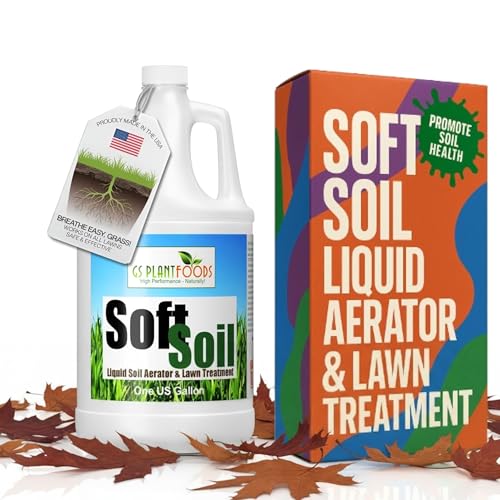
Soft Soil Liquid Soil Aerator and Lawn Treatment
About this pick
Soft Soil by GS Plant Foods is a liquid treatment for compacted soil, and it uses an organic formula. The maker says it suits new lawns, reseeding, and established grass.
It is described as safe for use around people and pets, and the company stresses trust, and it treats soil before seeding.
As another compact pick, it serves seeding projects, and compared with Aeroflow, it is organic. Compared with Turf Titan, it focuses on soil. Apply and water in, and repeat as directed, and check coverage. This product suits people planning to overseed, since loosened soil gives new seed a better start. Water in after application so the product moves into the root zone. Check the label for coverage, because liquid products often need a second application on tough ground. Store it out of reach of children and pets, and keep the cap tightly closed. Keep realistic expectations, because a liquid product cannot pull plugs the way a mechanical tool can, but it can still help water soak in and ease surface hardness over a season. Many gardeners pair it with a spike or coring pass for the best long-term outcome. Mark the dates of your applications on a calendar so you know when to reapply.
Best for: Organic treatment for compacted soil
Check price on AmazonSpecs
- Feature: level treatment for compacted soils
Pros
- +Organic formula
- +Suits seeding and reseeding
- +Targets compacted soils
- +Safe around family
Cons
- −Coverage details thin
- −Not a mechanical aerator
SENVERT 32 Pound Rolling Spike Lawn Aerator
About this pick
The SENVERT is a 32 pound rolling spike aerator, which is a mechanical tool rather than a liquid, and it comes fully assembled. A pair of auxiliary wheels makes it easy to move.
Rolling covers a lawn faster than step-on tools, and it punches holes with spikes. It suits those who prefer a physical approach.
As the premium pick, it is the only roller, and compared with liquids, it works immediately. Compared with the plug tool, it pushes rather than steps, and roll in rows, and store dry, and wipe spikes. Include this in a liquid roundup only as a mechanical alternative, because it solves compaction in a different way. Rolling is faster than stepping, though the 32 pounds can feel heavy on slopes. Mow short before rolling, and aerate when the soil is moist. Wipe the spikes dry afterward and store the tool indoors to prevent rust. If your goal is a quick fix before seeding, a roller like this delivers holes immediately while liquids work over weeks. The auxiliary wheels reduce the strain of moving it from shed to lawn, which helps older owners.
Best for: A mechanical option in a liquid guide
Check price on AmazonPros
- +Rolling design
- +Arrives assembled
- +Auxiliary wheels
- +Spikes penetrate soil
Cons
- −Not a liquid aerator
- −Heavy at 32 pounds
Plug Aerator Tool with Three Hollow Tines for Clay
About this pick
This plug aerator has three hollow tines and reaches four inches deep. It is a manual tool, not a liquid, and welded steel gives it strength.
It arrives semi-assembled with hardware, and the tines remove soil plugs. Working width is listed at 37 inches.
As another compact pick, it is the deepest option, and compared with liquids, it removes soil. Compared with the roller, it requires stepping, and aerate after rain, and clean tines, and store dry. It is another mechanical alternative to liquid products, and it removes real plugs of soil. That makes it stronger on stubborn clay, though it demands more physical effort. Take short breaks, wear sturdy boots, and aerate after a soaking rain. Clean the hollow tines after use and store the tool where the steel stays dry. Plan on a full afternoon for a medium lawn when using a manual plug tool, because each step removes only a small core. The result lasts longer than a liquid treatment on dense clay, but it asks much more from your legs. Work in a grid pattern, spacing holes a few inches apart, and rake the plugs apart afterward.
Best for: A mechanical option in a liquid guide
Check price on AmazonSpecs
- Working Width: 37"
Pros
- +Four inch depth
- +Three hollow tines
- +Welded steel frame
- +Hardware included
Cons
- −Not a liquid aerator
- −Stepping is tiring
How We Evaluated These Liquid Lawn Aerators (2026)
Each pick was assessed across 5 criteria weighted for real-world use.
Working Width
We compared working width across every pick in this roundup, from Lawn Aerator Tool with Non-Clogging Hollow Tines for Clay Soil at the high end (37") to SENVERT Rolling Lawn Aerator, Heavy Duty Push Spike Aeration Tool Up at the lower end (its listed spec), since this single spec drives most of the real-world performance difference between lawn aerator models.
Build Quality & Materials
We looked at the materials and construction details listed by each manufacturer, weighting picks that use more durable components in the parts that see the most wear and stress during regular use.
Ease of Use & Setup
We evaluated how straightforward each lawn aerator is to set up and operate based on the manufacturer's own documented features and included accessories, favoring designs a first-time buyer could use without a steep learning curve.
Value for Money
We weighed each pick's feature set against its price tier relative to the rest of the lineup, not against an absolute number, since Turf Titan Thatch Buster Liquid Lawn Aerator and Dethatcher (32 oz) and SENVERT Rolling Lawn Aerator, Heavy Duty Push Spike Aeration Tool Up are aimed at different budgets and different use patterns.
Maintenance & Reliability
We factored in ongoing maintenance requirements, warranty coverage where listed, and how well each design tends to hold up based on its construction and materials over repeated seasonal use.
How to Choose the Right Liquid Lawn Aerators (2026)
By Working Width
If working width is your main filter, here is how this lineup breaks down.
| Your priority | Recommended pick |
|---|---|
| Highest working width | Lawn Aerator Tool with Non-Clogging Hollow Tines for Clay Soil (37") |
| Balanced working width | Turf Titan Thatch Buster Liquid Lawn Aerator and Dethatcher (32 oz) |
| Balanced working width | Aeroflow Liquid Lawn Aerator - Soil Loosener for Compacted Clay - 32 |
| Balanced working width | Soft Soil Liquid Soil Aerator & Lawn Treatment to Fix Compacted |
By Budget
Price tiers shift over time, so use relative positioning rather than a fixed number.
| Budget | Recommended pick |
|---|---|
| Most affordable in this comparison | Turf Titan Thatch Buster Liquid Lawn Aerator and Dethatcher (32 oz) |
| Mid-range balance of price and features | Soft Soil Liquid Soil Aerator & Lawn Treatment to Fix Compacted |
| Willing to pay for the strongest spec sheet | SENVERT Rolling Lawn Aerator, Heavy Duty Push Spike Aeration Tool Up |
Manual Push Aerators vs. Tow-Behind Aerators
This is the real fork in the road for most lawn aerator buyers.
Manual Push Aerators
Manual Push Aerators favor lower cost and a smaller footprint. In this comparison, Turf Titan Thatch Buster Liquid Lawn Aerator and Dethatcher (32 oz) fits this profile. Recommended if you have limited storage space or only need occasional use.
Tow-Behind Aerators
Tow-Behind Aerators trade some convenience for stronger raw capability. SENVERT Rolling Lawn Aerator, Heavy Duty Push Spike Aeration Tool Up represents this side here. Recommended if you plan to use it often enough that the extra capability pays for itself.
Spike Aerator vs. Plug/Core Aerator
A second decision axis worth checking before you buy.
| Preference | Recommended pick |
|---|---|
| Spike Aerators | Lawn Aerator Tool with Non-Clogging Hollow Tines for Clay Soil |
| Plug/Core Aerators | SENVERT Rolling Lawn Aerator, Heavy Duty Push Spike Aeration Tool Up |
For Compacted Clay Soil Specifically
Look for a lawn aerator with a stronger-than-average working width rating and a design that holds up to repeated use, not just occasional light jobs.
In this comparison, Lawn Aerator Tool with Non-Clogging Hollow Tines for Clay Soil satisfies this best, at 37", followed closely by Turf Titan Thatch Buster Liquid Lawn Aerator and Dethatcher (32 oz).
When to Spend More
Spend more if
You use a lawn aerator often enough that working width and build quality directly save you time. SENVERT Rolling Lawn Aerator, Heavy Duty Push Spike Aeration Tool Up is built for that use pattern.
Save if
You need it occasionally and don't want to pay for capability you won't use regularly. Turf Titan Thatch Buster Liquid Lawn Aerator and Dethatcher (32 oz) covers the core job without the premium price tier.
Frequently Asked Questions
Should I get a core aerator or a spike aerator?
Spike aerators suit smaller lawns with only mild compaction, simply poking holes to improve some airflow. Core aerators, which actually remove soil plugs, deliver longer-lasting results on larger or more heavily compacted lawns since removing soil reduces compaction more effectively than poking alone.
Does my soil type affect which aerator I should buy?
Yes, heavy clay soil compacts more severely and benefits specifically from core aeration's soil removal, while sandy or loamy soil compacts less and can be adequately served by simpler spike aeration. Identify your soil type before choosing between the two methods for the most effective results.
When is the best time to aerate my lawn?
Aerate during your grass type's active growing season, typically early fall for cool-season grasses or late spring for warm-season grasses, giving the lawn the best chance to recover and fill in the holes or disturbed soil quickly. Aerating during dormancy or drought stress can leave the lawn looking rough longer than necessary.
How deep does lawn aeration need to go to actually help?
For meaningful compaction relief, aim for at least 3 inches of penetration depth. Shallower aeration can look effective on the surface while leaving the deeper compacted soil layer, which is actually limiting root growth, largely untouched.
Do budget lawn aerators work as well as premium models?
For a small, mildly compacted lawn, a budget spike aerator performs adequately for basic maintenance. Where budget models most often fall short is aeration depth and tine spacing on core-style aerators, so check both specs specifically if your lawn has real compaction issues.
How often should I aerate my lawn?
Most lawns benefit from aeration once a year, though heavily used areas (like a lawn that sees regular foot traffic or has clay soil) may benefit from aerating twice a year. Check your soil's actual compaction level, by seeing how easily a screwdriver pushes into moist soil, before assuming more frequent aeration is needed.
Bottom Line
best overall: Turf Titan Thatch Buster Liquid Lawn Aerator and Dethatcher, 32 oz - best value pick in this roundup.
See the full rankings above for all picks with pros, cons, and best-for summaries.
Browse on Amazon
All Prime-eligible options with current pricing.
Shop on Amazon →