Best Lawn Aerator Boots (2026)
Compare 5 of the best lawn aerator boots for 2026, with real specs, honest tradeoffs, and a buying guide to help you pick the right one.
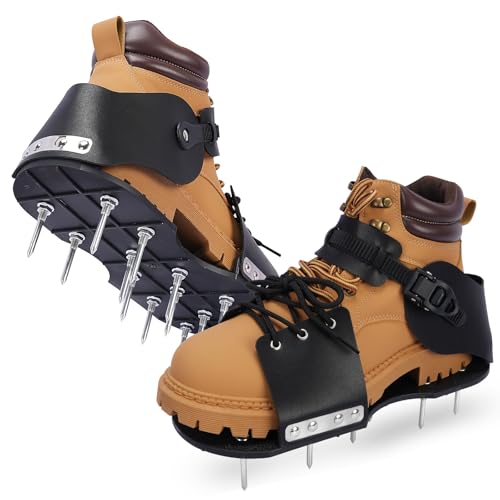


At a Glance
A common mistake with lawn aerator boots is assuming the first well-reviewed listing is the right fit. It often isn't. onoxouo Lawn Aerator Shoes for Compacted Clay Soil, Heavy Duty Steel and DWAEEGG Lawn Aerator Shoes, Pre-Installed Two-Layer Spike Aerator solve genuinely different problems in this comparison, and the right pick depends on your specific use case, not just star ratings.
Every pick below includes real specs pulled from the current listing, honest tradeoffs, and a "best for" recommendation so you can match the lawn aerator to your actual situation instead of guessing from a star rating alone.
6 Criteria to Look For Before Buying a Lawn Aerator Boots (2026)
Key buying criteria so you get the right fit the first time.
Tine Spacing Affects How Thoroughly the Lawn Gets Aerated in One Pass
Tighter tine spacing on an aerator's drum means more holes per pass and more thorough aeration coverage, while wider spacing requires additional passes to achieve the same density of holes across your lawn. Check HFH Heavy Duty Lawn Aerator Shoes with Upgraded Ratcheting Buckles's specific tine spacing spec, since two aerators of similar size and price can differ meaningfully in how many passes you need for genuinely thorough coverage.
Walk-Behind Suits Smaller Yards, Tow-Behind Covers Large Properties Faster
A walk-behind aerator, whether manual or electric, is manageable for a typical residential yard, while a tow-behind model like Lawn Aerator Shoes, Soil Aerator Grass Tool with Dual Hook & Loop, pulled by a riding mower or ATV, covers a large property meaningfully faster but requires a vehicle capable of towing it and more storage space when not in use. Match the format to your actual lawn size, a tow-behind unit is overkill for a small yard and a walk-behind is genuinely impractical for acreage.
Core Aeration Suits Clay Soil, Spike Suits Sandy or Loamy Soil
Core aeration is particularly well suited to heavy clay soils, which compact more severely and benefit from actual soil removal, while spike aeration works reasonably well on sandy or loamy soils that compact less and don't need the more intensive core method. Check your soil type before choosing HFH Heavy Duty Lawn Aerator Shoes with Upgraded Ratcheting Buckles or a spike alternative, since matching the method to your actual soil composition affects how much real benefit you get from aerating.
Electric Aerators Suit Smaller Lawns, Gas Models Handle Larger Ones Faster
An electric-powered aerator works well for a smaller residential lawn without the fuel maintenance a gas engine requires, while a gas-powered model like Lawn Aerator Shoes, Soil Aerator Grass Tool with Dual Hook & Loop typically offers more sustained power for larger lawns or more heavily compacted soil, at the cost of engine maintenance and fuel management. Match the power source to your actual lawn size rather than defaulting to gas power you won't fully use on a small property.
Core Aeration Removes Soil Plugs, Spike Aeration Just Pokes Holes
A spike aerator uses sharp tines to poke holes directly into compacted soil, suited to smaller lawns with mild compaction, while a core (or plug) aerator like Lawn Aerator Shoes, Soil Aerator Grass Tool with Dual Hook & Loop uses hollow tines that actually pull a plug of soil out of the ground, delivering longer-lasting results on larger or more heavily compacted lawns since removing soil reduces compaction more effectively than simply poking into it. Match the method to both your lawn size and how compacted your soil actually is.
At Least 3 Inches of Penetration Is Needed for Real Compaction Relief
For core aeration to meaningfully relieve soil compaction, the machine needs to penetrate at least 3 inches deep, with holes spaced roughly 2-4 inches apart and about 1 inch in diameter, shallower penetration leaves the deeper compacted layer untouched even if the surface looks properly aerated. Check HFH Heavy Duty Lawn Aerator Shoes with Upgraded Ratcheting Buckles's stated penetration depth specifically, since a shallow-tine aerator can look like it's doing the job while missing the compaction that's actually limiting root growth.
Best Lawn Aerator Boots (2026)
HFH Heavy Duty Lawn Aerator Shoes with Ratcheting Buckles
About this pick
These aerator shoes use ratcheting snow boot style buckles to lock the straps in place. The soles are rigid nylon paired with tough leather, which is sturdier than the flimsy straps on cheaper pairs. The spikes are listed at about 1.75 inches.
A video guide comes with the listing because the kit needs manual assembly. The goal is professional style results for a homeowner without renting a machine. Buckles stop straps from loosening, which prevents the shoes from sliding while you walk.
It is the best overall pick because the fit is the biggest weakness of this product type. Compared with the Ohuhu, it feels sturdier. Compared with the DWAEEGG, it asks for more setup but offers a more secure lock. The extra buckles do add weight and some fiddling when you put them on, so allow a few minutes for fitting before each session. Plan your path in rows across the lawn, because stepping sideways in spiked shoes is awkward and can cause a trip. Older users should sit to buckle up, since balancing on one foot while tightening the straps is risky.
Best for: Secure fit during long aerating sessions
Check price on AmazonSpecs
- Working Width: 1.75"
Pros
- +Ratcheting buckles hold securely
- +Rigid nylon soles
- +Leather straps
- +Video setup guide on listing
Cons
- −Needs manual assembly
- −Heavier than strap only designs
- −Walking in them feels awkward
Ohuhu Lawn Aerator Shoes with Hook-and-Loop Straps
About this pick
The Ohuhu aerator shoes use hook and loop straps to secure them over regular shoes. The listing provides little detail, so buyers should check the fit carefully before committing. They are sold purely as a lawn aeration accessory for regular shoes.
Hook and loop straps make them quick to put on and take off. That speed is helpful for short sessions in a small yard. The tradeoff is that straps can loosen over time, which is why buckle designs exist.
Compared with the HFH shoes, they lack ratcheting buckles and likely feel less rugged. They make sense for occasional use on a small lawn. Treat them as a simple, light duty option. Because details are thin, check how the straps and sole feel in person, and replace the straps if they stretch. Plan to aerate in short sessions, since spiked shoes are tiring and can feel unstable on uneven ground. Compared with the DWAEEGG shoes, which list a spike count and a depth, there is less specific information here, so treat this as a budget experiment rather than a proven performer. Returning it is simple if the fit disappoints.
Best for: Quick strap on use in small yards
Check price on AmazonSpecs
- Feature: lawn aerator
Pros
- +Hook and loop straps are quick to fasten
- +Easy to put on over shoes
- +Simple light design
- +Suits small lawns
Cons
- −Listing offers few details
- −Straps can loosen
- −Less rugged than buckle designs
DWAEEGG Pre-Installed Two-Layer Spike Aerator Shoes
About this pick
The DWAEEGG shoes use a dual layer structure with built in elastic springs. Each shoe holds 13 high strength steel spikes guided by precision slots. The spikes penetrate up to 40 millimeters deep to loosen compacted soil.
They are designed to fit US men's sizes 6 to 13, a wide range. They arrive pre installed, so no assembly is needed. They work best after watering or before seeding.
Compared with the HFH shoes, they skip the setup. Compared with the onoxouo, they use thinner construction. They suit casual aerators who want to put them on and walk. The spring loaded layers are a clever touch, but they add moving parts that can eventually wear, so inspect them each season. Walk in straight rows and avoid slopes or wet patios while wearing them, since the spikes reduce grip. Compared with the onoxouo steel base, the structure is lighter, which many people will find easier to wear for an hour. Buyers with larger feet should confirm the stated size range before ordering, since the shoes strap over regular footwear.
Best for: Ready to wear aeration
Check price on AmazonPros
- +Pre installed, no assembly
- +13 steel spikes per shoe
- +Penetrates up to 40 mm
- +Fits a wide range of men's sizes
Cons
- −Shallow compared with plug aerators
- −Springs may wear over time
- −Walking in them feels awkward
Lawn Aerator Shoes with Dual Hook-and-Loop Straps
About this pick
These shoes use dual straps across the instep for a firmer hold than a single strap. They need no installation, which saves the hassle of bulky assembly. A reinforced plastic base carries the spikes.
The listing emphasizes safety and says they are built for durability. The working width is listed at 5 inches. They are the value pick of the group.
Compared with the HFH shoes, they lack buckles and a rigid sole. Compared with the Ohuhu, the dual straps give a better hold. They suit homeowners who aerate once or twice a season. Keep expectations modest, since the shorter spikes loosen the top layer rather than reaching deep compaction. Check the straps before each session and clean soil from the base so the spikes stay in good shape. Compared with the onoxouo shoes, the plastic base is lighter on the foot but less suited to stubborn clay. Because it needs no installation, it is also the quickest of the group to get started with on a free afternoon. Rinse the spikes and base after each use to keep them rust free.
Best for: Budget no-assembly aerating
Check price on AmazonSpecs
- Working Width: 5"
- Feature: Safety is a priority
Pros
- +Dual instep straps
- +No installation needed
- +Reinforced plastic base
- +Value priced
Cons
- −Plastic base less rigid than nylon
- −Straps can slip over time
- −Short spikes
onoxouo Heavy Duty Steel Aerator Shoes for Clay Soil
About this pick
These shoes have a 5 millimeter metal base that the listing says is 70 percent thicker than standard models. The spikes are heavy duty and resist bending and rust. A hollow base reduces mud buildup, so clay does not clog the shoes.
Adjustable straps fit most men and women in US sizes 6 to 11. The extra steel suits compacted clay soil, where thinner spikes bend. They earn the premium pick label for build quality rather than extras.
Compared with the DWAEEGG, they are tougher but heavier. Compared with the value shoes, they should last longer. They suit people who aerate clay lawns often. The hollow base is useful in wet clay because mud packs into flat soles quickly and slows you down. Allow time to scrub them clean after use so the steel does not sit in damp soil and corrode. The adjustable straps accommodate both men and women, which helps if two people in a household share one pair. Heavier shoes also mean the spikes sink in with less effort per step, which partly offsets the extra weight.
Best for: Compacted clay lawns
Check price on AmazonSpecs
- Working Width: 16"
- Feature: duty spikes that resist bending and rust
Pros
- +Thick 5 mm metal base
- +Spikes resist bending and rust
- +Hollow base reduces mud buildup
- +Adjustable straps
Cons
- −Heavier on the foot
- −Sizes 6 to 11 only
- −Costs more than basic pairs
How We Evaluated These Lawn Aerator Boots (2026)
Each pick was assessed across 5 criteria weighted for real-world use.
Working Width
We compared working width across every pick in this roundup, from onoxouo Lawn Aerator Shoes for Compacted Clay Soil, Heavy Duty Steel at the high end (16") to DWAEEGG Lawn Aerator Shoes, Pre-Installed Two-Layer Spike Aerator at the lower end (its listed spec), since this single spec drives most of the real-world performance difference between lawn aerator models.
Build Quality & Materials
We looked at the materials and construction details listed by each manufacturer, weighting picks that use more durable components in the parts that see the most wear and stress during regular use.
Ease of Use & Setup
We evaluated how straightforward each lawn aerator is to set up and operate based on the manufacturer's own documented features and included accessories, favoring designs a first-time buyer could use without a steep learning curve.
Value for Money
We weighed each pick's feature set against its price tier relative to the rest of the lineup, not against an absolute number, since Lawn Aerator Shoes, Soil Aerator Grass Tool with Dual Hook & Loop and onoxouo Lawn Aerator Shoes for Compacted Clay Soil, Heavy Duty Steel are aimed at different budgets and different use patterns.
Maintenance & Reliability
We factored in ongoing maintenance requirements, warranty coverage where listed, and how well each design tends to hold up based on its construction and materials over repeated seasonal use.
How to Choose the Right Lawn Aerator Boots (2026)
By Working Width
If working width is your main filter, here is how this lineup breaks down.
| Your priority | Recommended pick |
|---|---|
| Highest working width | onoxouo Lawn Aerator Shoes for Compacted Clay Soil, Heavy Duty Steel (16") |
| Balanced working width | Lawn Aerator Shoes, Soil Aerator Grass Tool with Dual Hook & Loop (5") |
| Balanced working width | HFH Heavy Duty Lawn Aerator Shoes with Upgraded Ratcheting Buckles (1.75") |
| Balanced working width | Ohuhu Lawn Aerator Shoes with Hook & Loop Straps, All New Unique |
By Budget
Price tiers shift over time, so use relative positioning rather than a fixed number.
| Budget | Recommended pick |
|---|---|
| Most affordable in this comparison | Lawn Aerator Shoes, Soil Aerator Grass Tool with Dual Hook & Loop |
| Mid-range balance of price and features | DWAEEGG Lawn Aerator Shoes, Pre-Installed Two-Layer Spike Aerator |
| Willing to pay for the strongest spec sheet | onoxouo Lawn Aerator Shoes for Compacted Clay Soil, Heavy Duty Steel |
Manual Push Aerators vs. Tow-Behind Aerators
This is the real fork in the road for most lawn aerator buyers.
Manual Push Aerators
Manual Push Aerators favor lower cost and a smaller footprint. In this comparison, Lawn Aerator Shoes, Soil Aerator Grass Tool with Dual Hook & Loop fits this profile. Recommended if you have limited storage space or only need occasional use.
Tow-Behind Aerators
Tow-Behind Aerators trade some convenience for stronger raw capability. onoxouo Lawn Aerator Shoes for Compacted Clay Soil, Heavy Duty Steel represents this side here. Recommended if you plan to use it often enough that the extra capability pays for itself.
Spike Aerator vs. Plug/Core Aerator
A second decision axis worth checking before you buy.
| Preference | Recommended pick |
|---|---|
| Spike Aerators | onoxouo Lawn Aerator Shoes for Compacted Clay Soil, Heavy Duty Steel |
| Plug/Core Aerators | DWAEEGG Lawn Aerator Shoes, Pre-Installed Two-Layer Spike Aerator |
For Compacted Clay Soil Specifically
Look for a lawn aerator with a stronger-than-average working width rating and a design that holds up to repeated use, not just occasional light jobs.
In this comparison, onoxouo Lawn Aerator Shoes for Compacted Clay Soil, Heavy Duty Steel satisfies this best, at 16", followed closely by Lawn Aerator Shoes, Soil Aerator Grass Tool with Dual Hook & Loop.
When to Spend More
Spend more if
You use a lawn aerator often enough that working width and build quality directly save you time. onoxouo Lawn Aerator Shoes for Compacted Clay Soil, Heavy Duty Steel is built for that use pattern.
Save if
You need it occasionally and don't want to pay for capability you won't use regularly. Lawn Aerator Shoes, Soil Aerator Grass Tool with Dual Hook & Loop covers the core job without the premium price tier.
Frequently Asked Questions
How deep does lawn aeration need to go to actually help?
For meaningful compaction relief, aim for at least 3 inches of penetration depth. Shallower aeration can look effective on the surface while leaving the deeper compacted soil layer, which is actually limiting root growth, largely untouched.
Should I get a core aerator or a spike aerator?
Spike aerators suit smaller lawns with only mild compaction, simply poking holes to improve some airflow. Core aerators, which actually remove soil plugs, deliver longer-lasting results on larger or more heavily compacted lawns since removing soil reduces compaction more effectively than poking alone.
How often should I aerate my lawn?
Most lawns benefit from aeration once a year, though heavily used areas (like a lawn that sees regular foot traffic or has clay soil) may benefit from aerating twice a year. Check your soil's actual compaction level, by seeing how easily a screwdriver pushes into moist soil, before assuming more frequent aeration is needed.
When is the best time to aerate my lawn?
Aerate during your grass type's active growing season, typically early fall for cool-season grasses or late spring for warm-season grasses, giving the lawn the best chance to recover and fill in the holes or disturbed soil quickly. Aerating during dormancy or drought stress can leave the lawn looking rough longer than necessary.
Do budget lawn aerators work as well as premium models?
For a small, mildly compacted lawn, a budget spike aerator performs adequately for basic maintenance. Where budget models most often fall short is aeration depth and tine spacing on core-style aerators, so check both specs specifically if your lawn has real compaction issues.
Does my soil type affect which aerator I should buy?
Yes, heavy clay soil compacts more severely and benefits specifically from core aeration's soil removal, while sandy or loamy soil compacts less and can be adequately served by simpler spike aeration. Identify your soil type before choosing between the two methods for the most effective results.
Bottom Line
best overall: HFH Heavy Duty Lawn Aerator Shoes with Ratcheting Buckles - best overall pick in this roundup.
See the full rankings above for all picks with pros, cons, and best-for summaries.
Browse on Amazon
All Prime-eligible options with current pricing.
Shop on Amazon →