6 Best Clocks for Medication Reminders in 2026
Six clocks with medication reminders compared on display clarity, alarm count, talking prompts and power, for older adults and the people who help them.


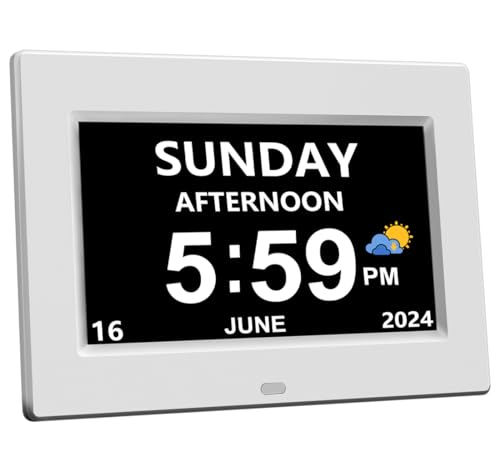

At a Glance
Some people want a reminder that lives in a pocket. Others want something that sits in plain sight and answers the question that matters most in the morning: what day is it, and what time? A clock with built-in medication reminders serves that second need, combining a readable display with scheduled prompts.
The six clocks here range from a talking clock that speaks in your own voice to a screen that shows 20 scheduled messages in words. We evaluated them based on product specs and buyer feedback, weighing display size, number of alarms, whether they talk, how they are powered and how hard they are to program. A clock that looks good on the shelf but needs a 12-step setup tends to end up unplugged.
Please keep expectations realistic. A clock can prompt, but it cannot verify that a dose was taken, and it cannot judge whether a schedule is correct. Confirm medication times with a pharmacist or doctor, and let a family member or caregiver check how the clock is working in real life during the first couple of weeks.
6 Criteria to Look For Before Buying a Clocks for Medication Reminder
Key buying criteria so you get the right fit the first time.
Clock readability from across a room
A clock earns its keep by being read at a glance, so display size and contrast come first. The MEDCENTER uses an extra large bold white display, the AINFTIME uses a large high-contrast font with a soft light, and the ROCAM offers 12 styles including text. Aim for numerals readable from the chair where the user sits. Avoid placing any clock in direct sunlight.
Alarm count and message type
More alarms help only if they are easy to manage. The ROCAM supports up to 20 with on-screen messages, the AINFTIME gives 12, the TabTime gives 8 and the Bovintex gives 3. A person with five dose times needs at least six slots to leave room for change. Text messages suit readers while recorded voices suit listeners.
Talking versus reading prompts
Choose the channel the user responds to. The MEDCENTER, ORKA and Bovintex play a recorded voice, while the ROCAM and AINFTIME show text and tones. Hearing and sight rarely change together, so test the prompt in the room where it will sit. Never rely on one channel alone for important medication.
Power source and outage behavior
Pick the power style the household will maintain. The ORKA is AC powered and needs an outlet, the Bovintex lasts up to six months per USB charge, and the AINFTIME runs from a USB adapter that is not included. Ask the maker about a backup battery if you rely on the clock overnight. Mark charging dates on a calendar.
Date and day clarity
Memory changes often show up as lost track of the date, so a display that states the day is more than cosmetic. The ORKA shows the day of the week, the AINFTIME shows date and day, and the AINFTIME adjusts for daylight saving automatically. A clock that shows the full date reduces guesswork. Place it where it is seen every morning.
Setup effort and who does it
Be honest about who will program the clock. A 20-alarm ROCAM or a recorded MEDCENTER takes a patient helper, while a three-alarm Bovintex is quick for anyone. Write the schedule on paper and keep it near the clock. Do a full day test run before relying on the reminders.
6 Best Clocks for Medication Reminders in 2026
ROCAM Dementia Clock with Medication Reminders
About this pick
The ROCAM treats the clock as a message board. You can set up to 20 alarms and schedules, each with a clear on-screen message, which makes it useful for appointments and routines as well as pills. There are 12 clock styles, spanning analog, digital and text, and the colors can be personalized.
The breadth is also its challenge. Twenty alarms, many styles and a range of gentle alert sounds mean there is more to configure than on a simple talking clock. A caregiver will likely do the first setup, and a short written note of the schedule is worth keeping nearby.
Once running, it replaces the habit of flipping through a calendar to find the date, and the text messages work well for people who read more easily than they listen. Compared with the AINFTIME at 12 alarms, it has headroom for a busier life. Compared with the ORKA, it relies on reading rather than a recorded voice.
Best for: Anyone with a busy schedule of medications and appointments who reads more easily than they hear.
Check price on AmazonSpecs
- Alarms: Up to 20
- Clock styles: 12
- Messages: On-screen text
Pros
- +Up to 20 alarms with clear on-screen messages
- +Twelve clock styles, from analog to text
- +Colors can be personalized to suit the room
- +Messages work for pills, visits and routines
Cons
- −More menus to learn than a simple clock
- −Reading-based prompts will not help with very low vision
MEDCENTER Talking Clock for Medication and Senior Reminders
About this pick
For a clock that speaks, the MEDCENTER is the one built most squarely around the idea. You record a personalized spoken alarm for each dose, and the playback is described as loud and clear for hearing impaired users. The display is a bold extra large white, meant to be read at distance, and the interface is aimed at dementia care.
The weak point is information. The listing does not give an alarm count, so you cannot compare it directly against clocks with published totals. Someone also has to record the messages, which means a caregiver or patient family member should be present during setup.
As a daily object it fits a nightstand, where a familiar voice can start the day. Next to the ROCAM it offers voice rather than text, which is a better match for people who struggle to read small print. It is the clearest choice when hearing and sight limits arrive together.
Best for: People with low vision and hearing loss who benefit from a recorded familiar voice.
Check price on AmazonSpecs
- Voice: Recordable per dose
- Display: Extra large, bold white
- Focus: Hearing loss and dementia
Pros
- +Spoken, personalized alarm for each dose
- +Display is bold and extra large
- +Loud playback suits hearing impaired users
- +Layout aims to stay simple for dementia care
Cons
- −Listing gives no alarm count to compare
- −Recording prompts needs a helper at setup
ORKA Talking Clock Voice Recordable Reminder
About this pick
The ORKA is an AC powered day clock that shows the day of the week on an extra large display and lets you record your own messages. Volume is adjustable, which makes it easier to fit a quiet bedroom or a noisy kitchen. The listing stresses that it is not battery operated, so it needs an outlet.
That dependence on the wall is both strength and constraint. It removes dead batteries from the list of worries, but a cord has to be routed safely and a power outage silences it unless a backup is described by the maker. Programming involves recording steps and is slower than for a simple button clock.
In use it earns its place where the day of the week is the main source of confusion. Compared with the MEDCENTER, it is less dedicated to dementia care in its wording but more explicit about being plugged in. Compared with the Bovintex, it is larger but permanently tethered.
Best for: People who lose track of the day and want a plugged-in clock with spoken reminders.
Check price on AmazonSpecs
- Power: AC adapter
- Voice: Your own messages
- Display: Extra large with day
Pros
- +Your own recorded voice reminds you what to do
- +AC power removes the battery worry
- +Volume can be adjusted for the room
- +Large display shows the day of the week
Cons
- −Needs a nearby outlet and a safely routed cord
- −Setup takes longer than for a simple clock
Bovintex Rechargeable Talking Clock
About this pick
Bovintex keeps things small and tidy, with three custom voice alarms, adjustable volume, and USB charging. About three hours fills it, and the maker says that can last up to six months. Recording your own voice is the main appeal, since a familiar tone can feel less clinical than a beep.
Three alarms is the limit, so it works for morning, noon and evening but not for a more complicated pattern. The compact body also means a smaller display than most of the others, which is a poor match for very low vision.
In daily use it is the easiest to move, since there is no cord to manage for months at a time. Put a charge reminder in the calendar. Compared with the AINFTIME, it offers fewer alarms but a spoken message, while the ORKA offers a bigger screen at the cost of an outlet.
Best for: A simple three-dose day where a portable, rechargeable voice clock is enough.
Check price on AmazonSpecs
- Voice alarms: 3 custom
- Charge: About 3 hours
- Run time: Up to 6 months
Pros
- +Three recorded alarms for morning, noon and evening
- +One charge is described as lasting up to 6 months
- +About three hours to charge from empty
- +A familiar voice feels friendlier than a beep
Cons
- −Only three alarm slots, so four doses will not fit
- −Compact body limits display size
AINFTIME Digital Clock with Date and 12 Alarms
About this pick
The AINFTIME is a digital date clock with 12 alarms, a large high-contrast font and a soft light the maker says has no blue light. It adjusts automatically for daylight saving in North America, the UK and the EU, which spares a caregiver an annual reset. Power is by USB.
Note that the listing says no power adapter is included, so you need your own 5V 1A USB adapter. It is also a display clock rather than a talking one, so alerts are tone-based and reading ability matters.
For the money-conscious household it sits between simple and complex. Compared with the ORKA, you gain more alarms but lose the recorded voice. Compared with the ROCAM, you have fewer alarms but fewer menus to learn. It suits a user who sees well and wants the date, the day and a handful of reminders at a glance.
Best for: A reader who wants a clear date display and a dozen alarms without speech.
Check price on AmazonSpecs
- Alarms: 12
- Time change: Automatic DST
- Power: USB, adapter not included
Pros
- +Twelve alarms cover a busy medication day
- +Automatic daylight saving adjustment by region
- +Large high-contrast font with a soft light
- +Fewer menus than the 20-alarm ROCAM
Cons
- −Power adapter is not included in the listing
- −Tone alerts only, with no spoken prompt
TabTime Pill Reminder and Timer
About this pick
TabTime is the odd one out, a pocket-sized alarm timer rather than a wall or table clock. It stores eight independently set alarms that repeat at the same times each day until the battery needs replacing. The pitch is simple: program it once and leave it alone.
Because it is so small, it has the smallest display here and relies on tones. That makes it a poor fit for anyone who needs a clock to read the date or a message to follow. It does suit someone who is out and about and wants the reminder on their person.
Compared with the AINFTIME at 12 alarms, it has fewer slots but travels in a pocket. Treat it as a companion to a full clock rather than a replacement, and swap its battery on a fixed calendar date so the alarms never lapse without notice.
Best for: People who move around the house or outdoors and want reminders in a pocket.
Check price on AmazonSpecs
- Alarms: 8 independent
- Size: Pocket-sized
- Power: Battery
Pros
- +Eight independent alarms repeat every day
- +Pocket-sized, so it goes wherever you go
- +Set once and it keeps going until the battery fails
- +Simple concept with few features to learn
Cons
- −Smallest display of the six, hard on low vision
- −No date, day or spoken message
How We Evaluated These Clocks for Medication Reminders
Each pick was assessed across 5 criteria weighted for real-world use.
Display clarity
We compared the size, contrast and style of each display from the listing detail. The MEDCENTER and ORKA lead with extra large formats, the AINFTIME with a high-contrast font, and the ROCAM with selectable styles. A bigger display earned more weight for fixed-location use.
Alarm capacity
Published alarm counts were lined up: ROCAM at 20, AINFTIME at 12, TabTime at 8, Bovintex at 3. The MEDCENTER and ORKA are not listed with counts. Capacity mattered most for users with multiple medications.
Prompt style
We separated recorded voice from on-screen text and tones. The MEDCENTER, ORKA and Bovintex speak, and the ROCAM writes messages. We did not assume any prompt style works better for everyone.
Power and upkeep
AC, USB and battery arrangements were compared for upkeep burden. The ORKA is plug-in only, the Bovintex cites six months per charge, and the AINFTIME needs a separate adapter. The most reliable setup is the one that fits the household routine.
Ease of setup
Setup steps were estimated from listing detail and buyer feedback, since we did not claim hands-on handling. The Bovintex and TabTime are simpler, while the ROCAM and MEDCENTER ask more of a helper. Lineup positioning therefore places the ROCAM first for capacity and the MEDCENTER first for voice.
How to Choose the Right Clocks for Medication Reminders
By Main Sensory Need
The best clock follows the user's strongest sense.
| Situation | Pick | Reason |
|---|---|---|
| Reads well but hears poorly | ROCAM Dementia Clock with Medication Reminders | On-screen messages and 20 alarms |
| Hears well but sees poorly | MEDCENTER Talking Clock for Medication and Senior Reminders | Recorded voice and a bold white display |
| Loses track of the weekday | ORKA Talking Clock Voice Recordable Reminder | Day of the week on an extra large display |
| Sees well, wants date at a glance | AINFTIME Digital Clock with Date and 12 Alarms | High-contrast date display |
| Wants a small voice companion | Bovintex Rechargeable Talking Clock | Three recorded alarms in a compact body |
No clock replaces a check-in from a person who knows the routine.
By Budget
Relative tiers only, with no prices shown.
| Tier | Pick | What you get |
|---|---|---|
| Entry | TabTime Pill Reminder and Timer | Eight tone alarms in a pocket body |
| Entry to mid | AINFTIME Digital Clock with Date and 12 Alarms | Date clock and alarms, adapter not included |
| Mid | Bovintex Rechargeable Talking Clock | Voice alarms with USB charging |
| Mid to premium | ORKA Talking Clock Voice Recordable Reminder | Large plug-in display with voice |
| Premium | ROCAM Dementia Clock with Medication Reminders | Twenty alarms and many display styles |
Talking Clock vs Message Clock
Two different philosophies deliver a reminder.
Talking clock
A recorded voice plays when the alarm fires, which works when reading is hard. The MEDCENTER, ORKA and Bovintex fit here. Choose this if the person responds to a familiar voice, and plan on recording sessions.
Message clock
Text appears on screen with the time and date, which works when hearing is limited. The ROCAM and AINFTIME fit here. Choose this if the person reads comfortably and wants a big visual calendar.
By Where the Clock Will Sit
Placement changes which design makes sense.
| Location | Pick | Reason |
|---|---|---|
| Bedside table | MEDCENTER Talking Clock for Medication and Senior Reminders | Large digits and spoken prompts |
| Kitchen counter near the cord | ORKA Talking Clock Voice Recordable Reminder | Plug-in clock near an outlet |
| Shelf with no outlet | Bovintex Rechargeable Talking Clock | Months between charges |
| Pocket or handbag | TabTime Pill Reminder and Timer | Smallest body of the six |
For Caregiver-Set Schedules Specifically
When a family member programs the clock, a few traits matter.
Look for
Enough alarms for future changes, a way to review the schedule, and prompts that need no decisions from the user. Keep a written copy of the programmed times.
In this comparison
The ROCAM allows up to 20 scheduled messages, the AINFTIME holds 12 alarms, and the MEDCENTER and ORKA let a caregiver record the voice. The TabTime and Bovintex have the fewest slots.
When to Spend More
Pay up only when the extra features solve a real problem.
| Spend more if | Save if |
|---|---|
| Schedules are crowded, so the ROCAM Dementia Clock with Medication Reminders fits | Three doses fit the Bovintex Rechargeable Talking Clock |
| Voice and sight limits meet, as the MEDCENTER Talking Clock for Medication and Senior Reminders addresses | The user reads fine print, so the AINFTIME Digital Clock with Date and 12 Alarms is enough |
| Weekday confusion is frequent, as with the ORKA Talking Clock Voice Recordable Reminder | A phone already shows the date |
| You need a portable backup | The TabTime Pill Reminder and Timer is a spare, not a main clock |
Frequently Asked Questions
Which clock is best for someone with dementia?
The MEDCENTER is described as dementia friendly and uses a recorded voice with a bold display, and the ROCAM is marketed for dementia with on-screen messages. Neither can replace supervision. Talk with the person's doctor about the level of support needed and keep the routine as consistent as possible. Place the clock in the room where the day starts, keep the surface around it uncluttered, and remove old clocks that show a different time, since conflicting displays can cause confusion.
Do I need a clock if I already have a pill organizer?
The organizer holds the pills and the clock supplies the prompt, so they work well together. Place the clock where the organizer sits so the alarm points to something concrete. Fill the organizer from a pharmacy list and ask a pharmacist to check the schedule.
How many alarms should I look for?
Count the daily dose times and add two spare slots for appointments or changes. The ROCAM offers up to 20 and the AINFTIME 12, while the Bovintex offers 3. A longer list is harder to program, so do not buy more than you will use.
Does automatic daylight saving matter?
It helps more than people expect. A clock that does not adjust can be an hour wrong for part of the year, and a wrong clock sounds alarms at the wrong time. The AINFTIME lists automatic adjustment for North America, the UK and the EU; check how the others handle it before relying on them.
Can I use my own voice for the alarms?
Yes on the MEDCENTER, ORKA and Bovintex, which all record spoken messages. Keep each message short, mention the medication and the time of day, and speak calmly. Re-record if the playback sounds muffled. Some families record the message in the voice of a grandchild or spouse, which can make the prompt feel personal rather than clinical. Test the volume at the farthest point in the room where the person usually sits, and ask someone with typical hearing to confirm the words are clear.
What happens during a power outage?
It depends on the model. The ORKA is AC powered and the listing says it is not battery operated, so ask the maker about backup. The Bovintex and TabTime run on stored power, so a short outage should not stop them, but confirm before relying on one overnight.
Is a clock enough to manage several medications safely?
A clock only prompts. It cannot check the right pill, the right dose or the right moment, and it cannot see what was taken. Ask a pharmacist to review the medication list and consider a locked dispenser or caregiver check if errors are a concern.
Bottom Line
best overall: ROCAM Dementia Clock with Medication Reminders - best overall pick in this roundup.
See the full rankings above for all picks with pros, cons, and best-for summaries.
Browse on Amazon
All Prime-eligible options with current pricing.
Shop on Amazon →